English
 中文简体
中文简体
Content
- 1 What Is a Horizontal Volumetric Water Meter and How Does It Work?
- 2 Key Selection Criteria: What to Evaluate Before You Buy
- 3 Accuracy Performance: Turndown Ratio Visual Comparison
- 4 Residential vs. Industrial Applications: Choosing the Right Fit
- 5 Installation Best Practices for Horizontal Water Meters
- 6 Long-Term Accuracy Retention: How Volumetric Meters Age
- 7 Radar Performance Profile: Evaluating Meter Suitability by Use Case
- 8 Material and Construction Standards: Why Copper Matters
- 9 Smart Integration Options: Pulse Output and Remote Reading
- 10 About NINGBO SHIDAI INSTRUMENT CO., LTD
- 11 Frequently Asked Questions
When selecting a horizontal volumetric water meter for your system, the most critical decision factors are measurement accuracy, material durability, flow range compatibility, and whether the meter suits residential or industrial applications. A high accuracy water meter using the volumetric principle — such as a rotating piston design — consistently outperforms single-jet or multi-jet alternatives in low-flow sensitivity and long-term reliability. For most applications, a meter with a measuring range up to R=400 and a dry counter sealed in copper or plastic delivers the best combination of precision, hygiene, and reading longevity.
This guide breaks down everything you need to know — from operating principles and installation requirements to performance comparisons and selection criteria — so you can confidently choose the right horizontal flow meter for your water system.
What Is a Horizontal Volumetric Water Meter and How Does It Work?
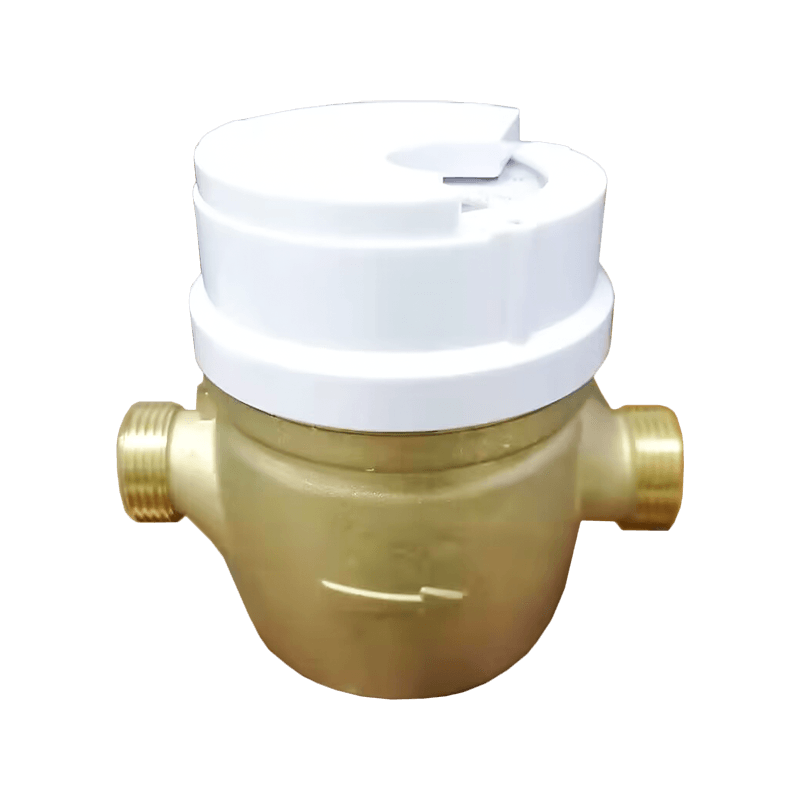
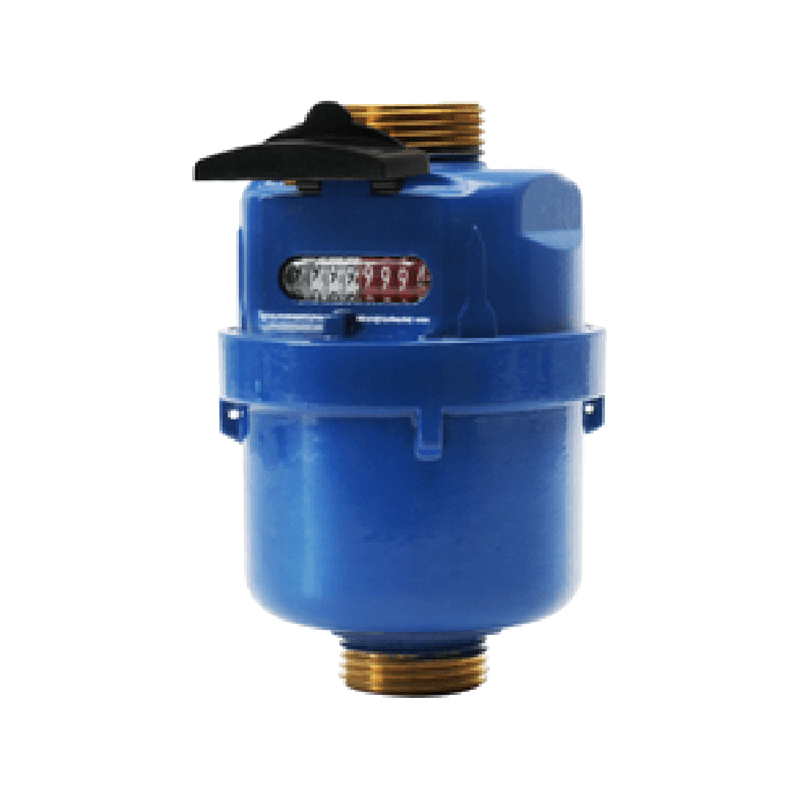
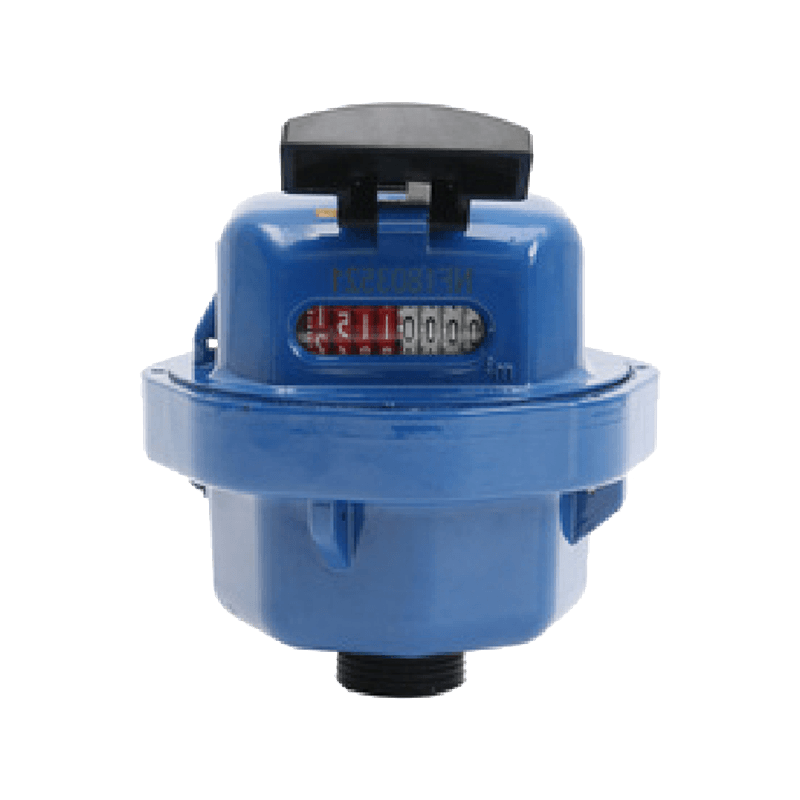
A horizontal volumetric water meter is a precision flow measurement meter that calculates water consumption by repeatedly filling and emptying a known, fixed-volume chamber. Unlike velocity-based meters that estimate flow from speed, volumetric meters count discrete packets of water, making them inherently more accurate — especially at low flow rates.
The "horizontal" designation means the meter must be installed with its body in a horizontal plane and the reading face pointing upward, with the arrow on the body aligned with the direction of water flow. This orientation ensures the rotating piston mechanism maintains balanced force distribution, resulting in stable output water flow and minimal mechanical wear over time.
Rotating Piston Mechanism — The Core of Volumetric Measurement
The rotating piston (also called oscillating piston) is the defining feature of this water metering device. Water pressure causes the piston to orbit within a cylindrical chamber, and each complete revolution displaces a precise, known volume of water. A magnetic coupling transmits this rotation to a sealed dry counter, which accumulates the total. Because no water contacts the register, the counter remains fog-free and legible for years — a critical advantage in environments with temperature swings or high humidity.
Key structural materials matter here: the body shell of a quality mechanical water meter uses high-grade copper alloy, which is corrosion-resistant, pressure-tolerant, and compliant with drinking water safety standards. The internal movement components are manufactured from engineered polymers and stainless alloys selected for low friction and dimensional stability across a wide temperature range.
Figure 1: Rotating Piston Operating Principle of a Horizontal Volumetric Water Meter. Water enters from the left (IN) and forces the rotating piston to orbit within the sealed cylindrical chamber. Each full revolution of the piston displaces a precisely fixed volume of water, which is recorded by a magnetically coupled dry counter on the right. Because the counter is sealed — either in copper or plastic — it remains fog-free and clearly readable for the meter's entire service life. The copper alloy body ensures corrosion resistance and pressure integrity, while the horizontal installation keeps the piston force balanced, reducing mechanical wear and extending operational lifespan significantly compared to non-horizontal or velocity-type meters.
Key Selection Criteria: What to Evaluate Before You Buy
Choosing the right water monitoring meter is not a one-size-fits-all exercise. The correct meter depends on flow profile, pipe size, water quality, ambient conditions, and whether you need a residential water meter or a heavy-duty industrial water meter. Below are the most important parameters to evaluate.
Flow Range and Turndown Ratio (R-Value)
The turndown ratio — expressed as R = Qmax/Qmin — tells you how wide a flow range the meter can measure accurately. Standard velocity meters typically achieve R=80 to R=160. A precision water meter using the volumetric principle can reach R=400, meaning it remains accurate even when flow drops to 1/400th of the maximum rated flow. This is critical in residential buildings where night-time consumption may be near zero, or in industrial sub-metering where demand fluctuates dramatically throughout the day.
Meter Size and Nominal Diameter
Selecting the correct nominal diameter (DN) ensures you neither underscore accuracy by over-sizing nor create pressure loss by under-sizing. Common sizes for horizontal water meters range from DN15 (residential branches) up to DN50 or larger for commercial and light industrial lines. Always size based on design flow rate, not pipe diameter alone.
Accuracy Class
International standard ISO 4064 defines metrological classes. Class C and Class D meters offer tighter tolerances — typically ±2% from minimum to transitional flow and ±1.5% from transitional to maximum. Volumetric meters naturally achieve these higher accuracy classes, making them the preferred choice where billing accuracy is legally mandated.
| Parameter | Horizontal Volumetric | Single-Jet Velocity | Multi-Jet Velocity | Electromagnetic |
|---|---|---|---|---|
| Turndown Ratio (R) | Up to R=400 | R=80 | R=160 | R=300+ |
| Low Flow Sensitivity | Excellent | Poor | Moderate | Good |
| Installation Flexibility | Horizontal only | Any | Any | Any |
| Maintenance Complexity | Low | Low | Moderate | High |
| Suitable for Drinking Water | Yes (copper body) | Yes | Yes | Limited |
| Counter Legibility | Long-term clear (dry) | Wet, may fog | Wet, may fog | Digital display |
Accuracy Performance: Turndown Ratio Visual Comparison
One of the most telling indicators of a high accuracy water meter is its turndown ratio — how wide a range of flow rates it can measure reliably. The chart below illustrates how a horizontal volumetric water meter with R=400 dramatically outperforms competing technologies in this regard.
Figure 2: Turndown Ratio Comparison Across Water Meter Technologies. The horizontal bar chart clearly demonstrates the superior measurement range of the horizontal volumetric water meter with an R=400 turndown ratio — five times wider than a standard single-jet velocity meter (R=80). This extended range is not merely a specification advantage; it translates directly into billing fairness and leak detection capability. In a residential building, a single-jet meter may completely fail to register slow drips from a faulty tap fitting, leading to unbilled water loss. A volumetric meter with R=400 starts registering flow at a threshold roughly 80% lower than its competitors, capturing consumption that would otherwise go unrecorded. For water utilities and sub-metering operators, this means significantly improved revenue recovery and more reliable usage data for infrastructure planning and demand forecasting.
Residential vs. Industrial Applications: Choosing the Right Fit
The horizontal volumetric water meter serves two fundamentally different market segments, each with distinct requirements. Understanding where your application falls will guide the right specification choices.
Residential Water Meter Applications
For household and apartment block metering, the priorities are low starting flow (to capture all domestic consumption including drips), hygienic materials (copper body certified for drinking water contact), compact dimensions, and a readable dry counter. A DN15 or DN20 residential water meter with R=400 provides accurate billing down to very small volumes — less than 1 liter per hour in many specifications — which is essential for leak detection programs that help residents identify plumbing faults before they become costly.
Industrial Water Meter Applications
Industrial and commercial applications demand larger pipe sizes, higher maximum flow rates, and often integration with pulse output or communication modules (for remote reading). An industrial water meter based on volumetric principles maintains its accuracy advantage even at larger diameters, and the robust copper alloy construction withstands higher working pressures — typically up to 1.6 MPa in standard models. Industries such as food processing, pharmaceutical manufacturing, and building services where potable water usage must be tracked and reported benefit most from the inherent precision of the rotating piston water usage meter.
Figure 3: Residential vs. Industrial Meter Requirement Profiles (Relative Score, 0–100). This grouped column chart compares how residential and industrial applications weight different performance dimensions of a water metering device. Residential applications (blue) score highest on low flow sensitivity and metering accuracy — the two factors most critical for household billing fairness and leak detection. Industrial applications (gold) prioritize durability and maximum flow range, reflecting the higher pressures, larger pipe diameters, and harsher operating conditions typical of commercial settings. Both application types benefit from the volumetric operating principle, but the specification of body size, pressure rating, and counter type should be tailored to the specific use case. Notably, ease of installation scores similarly for both segments, underscoring that the horizontal volumetric design is straightforward to commission when installation guidelines are followed correctly.
Installation Best Practices for Horizontal Water Meters
Proper installation is not optional — it is a prerequisite for achieving the meter's rated performance. A horizontal flow meter installed in the wrong orientation will produce inaccurate readings, increased wear, and premature failure. The following guidelines apply universally to this meter type.
- Horizontal plane, face up: The meter body must lie in a horizontal pipe run, with the counter face pointing directly upward. Tilting even 15° from horizontal can affect piston balance and measurement integrity.
- Arrow alignment: The directional arrow cast or stamped on the meter body must align with the direction of water flow. Reverse installation will prevent measurement and can damage the piston.
- Straight pipe runs: Install with at least 5 pipe diameters of straight pipe upstream and 2 diameters downstream to ensure settled flow enters the measurement chamber without turbulence.
- Isolation valves: Fit isolating valves on both sides to allow removal for maintenance or replacement without draining the system.
- Strainer upstream: A fine-mesh strainer (80–100 mesh) upstream of the meter protects the rotating piston from debris and prolongs service life significantly.
- Avoid high-vibration locations: Mount the meter away from pumps or compressors that generate vibration, as sustained mechanical vibration can affect the piston mechanism over time.
When these installation requirements are met, a quality mechanical water meter of this type requires minimal maintenance — typically just a periodic visual inspection of the counter and a check for external leaks at the unions. The sealed dry counter means there is no need to re-seal the register housing, and the copper body does not degrade from mineral deposits in the same way plastic bodies can.
Long-Term Accuracy Retention: How Volumetric Meters Age
One of the strongest practical arguments for choosing a precision water meter of the volumetric type is how it maintains accuracy over its operational lifespan. Studies comparing meter drift over 5–10 year periods consistently show that volumetric meters retain their measurement accuracy significantly better than velocity-type alternatives, particularly in low-flow regimes.
Velocity meters tend to under-register at low flows as bearings wear and turbine inertia increases. A rotating piston meter, by contrast, loses very little sensitivity at low flows over time because the mechanical tolerance of the piston chamber changes only slightly with normal wear. This makes volumetric meters the preferred technology for water utilities undertaking meter replacement programs aimed at recovering lost revenue from aging infrastructure.
Figure 4: Long-Term Accuracy Retention Comparison — Volumetric vs. Velocity Meter Over 10 Years. The line chart illustrates a consistent and widening divergence between the two meter types as service years accumulate. The horizontal volumetric water meter (solid blue line) retains approximately 96–98% of its original accuracy at the 10-year mark, a degradation of only 2–4 percentage points. The velocity-type meter (dashed gold line) degrades far more rapidly, dropping below 70% of original accuracy by year 8–10 under similar conditions. This difference has real financial consequences for water utilities and facility managers: a velocity meter that under-registers by 25% at low flows effectively gives away a quarter of consumption at those flow rates. Over a 10-year replacement cycle, replacing velocity meters with high accuracy water meters of the volumetric type can recover hundreds of cubic meters of unregistered consumption per installation point. This makes the slightly higher initial investment in a precision volumetric meter one of the most cost-effective decisions in water infrastructure management.
Radar Performance Profile: Evaluating Meter Suitability by Use Case
To help visualize how the horizontal volumetric water meter stacks up across multiple performance dimensions simultaneously, a radar chart provides an intuitive multi-axis view. This chart plots six key parameters that matter to end users and engineers when specifying a flow measurement meter.
Figure 5: Multi-Axis Radar Chart — Performance Profile Comparison. The radar chart reveals how comprehensively the horizontal volumetric water meter (blue polygon) outperforms velocity-type alternatives (gold dashed polygon) across all six evaluated dimensions. The most dramatic gap appears on the Turndown Ratio axis, where the volumetric meter's R=400 capability creates a visually striking extension compared to the velocity meter's R=80. Low Flow Sensitivity follows closely, reflecting the rotating piston's ability to begin registering flow at thresholds far below the detection minimum of impeller-based designs. Accuracy and Ease of Reading scores reinforce the value of the dry counter design and the volumetric measurement principle. Hygiene and Safety scores reflect the use of certified copper alloy body materials suitable for drinking water contact. The only dimension where velocity meters may approach equivalence is Durability in high-flow, debris-free industrial environments — but even here, the copper body and precision movement of a quality volumetric meter hold their own. This radar profile makes it clear that for the vast majority of metering applications, the horizontal volumetric water meter delivers the most complete and balanced performance package available in a mechanical water meter format.
Material and Construction Standards: Why Copper Matters
The body shell material of a water usage meter directly determines its longevity, safety, and performance in challenging water chemistry conditions. High-quality copper alloy (typically brass — an alloy of copper and zinc with small additions of lead or bismuth) remains the gold standard for water metering devices because of its unique combination of properties:
- Corrosion resistance: Copper alloys form a stable oxide layer that resists dezincification and pitting corrosion in chlorinated potable water, even at residual chlorine levels typical of municipal supply.
- Pressure tolerance: Copper alloy bodies reliably maintain structural integrity at working pressures up to 1.6 MPa (16 bar) for standard meters, well above the 0.4–0.6 MPa typical of residential supply.
- Hygienic compliance: Copper and approved copper alloys are certified under standards such as NSF/ANSI 61 and WRAS for contact with drinking water, ensuring the meter does not introduce contaminants into the supply.
- Dimensional stability: Copper alloy does not creep or deform under sustained pressure or temperature cycling, maintaining precise piston chamber geometry and measurement accuracy over decades.
- Dry counter sealing: Whether the register is copper-sealed or plastic-sealed, the design ensures moisture cannot enter the counter compartment, keeping readings legible and preventing corrosion of the internal display mechanism.
The internal movement components — the piston, seals, and guide surfaces — are manufactured from engineering polymers selected for chemical compatibility with water, low friction coefficients, and dimensional stability. Long-term performance testing demonstrates that a well-built precision water meter of this construction can reliably serve for 10–15 years before requiring replacement, significantly reducing the total cost of ownership compared to lower-grade alternatives.
Smart Integration Options: Pulse Output and Remote Reading
Modern infrastructure increasingly demands that even a traditional mechanical water meter be capable of feeding data into digital management systems. The rotating piston horizontal volumetric water meter is fully compatible with a range of smart add-on modules that transform it from a standalone reading device into a connected node in an intelligent water management network.
Pulse Output Module
A reed switch or Hall-effect sensor can be fitted to the dry counter to generate electrical pulses at a defined volume per pulse (e.g., 1 pulse per liter or per 10 liters). These pulses are counted by a data logger, building management system (BMS), or sub-metering controller to provide real-time consumption data without requiring manual readings. This converts the standard water monitoring meter into a remote-transmissible unit.
Communication Protocol Options
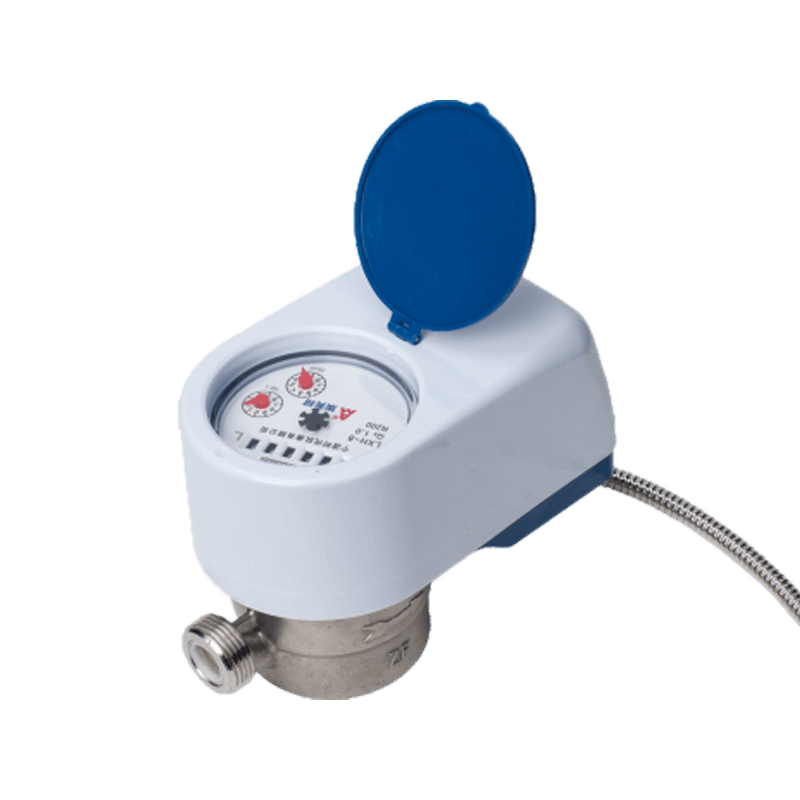
The AMICO Group's product range extends this base technology into fully integrated smart meter platforms — including Bluetooth, NB-IoT, LoRa, and IC card variants — that retain the volumetric measurement principle at their core while adding wireless communication, tamper detection, and remote valve control. This modular approach means you can start with a standard horizontal water meter and upgrade to a networked solution without replacing the measurement core.
About NINGBO SHIDAI INSTRUMENT CO., LTD
NINGBO SHIDAI INSTRUMENT CO., LTD is a subsidiary of AMICO Group. It is a comprehensive high-tech enterprise specializing in the research, development, production, and sales services of AMICO brand IC card water meters, Bluetooth water meters, heat meters, photoelectric direct reading meters, pulse remote transmission meters, LoRa wireless meters, NB wireless meters, WS water meters, WPD water meters, single flow communication water meters, capacitive direct drinking water meters, and intelligent water meter reading systems. With deep expertise in precision flow measurement meter technology and a commitment to innovation, NINGBO SHIDAI INSTRUMENT CO., LTD serves residential, commercial, and industrial customers globally with reliable, accurate, and smart water metering solutions built on decades of engineering experience.
Frequently Asked Questions
Q1: Can a horizontal volumetric water meter be installed vertically?
No. The rotating piston mechanism relies on gravity and balanced hydraulic forces that are only maintained when the meter is installed horizontally with the counter face pointing upward. Vertical installation will cause the piston to apply uneven force on the chamber walls, increasing wear and producing inaccurate readings. Always follow the arrow on the meter body for flow direction and ensure the installation plane is horizontal.
Q2: What does R=400 turndown ratio mean in practical terms?
R=400 means the meter can accurately measure flow rates ranging from its minimum flow (Qmin) to its maximum flow (Qmax), where Qmax is 400 times Qmin. In practical terms, if the maximum rated flow is 4 m³/h, the meter will still register accurately at flows as low as 10 liters/hour. This is particularly valuable for detecting slow leaks, capturing low overnight consumption, and billing fairly in low-demand scenarios.
Q3: How long does the dry counter remain readable?
A properly sealed dry counter — whether copper-sealed or plastic-sealed — maintains fog-free, clear readability throughout the meter's entire operational lifespan, which is typically 10–15 years for a quality unit installed in normal conditions. The magnetic drive coupling between the wet mechanism and the dry counter ensures no water contact with the register housing, eliminating fogging even in high-humidity underground pit installations.
Q4: Is a strainer required upstream of the meter?
While not always mandatory, installing an 80–100 mesh strainer upstream is strongly recommended. Particles in the water supply — sand, pipe scale, rust fragments — can enter the piston chamber and cause premature wear of the piston seals and chamber surface, degrading accuracy and reducing service life. A strainer is a low-cost protection measure that significantly extends the operational reliability of the meter.
Q5: Can this meter type be upgraded with a pulse output or smart communication module?
Yes. The horizontal volumetric water meter is compatible with pulse output add-on modules (reed switch or Hall-effect type) that can be fitted at the time of manufacture or in some cases retrofitted. Pulse output enables integration with data loggers, building management systems, and sub-metering platforms. For full smart metering capability — including NB-IoT, LoRa, or Bluetooth communication — AMICO Group offers dedicated smart meter variants that retain the volumetric measurement core.
Q6: What maintenance does this meter type require?
Under normal operating conditions, a horizontal volumetric water meter requires very minimal maintenance. A periodic visual inspection of the counter display, the external body for signs of corrosion or joint leakage, and the upstream strainer (cleaning as needed) is typically all that is required. There is no need to re-lubricate internal components or adjust the mechanism. The sealed construction and durable copper body are designed for low-maintenance, long-service deployment.