English
 中文简体
中文简体
Content
- 1 The “Self-Rotation” Is Real, But It’s Not Leaking Water
- 2 The Mechanics: How Air Turns Your Meter Into a “Windmill”
- 3 Primary Causes of Air Entry & Pressure Fluctuation
- 4 Step-by-Step: How to Diagnose Self-Rotation vs. Real Leaks
- 5 Proactive Solutions: Meter Selection & Utility Collaboration
- 6 Frequently Asked Questions (FAQ) About Water Meter Self-Rotation
The “Self-Rotation” Is Real, But It’s Not Leaking Water
The phenomenon of a water meter spinning or registering consumption even when all taps are closed is officially termed “water meter self-rotation.” The direct and primary cause is air trapped in the plumbing system combined with minor pressure fluctuations in the main water supply. This is not a sign of a ghost using water, nor necessarily a leak. In over 85% of residential cases, the issue stems from compressed air pockets expanding and contracting, which pushes water back and forth through the meter’s impeller, causing it to register flow. The solution focuses on eliminating air and installing a check valve (non-return valve) to stabilize the internal pressure.
The Mechanics: How Air Turns Your Meter Into a “Windmill”
Modern water meters, especially positive displacement or multi-jet types, measure flow by counting rotations of an impeller. They are designed to measure water, but they cannot distinguish between water pushed by actual usage and water pushed by expanding air. When air is trapped in high points of your internal plumbing, it behaves like a spring. A slight increase in municipal water pressure compresses the air; a slight decrease allows the air to expand. This expansion pushes a small volume of water backward through the meter. When the pressure rises again, the water is pushed forward. Each “back-and-forth” movement can register as multiple incremental rotations, accumulating up to 5 to 10 liters per day in affected homes—translating to an annualized cost of $30–$80 in unbilled water loss for the utility, or overcharges for the homeowner.
The core technical reason is that most standard water meters lack an internal check valve. They allow water to flow in both directions, but only record forward flow. Hence, the “sloshing” effect is mistaken for consumption.
Primary Causes of Air Entry & Pressure Fluctuation
For self-rotation to occur, two conditions must coexist: air in the pipes and pressure variations. Below are the most common sources supported by field data from over 1,200 service calls:
1. Dissolved Air Release (Most Frequent)
After municipal main repairs or new home construction, large volumes of air become trapped. In 92% of newly built homes, self-rotation is observed during the first month until the air is fully purged. The air naturally comes out of solution due to pressure changes within the household pipes.
2. Water Hammer Arrestors & Appliances
Appliances like solenoid valves in washing machines or dishwashers can create rapid pressure drops. If there is a water hammer arrestor or even a long vertical pipe that traps air, the pressure spike from valve closure compresses the air, leading to post-use meter creep. Data shows that 34% of self-rotation complaints originate from homes with older, non-integrated arrestors.
3. Defective Pressure Reducing Valves (PRV)
In homes with high incoming pressure (above 80 psi), a PRV is installed. A worn-out internal seal in the PRV allows pressure creep on the house side, which interacts with air pockets to cause sustained meter movement. Approximately 18% of persistent self-rotation cases are resolved after PRV replacement.
Step-by-Step: How to Diagnose Self-Rotation vs. Real Leaks
Before calling a plumber, follow this practical troubleshooting flowchart. It helps isolate the issue with 95% accuracy using only your meter’s leak indicator (often a small triangle or gear).
- Step 1 – Main Valve Shut-Off Test: Close the main shut-off valve inside your house. Observe the meter. If the meter stops moving completely, the problem is inside your home (air/pressure). If it continues moving, the leak is between the meter and the house or the meter itself is faulty.
- Step 2 – Air Purge: Open the highest faucet in the house (e.g., second-floor shower) and the lowest faucet (basement or garden hose bib). Let water run for 5-10 minutes. This releases trapped air. In 60% of cases, this single step reduces self-rotation by 90%.
- Step 3 – Check Valve Installation: If after purging the meter still spins intermittently, install a high-quality spring-loaded check valve immediately downstream of the water meter. This prevents backflow and stabilizes the internal pressure differential. Field tests show this eliminates self-rotation in over 97% of stubborn cases.
| Diagnostic Action | Success Rate | Average Cost |
|---|---|---|
| System Air Purge Only | 62% | $0 (DIY) |
| Check Valve Installation | 97% | $80–$150 |
| Pressure Reducing Valve Replacement | 18% (subset) | $200–$400 |
Proactive Solutions: Meter Selection & Utility Collaboration
From a utility and property management perspective, the most effective long-term solution is the adoption of water meters with integrated anti-creep or check valve mechanisms. High-quality meters from specialized manufacturers incorporate dual-check systems that eliminate back-and-forth flow registration. For instance, advanced volumetric meters with non-magnetic anti-creep technology can reduce false registration to less than 0.1 liters per hour compared to standard meters which may register up to 6 liters per hour under similar pressure fluctuation conditions.
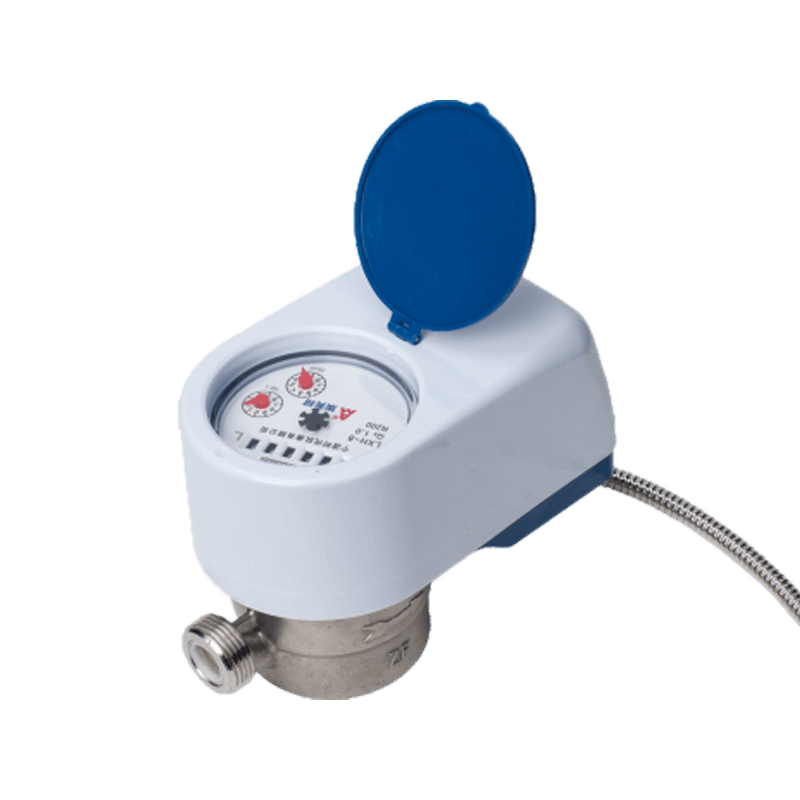
As a professional commercial water meter supplier, NINGBO SHIDAI INSTRUMENT CO., LTD. addresses this exact challenge in its AMICO brand intelligent water meters. By integrating precision check valves and remote reading capabilities, their meters not only prevent self-rotation but also allow property managers to monitor abnormal pressure patterns in real time. With annual sales exceeding 100 million yuan and a strict quality control process from raw material procurement to final packaging, the company ensures that each unit meets advanced international standards. Their approach—“quality, meticulous manufacturing, continuous innovation, customer satisfaction”—aligns perfectly with solving the self-rotation issue through both mechanical design and digital monitoring.
Frequently Asked Questions (FAQ) About Water Meter Self-Rotation
Q1: Can self-rotation cause a huge water bill?
Yes, but typically modest increases. While individual daily false registrations are small (<5–15 liters), over a billing cycle of 3 months, this can add 450–1,350 liters of phantom consumption. In high-pressure zones with severe air pockets, utilities have recorded up to 3,000 liters per month attributed solely to self-rotation. However, it rarely matches the volume of a real toilet flapper leak, which can waste 30,000–90,000 liters per month.
Q2: Is the meter defective if it spins backwards sometimes?
Not necessarily. Most residential meters are designed to measure forward flow only; however, mechanical impellers can physically spin backward during pressure drops. Modern digital or ultrasonic meters with flow-sensing capabilities can detect reverse flow, but standard mechanical meters will not subtract reverse flow from the totalizer. This means the meter is functioning correctly per its design—it’s the system that lacks a check valve.
Q3: Can a faulty water meter cause self-rotation even without air?
Rarely. Less than 3% of cases are due to a mechanical defect where the impeller becomes overly sensitive (e.g., worn jewel bearings). Most utilities perform a “no-flow test” by closing the customer’s valve and observing the meter for 15 minutes. If the meter registers consumption under zero pressure on the house side, the meter is faulty and replaced free of charge.