English
 中文简体
中文简体
Content
- 1 What Is Acoustic Leak Detection and What Does It Actually Measure?
- 2 How Leak Noise Behaves: Pressure, Pipe Material, Soil and Depth
- 3 Inside an Acoustic Leak Detection System: Components and How Correlation Works
- 4 Equipment Classes: Listening, Correlating and Monitoring
- 5 Acoustic leak detection compared with other methods
- 6 Application Scenarios: Where an Acoustic Survey Pays Off Most
- 7 Specification and Selection: What to Compare Before You Buy
- 8 A Repeatable Field Workflow for Acoustic Leak Detection
- 9 Maintenance, Calibration and Data Hygiene
- 10 Working With a Manufacturer, Supplier or Wholesaler
- 11 Frequently Asked Questions About Acoustic Leak Detection
- 11.1 What is acoustic leak detection in simple terms?
- 11.2 How accurate is acoustic leak detection?
- 11.3 Does acoustic leak detection work on plastic pipes?
- 11.4 Why are leak surveys usually carried out at night?
- 11.5 How much water can acoustic leak detection help recover?
- 11.6 What is the difference between a listening survey and correlation?
- 11.7 Can one acoustic leak detection system cover a whole city?
- 11.8 Should utilities buy from a manufacturer, a supplier or a wholesaler?
- 12 Bringing the Two Halves Together
A district meter on a 300 mm cast iron main reads 21 cubic metres per hour at two in the morning, when every known customer on that branch is drawing less than four. The water is leaving the network somewhere along two kilometres of pipe that runs under a road, a car park and a school playing field. Before anyone lifts a valve box or orders a pneumatic breaker, the practical question is much narrower than the water balance report suggests: where exactly is the loss, and how confident can the crew be before they dig? Acoustic leak detection answers that question by converting the noise of escaping water into a distance reading, and on most metallic distribution mains working between three and six bar it can shrink a two kilometre search down to a one metre excavation.
That is the conclusion, and it is worth stating before any of the theory. Acoustic leak detection is usually the fastest and cheapest way to turn a district level water balance discrepancy into a dig ready point, provided the pipe material, the operating pressure and the background noise all sit inside the working envelope of the method. Where they do not, for example along long runs of soft plastic pipe, in zones running below one and a half bar, or directly under an active construction site, acoustic techniques still deliver results, but they need different sensors, different survey hours and often a second confirming technology such as tracer gas or pressure step testing.
The pages that follow explain why acoustic leak detection behaves the way it does, what the hardware actually measures, how to read a specification sheet without being misled by impressive sounding decibel claims, and how the metering side of the same problem supports the acoustic survey that eventually locates the leak. Along the way the discussion covers equipment classes, selection criteria, a repeatable field workflow, maintenance routines and the commercial questions that come up when a utility buys acoustic leak detection equipment from an overseas manufacturer, supplier or wholesaler.
Acoustic leak detection turns the sound of escaping water into a measurable distance, which is why it is normally the first tool a water utility reaches for once a district meter confirms a real loss.
What Is Acoustic Leak Detection and What Does It Actually Measure?
Acoustic leak detection is a passive, non-destructive technique. Rather than sending a signal into the pipe and watching for an echo, it listens to noise that the leak is already producing. Pressurised water forced through a crack, a corroded pinhole, a failed joint gasket or a partially open valve generates a continuous broadband signal. That signal is the raw material of the whole method, and everything from sensor choice to survey timing exists to capture it cleanly and convert it into a position.
The noise itself comes from several mechanisms acting together. Turbulent flow accelerates as it approaches the opening, then cavitates as the pressure drops below vapour pressure at the vena contracta. The resulting jet strikes soil, backfill or the pipe wall and excites vibration. Because none of these processes is periodic in a musical sense, the emitted energy is spread across a wide band rather than concentrated at one tone. In practice, water leak noise on a municipal main typically occupies a band from roughly 100 Hz up to about 8 kHz, with the usable energy concentrated in different places depending on the pipe.
The noise travels by two routes. The structure-borne path runs along the pipe wall and through the water column, which is why a sensor magnetically clamped to a fire hydrant, a sluice valve spindle or a meter body can pick up a leak forty metres away or more. The ground-borne path radiates outward from the pipe into the surrounding soil and reaches the surface, which is what a ground microphone detects when an operator walks a line looking for a hot spot. Structure-borne noise usually travels much further than ground-borne noise, and it is the path that most correlation equipment relies on.
Whatever reaches the sensor is converted into a voltage, filtered, amplified and then either presented to a human ear through headphones or processed mathematically. That single split, human listening versus machine correlation, defines the two main families of acoustic leak detection equipment and explains why they are used in sequence rather than in competition. Listening narrows a large area quickly and cheaply, while correlation delivers the measurement precision that justifies excavation.
One clarification saves a great deal of confusion during procurement. Acoustic leak detection for water networks is not the same as ultrasonic gas leak detection, where escaping gas produces high frequency ultrasound in the 20 kHz to 100 kHz range and the detector measures an increase in ultrasonic energy. Water escaping from a pressurised main produces a lower frequency, broadband signal, and the survey problem is not simply detecting presence but estimating distance. A detector built for gas service will rarely satisfy a water utility, and a water leak correlator has no useful role on a gas riser.
Acoustic leak detection measures noise that the leak already produces, so its accuracy depends entirely on how well the sensor captures that noise and how honestly the surveyor accounts for pipe data.
How Leak Noise Behaves: Pressure, Pipe Material, Soil and Depth
Four variables decide whether an acoustic survey succeeds or produces a frustrating set of false readings: the pressure differential across the leak, the pipe material and diameter, the depth and type of soil cover, and the background noise field. Experienced crews assess all four before they commit a day to a street, because the same equipment that performs brilliantly on a ductile iron main under asphalt can produce almost nothing useful on a buried polyethylene line in wet clay.
Pressure is the strongest single influence. Leak noise intensity rises with the pressure difference across the opening, so a leak in a zone throttled down to 1.5 bar may be audible for only a few metres, while the same defect in an unthrottled zone at 6 bar can be detected from several times that distance. This is why pressure management programmes sometimes make leak detection harder before they make it easier, and why surveys are best scheduled before a zone is permanently throttled, or with temporary pressure restoration in the specific street being examined.
Pipe material determines which frequencies survive the journey. Metals transmit high frequencies efficiently with relatively little loss, so correlation over 200 m to 400 m of sensor spacing is realistic. Plastics behave like a low pass filter and absorb the higher part of the spectrum quickly, which pushes the usable signal down towards a few hundred hertz and shortens the effective spacing considerably. Diameter matters as well, because the stiffness of a thick wall pipe changes the wave speed used in the correlation calculation, and a wall thickness that varies with corrosion makes that value uncertain.
| Pipe material | Dominant leak noise band | Transmission quality | Practical survey note |
|---|---|---|---|
| Ductile iron and cast iron | 500 Hz to 2,500 Hz | Strong along the pipe wall, moderate through soil | Correlators work well with 200 m to 400 m sensor spacing |
| Steel | 600 Hz to 3,000 Hz | Very strong, low attenuation | Watch for pump and machinery noise entering through the same path |
| Copper | 800 Hz to 4,000 Hz | Strong but small diameter limits coupling | Best suited to indoor risers and small diameter distribution |
| Asbestos cement | 300 Hz to 1,500 Hz | Moderate, joints damp the higher frequencies | Access points are limited and fittings are fragile |
| PVC and polyethylene | 100 Hz to 800 Hz | Weak, high frequencies absorbed quickly | Use low frequency sensors, short spacing and hydrophones where possible |
| Concrete and glass reinforced plastic | 200 Hz to 1,000 Hz | Weak and uneven, depends on lining | Prefer hydrophone or in-line sensing with tight sensor spacing |
| Pre-insulated district heating steel | 400 Hz to 2,000 Hz | Strong through the service pipe, damped by insulation | Survey during the heating season when the pipe is under pressure |
Soil conditions add a layer of uncertainty that no specification sheet resolves. Dry sand and gravel transmit ground-borne noise reasonably well, saturated clay attenuates it heavily, and loose backfill around a recently repaired main can create a channel that carries noise along the trench rather than away from the leak, producing a misleading hot spot tens of metres from the defect. Depth matters too. A leak 1.5 m below the surface radiates a signal that reaches a ground microphone at usable strength, while the same leak at 3.5 m under a concrete slab may be effectively invisible from the surface and have to be reached through a contact point instead.
Background noise is the fourth variable and the one most often underestimated. Traffic, refrigeration plant, industrial machinery, pumps, air conditioning units and even rain falling on manhole covers all inject energy into the same frequency bands used by the survey. This is why acoustic leak detection in urban areas is overwhelmingly a night activity, typically between about 23:00 and 04:00, when commercial draw is minimal and road traffic is reduced. Permanent noise loggers take the idea further by recording during quiet windows automatically, which removes the need to keep an operator awake and produces a consistent comparison between nights.
Pressure, material, soil and background noise set the ceiling on what acoustic leak detection can achieve in a given street, so assessing those four factors is more valuable than buying a marginally more sensitive detector.
Inside an Acoustic Leak Detection System: Components and How Correlation Works
A complete acoustic leak detection system is a chain of parts, and the chain is only as strong as its weakest link. A high sensitivity accelerometer connected by a worn cable to a correlator with a stale pipe data library will produce confident looking numbers that send a crew to the wrong address. Understanding each element makes it much easier to judge quotations, because the difference between two offers is rarely the microphone and almost always the processing, the data handling and the support behind them.
Sensors: accelerometers, hydrophones and ground microphones
An accelerometer converts vibration of the pipe wall into a voltage and is the workhorse of contact based surveying. Good units cover a wide band, tolerate the temperature swings found in buried chambers and can be clamped magnetically to a valve spindle or strapped to an uneven surface. A hydrophone goes one step further and listens inside the water column itself, which is invaluable on low pressure plastic mains where the pipe wall carries very little energy. A ground microphone is a different animal entirely: a sensitive surface pickup that the operator places on the road or pavement to listen for the radiated component. It is the tool used for pinpointing rather than area screening.
Correlation: turning a time lag into a distance
Correlation is the part of acoustic leak detection that produces a number a contractor can be held to. Two sensors are attached to accessible points on the same pipe, one on each side of the suspected leak, and both record the noise simultaneously with synchronised clocks. Because the leak is closer to one sensor than the other, its noise arrives at the nearer sensor first, and the difference in arrival time is the time lag. The distance from the reference sensor to the leak equals half of the sensor spacing minus half of the product of wave speed and the measured time lag.
Three input values carry uncertainty. The sensor spacing is usually measured, so it is reliable. The measured time lag is precise to a small fraction of a millisecond on modern equipment. The wave speed is the problem, because it depends on pipe material, diameter, wall thickness, lining and the presence of air pockets, and published tables give ranges rather than exact values. A ten per cent error in wave speed on a 400 m spacing shifts the calculated position by twenty metres. Good practice is to enter measured or corrected wave speeds for the dominant pipe types in the network, and to treat any correlation result near the midpoint of a long span with appropriate caution.
Loggers: unattended listening over many nights
A leak noise logger is a small, self-contained recorder with an accelerometer, a memory, a battery and a clock. Deployed on valves, hydrants and meter chambers across a district metered area, it records the acoustic level during the quietest hours and reports a ranking of the noisiest points. The ranking does not prove that a leak exists, since a loose valve or a vibrating pump can produce a similar signature, but it does tell a utility where to send a two person crew first. Fixed acoustic networks take the concept further and keep the sensors in place permanently, which converts leak detection from a periodic project into a continuous monitoring function.
| Component | Function | Typical field use |
|---|---|---|
| Accelerometer | Converts pipe wall vibration into a voltage signal | Contact points on valves, hydrants and meter bodies |
| Hydrophone | Listens inside the water column | Low pressure plastic mains and submerged access points |
| Ground microphone | Picks up noise radiated to the surface | Pinpointing a leak after a rough location is known |
| Listening stick | Mechanical or electronic contact probe | Quick manual checks on fittings and service lines |
| Two channel correlator | Measures the time lag between two sensors and converts it to distance | Locating leaks between two accessible points |
| Multi channel correlator | Handles several sensor pairs at the same time | Complex networks with few access points |
| Leak noise logger | Records noise levels on a schedule without an operator | Area screening across a district metered area |
| Filter and amplifier stage | Removes pump, traffic and machinery noise | Every survey, especially in dense urban streets |
| Mapping and reporting software | Stores points, history and follow up status | Programmes that repeat surveys over several years |
The weakest link in acoustic leak detection is almost never the sensor; it is the wave speed value and pipe data that the correlation result depends on.
Equipment Classes: Listening, Correlating and Monitoring
Buyers often describe their requirement as simply wanting an acoustic leak detector, when in fact three quite different classes of equipment exist and each solves a different part of the problem. Choosing the wrong class is the most common reason a first purchase disappoints, because a listening stick cannot produce a defensible location for a contractor and a fixed logger network cannot pinpoint a leak inside a building.
Listening sticks and ground microphones
These are the entry point. A listening stick is a rigid rod with a contact tip and either an acoustic chamber or an electronic pickup at the other end, used to compare noise at successive fittings along a main. The operator walks a route, listens at every valve, hydrant and stop tap, and identifies the section where the noise becomes clearly louder. A ground microphone does the same job from the surface, usually in a grid pattern, and a competent operator can locate a leak on a metallic main with a few minutes of careful listening. Both tools depend heavily on operator skill, both are inexpensive, and both remain useful even in organisations that own full correlating sets.
Two channel and multi channel correlators
A two channel correlator is the standard locating instrument for municipal water departments. It links two sensors by radio or cable, displays the correlation function, and presents a peak that corresponds to the time lag. Multi channel versions accept three or more inputs and can solve a leak position across a junction or along a pipe where the nearest accessible points are widely separated. The practical difference between a mid-range and a premium unit shows up in the filtering, the quality of the pipe data library, the speed of the radio link and the clarity of the reporting output, not in the sensor alone.
Leak noise loggers and fixed acoustic networks
Loggers remove the human element from the screening stage. Instead of an operator touring the district, a set of recorders is deployed for a week or two and the software ranks the noisiest locations. Some models add a second parameter, such as a pressure measurement or a simplified correlation between pairs of adjacent loggers, which reduces the number of false alarms raised by vibrating fittings. Permanent acoustic networks go a step further and provide continuous coverage, which suits utilities with chronic non-revenue water problems, large campuses, industrial sites and hospitals that cannot tolerate an unplanned supply interruption.
Combined acoustic, pressure and flow platforms
The most recent direction in acoustic leak detection is integration. A correlator that also reads transient pressure data can show whether a burst occurred during a surge event, and a logger that shares a platform with district flow meters links the acoustic ranking directly to the measured volume loss. For utilities that already run a smart metering or supervisory system, this integration is usually the deciding factor, because it avoids duplicate field visits and keeps all the evidence for a repair decision in one database.
Listening tools, correlators and loggers answer three different questions, so a competent leak detection programme usually owns all three rather than replacing one with another.
Acoustic leak detection compared with other methods
No single technology covers every situation, and the fastest way to justify an acoustic programme is to place it beside the alternatives that a utility might otherwise deploy. Acoustic methods are passive, meaning nothing has to be inserted into the pipeline and no gas has to be handled, which keeps the work outside confined space regulations in most cases. They also produce a measurement rather than a suspicion, which is what a repair contractor needs before mobilising. The trade-off is sensitivity to background noise and a real dependence on pipe material. Modern equipment has narrowed that gap with better filtering and lower frequency sensors, but the physical limits have not disappeared. The question is therefore not whether acoustic leak detection is better in the abstract, but where its working envelope ends and another method has to take over.
The pattern in the chart is consistent with what most water utilities observe in practice. Correlation sits at the top because it combines high sensitivity with a location output that can be trusted to within roughly a metre on a well documented metallic main. Fixed logger networks score nearly as highly because they capture the quietest hours of every night rather than the single night an operator happens to be on shift, which matters enormously when a leak is intermittent or when a zone is noisy for most of the day. Ground microphone surveying remains the most versatile single tool, since it needs no access points at all, but its score reflects the fact that a human ear and a surface pickup are more affected by traffic, weather and soil conditions than a pair of clamped sensors.
Tracer gas lands in the middle. It is extremely reliable on short lengths of non-metallic pipe where acoustic energy is weak, and it works at very low pressure where noise generation is minimal, but it is slow, it needs gas handling procedures, and it does not scale to a whole district. Pressure step testing, where sections are isolated and pressure decay is compared, is a legitimate technique for networks with well maintained valves, yet it demands significant field time and interrupts supply, so it is normally reserved for validating a suspicion rather than finding one. Camera inspection is excellent for gravity sewers and large diameter mains where infiltration can be seen directly, but it cannot see a pinhole in a pressurised small main, and it says nothing about loss volumes.
The important conclusion is not that one method beats the others, but that the ranking changes with conditions. On a 400 m run of ductile iron at five bar, correlation is close to definitive. On the same length of polyethylene at 1.5 bar, correlation may struggle to show a clean peak, loggers may report a weak and ambiguous noise floor, and tracer gas becomes the sensible next step. A utility that plans only for the easy case will be disappointed on a predictable proportion of its network, which is why the purchasing decision should cover at least two complementary techniques.
| Method | Principle | Best fit | Main limits |
|---|---|---|---|
| Acoustic listening | Operator hears leak noise through a contact probe or ground microphone | Rapid screening and confirming a suspected point | Depends on operator skill and background noise |
| Acoustic correlation | Two or more sensors, time lag converted into distance | Metallic mains and district heating, 100 m to 400 m spacing | Needs two access points and reliable pipe data |
| Leak noise logging | Unattended noise recording during quiet hours | District level screening before crews are dispatched | Cannot locate precisely on its own, false alarms possible |
| Tracer gas | Inert gas escapes and is detected at the surface | Non-metallic pipe, short lengths, low pressure zones | Slow, requires gas handling and surface access |
| Pressure step testing | Isolating sections and comparing pressure decay | Networks with sound valves and good access | Time consuming and interrupts supply |
| Camera inspection | Visual inspection from inside the pipe | Sewers and large diameter gravity mains | Cannot see pressurised small main leaks |
| Metering and water balance | Bulk and district metering to quantify loss | Prioritising which zones deserve a survey | Locates an area, never a point |
Acoustic correlation leads on metallic mains, but the ranking shifts on low pressure plastic pipe, so a mature programme budgets for two complementary detection methods.
Application Scenarios: Where an Acoustic Survey Pays Off Most
Acoustic leak detection performs best where access points are plentiful, pressure is reasonable and the cost of an unnecessary excavation is high. That combination describes far more of the average water network than many operators expect, and the following situations account for the majority of successful programmes.
- District metered areas with a confirmed night flow excess. The water balance tells you the zone, the acoustic survey tells you the street, and correlation tells you the metre.
- Transmission and trunk mains where a single repair costs far more than the survey. Even a modest reduction in search area translates directly into reduced reinstatement cost and shorter supply interruption.
- City centres and historic districts where permits are slow and pavement reinstatement is expensive. Here a survey that saves a single unnecessary trench usually pays for the equipment.
- Industrial plants and campuses with long private networks and no public record of pipe routes. Correlation combined with contact listening often locates the leak before drawings are even found.
- District heating networks, where the same acoustic principles apply to pressurised hot water and where a leak detected early avoids excavation of insulated ducts.
- Hospitals, airports, universities and data centres that cannot accept an unplanned interruption and therefore prefer planned, evidence based repairs.
- Irrigation and agricultural supply lines, where long plastic runs benefit from low frequency sensors and hydrophone access at pump stations.
In all of these settings, the acoustic survey only works because something upstream quantified the loss first. A survey crew dispatched to a zone with no metering data has no way to judge whether the reported noise is a genuine leak or the hum of a pump. That is why a metering programme and an acoustic programme should be planned together, and it is also why the choice of bulk and district metering hardware influences how well acoustic leak detection can be targeted.
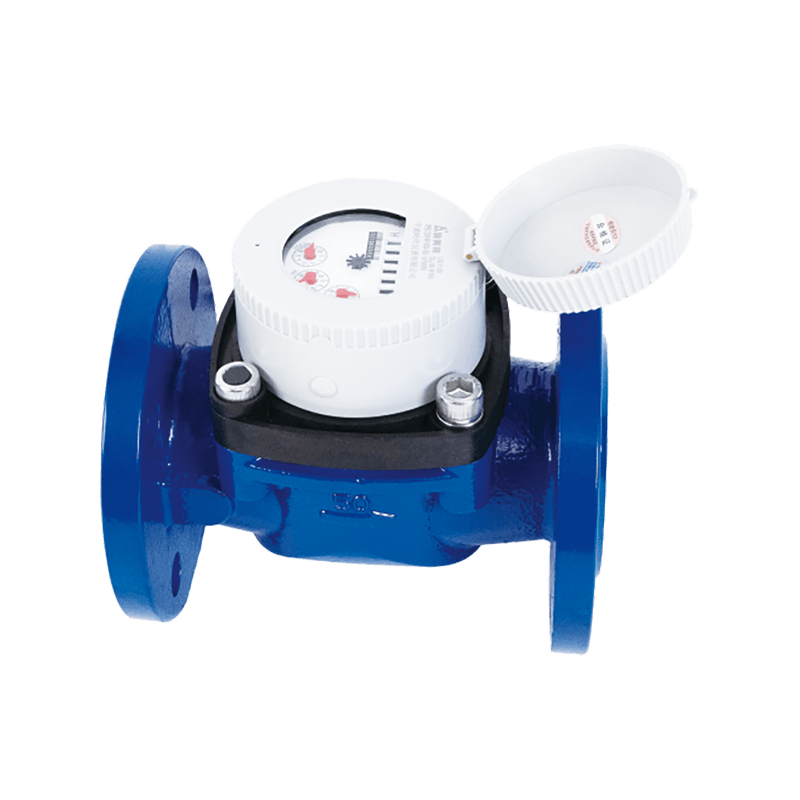 WPD Horizontal Screw-Wing Water MeterThe optional passive direct-reading counter is a photoelectric direct-reading meter. The optional pulse output counter is a pulse sending table. The optional wireless ...View Product →
Large diameter distribution and trunk mains are the classic case. A Woltman type detachable meter installed at a district boundary or a trunk main outlet provides the continuous flow record that shows when a zone starts losing water and how large the loss has become. Once that trend line is established, the acoustic survey has a defined target, a start date and a measurable outcome after the repair. The same logic applies at building level, where a meter on the incoming service separates genuine consumption from a loss on the private side, which is often where domestic leaks hide.
Acoustic leak detection works best when bulk and district metering has already told the crew which zone is losing water and roughly how much is disappearing.
Specification and Selection: What to Compare Before You Buy
Specification sheets for acoustic leak detection equipment tend to emphasise the same handful of headline numbers, and the numbers that matter most are frequently the ones printed in the smallest type. Comparing four or five offers on a common set of criteria takes an afternoon and regularly saves a utility from a purchase it would have regretted for a decade.
Frequency response and low flow sensitivity
The lower limit of the sensor matters more than the marketing suggests. A sensor that responds from 100 Hz will find leaks on polyethylene and PVC that a 500 Hz unit simply cannot hear, and networks in many regions are now dominated by plastic pipe. Ask for a frequency response curve rather than a single sensitivity figure, and ask how the equipment behaves when the leak signal is only a little above the noise floor.
Correlation resolution and pipe data
Sampling rate and time lag resolution determine how finely the distance can be calculated. Equally important is whether the pipe data library can be edited. Fixed lookup tables based on generic material values produce systematic errors on lined, encrusted or unusually thick walled mains, and there is no substitute for a library that the utility can tune with its own measurements.
Filtering, timing and practical field use
Adjustable band pass filtering, notch filters and automatic spectrum selection separate competent instruments from frustrating ones. Survey timing features matter too: the ability to schedule logger recordings into the quietest hours, and to correlate the results from several nights rather than trusting a single sample, reduces the false positive rate substantially. Finally, consider ergonomics and weather protection. A correlator that is awkward to carry, slow to pair or vulnerable to water ingress in a valve chamber will spend more time in the workshop than in the street.
| Criterion | What to check | Typical practical target |
|---|---|---|
| Sensor frequency range | Lower limit of the accelerometer or hydrophone | Response from about 100 Hz for plastic pipe work |
| Correlator resolution | Sampling rate and time lag resolution | Enough to resolve one metre or better on short spacing |
| Pipe data library | Stored wave speeds by material and diameter | Editable values rather than a fixed lookup table |
| Filtering | Adjustable band pass and notch functions | At least three selectable bands and a pump notch |
| Multi point capability | Number of simultaneous loggers supported | Six to twelve for a typical district metered area |
| Battery autonomy | Logger life at the chosen sampling rate | Several months at a normal survey cycle |
| Data export | Open formats and coordinate handling | Comma separated output with clear time stamps |
| Environmental rating | Ingress protection and temperature range | Suited to buried chambers and wet valve boxes |
| Support and training | Access to application advice and spare parts | Local response within a reasonable working week |
A final specification point that rarely appears on a datasheet is the quality of the training that comes with the equipment. Acoustic leak detection is a skill based discipline, and a crew that understands how filtering, wave speed and access point selection interact will outperform a crew with better hardware and no method. When comparing suppliers, ask how many days of practical training are included, whether the training uses the buyer's own network, and whether follow up support is available in the first year when the first genuinely difficult correlation appears.
Low frequency sensor response, an editable pipe data library and real training are worth more than a higher headline sensitivity figure on a specification sheet.
A Repeatable Field Workflow for Acoustic Leak Detection
Consistency is what turns an occasional successful survey into a programme with an auditable success rate. The sequence below is used by many municipal teams and can be scaled from a single street to a whole district metered area.
- Review the water balance and the night flow record for the zone, and rank the zones by the volume of water that cannot be accounted for.
- Collect pipe records for the target zone: material, diameter, depth, route, valve positions and any recent repairs. Mark the access points that can be opened safely.
- Deploy leak noise loggers across the zone for several nights, or begin a manual contact survey if the area is small enough to cover in one shift.
- Rank the noisy points and dispatch a crew to the highest ranked locations, starting with the points where a leak is most likely given pipe age and history.
- Perform a listening survey at valves, hydrants and meter chambers, moving along the main until the noise clearly increases in one direction.
- Select two accessible points that bracket the suspected leak and run a correlation, entering the correct material, diameter, spacing and wave speed.
- Repeat the correlation with a different band pass setting or a reversed sensor arrangement and confirm that the peak appears at the same distance.
- Pinpoint from the surface with a ground microphone along the calculated position, and mark the most likely excavation point.
- Record the result with coordinates, the correlation report, the pipe data used and the confidence level, then pass it to the repair team.
- Re-survey the zone after the repair, both to confirm the loss has stopped and to update the acoustic and flow baseline for the next cycle.
Step eight deserves more attention than it usually receives. Correlation narrows the position along the pipe axis, but it says nothing about whether the leak is directly under the pipe or has travelled along the trench. Pinpointing from the surface, and where possible confirming with a second technique, is what prevents a crew from excavating the right chainage at the wrong offset. Where the pipe is plastic or deeply buried, the confirmation may need to come from a hydrophone measurement or from tracer gas rather than a surface microphone.
The workflow also connects directly to the metering infrastructure, because step one and step ten both depend on reliable flow data. Utilities that already operate a smart metering network can often automate the first step entirely, with the system flagging zones whose night flow has drifted above a threshold.
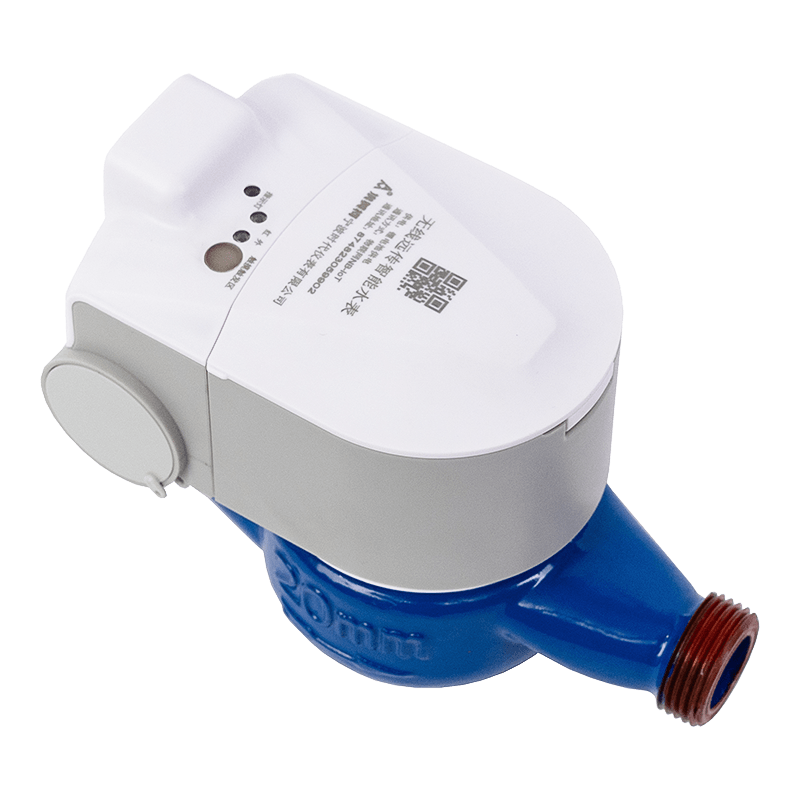 NB IOT Wireless Water MeterMade of high-quality materials, copper shell, iron shell or stainless steel body shell is optional. Available with or without valve. Available with cold or hot water. ...View Product →
A wireless meter that reports on a narrowband IoT network supports this kind of workflow without sending anyone to read a dial. Night flow anomalies appear in the platform as a trend rather than as an annual surprise, and the acoustic crew can be dispatched to a zone that has already been narrowed down by data. For further detail on how these systems are structured, the site's overview of smart water meter solutions explains how metering, communication and management layers fit together.
A correlation result should always be confirmed by a second measurement and by surface pinpointing before an excavation is ordered.
Maintenance, Calibration and Data Hygiene
Acoustic equipment is rugged but not maintenance free, and the failure mode is quiet rather than dramatic. A sensor with a partly broken cable does not stop working; it produces a weaker signal and a correlation peak that looks plausible but is subtly wrong. Because the operator has no way of noticing this in the field, routine checks are the only reliable defence.
| Item | Suggested interval | Action |
|---|---|---|
| Sensors and cables | Before every survey | Inspect connectors and test against a known noise source |
| Batteries and charging | Monthly or per deployment | Replace or recharge and record remaining capacity |
| Calibration check | Annually | Verify against a reference vibration source |
| Firmware and software | Twice a year | Update and re-check the pipe data library afterwards |
| Pipe data library | Annually | Re-measure wave speed or correct for network changes |
| Deployment records | Every survey | Confirm logger identity, position, depth and access notes |
| Correlation reports | Every survey | Archive with time stamps for later trend comparison |
| Operator skills | Annually | Refresher on filtering, wave speed and false positive rejection |
Data hygiene deserves the same discipline as hardware. Every correlation should be stored with the pipe data that produced it, because six months later the only way to understand why a repair landed eleven metres from the predicted point is to see what wave speed was entered. Equally, loggers should be recorded with their exact position and depth, since a logger that has been moved between deployments produces a time series that cannot be compared with the previous one. Teams that keep this discipline build a local calibration curve for wave speed over several years, and their correlation accuracy improves without any change of equipment.
Operator skill is the other maintenance item that is easy to overlook. Filtering decisions, the choice of correlation bandwidth and the judgement about whether a peak is a leak or a reflection are learned behaviours. A single day of refresher training each year, using recordings from the utility's own network, keeps those skills sharp and reduces the number of dry excavations.
Acoustic leak detection degrades quietly, so scheduled sensor checks, calibration and archived correlation reports protect accuracy more than any upgrade.
Working With a Manufacturer, Supplier or Wholesaler
Once the technical case is settled, the commercial questions begin, and they are different depending on who is buying and where the equipment will be used. A municipal utility procuring a fleet of correlators has different priorities from a contractor that needs one rugged kit and fast access to spares, and both differ from a distributor looking for a wholesale relationship with an overseas manufacturer that can supply consistent product over several years.
For a first purchase, ask for a demonstration on the buyer's own network rather than on a test rig. A supplier confident in the product will agree, and the exercise reveals more about filtering behaviour and ease of use in ten minutes than a specification sheet will in an hour. Ask also how the equipment integrates with existing metering platforms, because a leak detection programme that cannot share data with the billing or supervisory system creates duplicate records and duplicate field visits.
Spare parts and consumables are the classic hidden cost. Accelerometers, cables, magnetic clamps, headphones and batteries all wear out, and an overseas supplier that cannot ship replacements quickly leaves equipment idle. Confirm lead times, confirm whether common items such as cables and clamps are standard parts, and confirm the warranty terms for sensors specifically, since these are the components most likely to be damaged in the field.
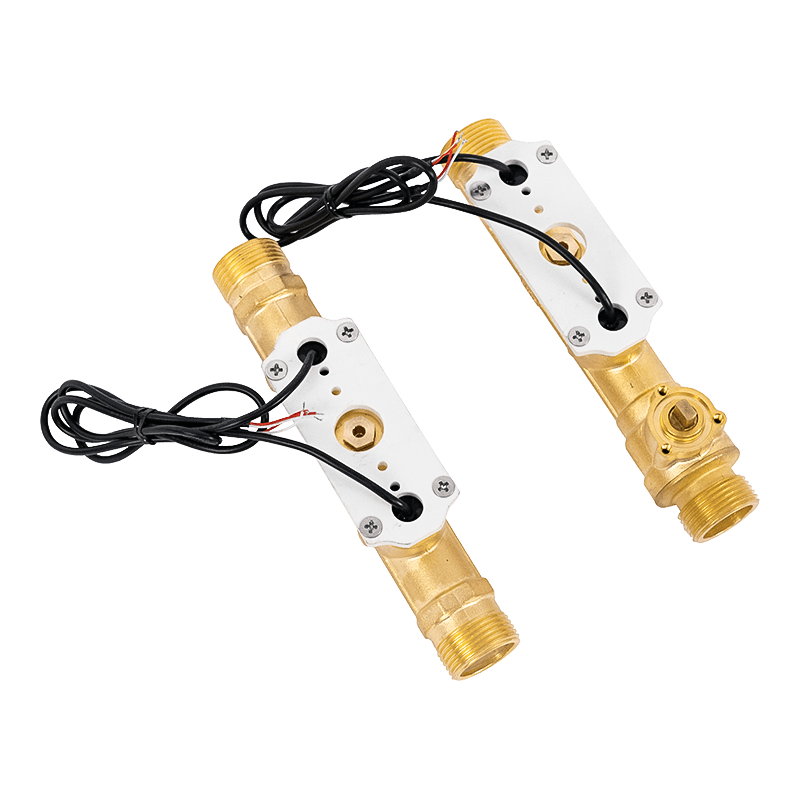 Ultrasonic Water MeterThe body material of DN15-DN40 is high-quality brass, and the iron shell material of DN50-DN300 is cast iron. High protection level and strong anti-interference abilit...View Product →
There is also a technical argument for buying leak detection capability alongside accurate metering hardware from the same channel. A solid state ultrasonic water meter with no moving parts in the flow path maintains its accuracy over long service intervals and provides a stable, high resolution flow signal, which makes the small night flow changes caused by a developing leak far easier to see. When the metering and the acoustic survey are planned as one system, the utility gets a coherent picture: the meter shows that water is being lost, the acoustic survey shows where, and the repair record closes the loop.
For buyers comparing international suppliers, three questions separate a long term partner from a one off trader. Can the supplier provide documentation and certificates that satisfy the local authority? Can they support the product with training and after sales service rather than only shipping boxes? And can they supply the wider range of meters, fittings and accessories that a water utility will need in the following years, so that the utility is not running five incompatible systems by the end of the decade?
Buyers should judge a supplier on demonstration performance, spare part lead times and long term range coverage, not on the headline price of the first kit.
Frequently Asked Questions About Acoustic Leak Detection
What is acoustic leak detection in simple terms?
Acoustic leak detection is the practice of finding leaks in pressurised pipes by listening to the noise the escaping water produces. Sensors convert that vibration into a signal, and a correlator compares the arrival time of the noise at two points to calculate how far along the pipe the leak is. Nothing has to be inserted into the pipeline, and no water has to be drained.
How accurate is acoustic leak detection?
On a well documented metallic main with an accurate wave speed value, correlation typically locates a leak within about one metre along the pipe axis. On plastic pipe, or where the wave speed is uncertain, the error can grow to several metres or more. Correlation gives the position along the pipe, not across it, so surface pinpointing is still needed before excavation.
Does acoustic leak detection work on plastic pipes?
It works, but with constraints. Plastic absorbs high frequencies quickly, so the usable signal sits at lower frequencies and travels a shorter distance. The practical response is to use sensors with response down to about 100 Hz, shorten the spacing between sensors, use hydrophones where an access point allows it, and accept that a second method such as tracer gas may be needed for confirmation.
Why are leak surveys usually carried out at night?
Because background noise from traffic, industry, refrigeration and commercial draw masks the leak signal. Between roughly 23:00 and 04:00 the acoustic floor drops substantially, which improves both audibility and the correlation peak. Where night work is impractical, permanent loggers can record automatically during those hours and the crew can analyse the results during the day.
How much water can acoustic leak detection help recover?
The method itself recovers nothing; it shortens the time between a leak starting and being repaired. Utilities with active programmes typically report that the combination of district metering, acoustic surveying and prompt repair reduces non-revenue water substantially over several years. The size of the gain depends on pressure management, network condition and how quickly repairs are completed once a leak is located.
What is the difference between a listening survey and correlation?
A listening survey uses a contact probe or ground microphone and the operator's ear to find the loudest point, which is fast and inexpensive but depends on skill. Correlation uses two synchronised sensors and mathematics to calculate a distance, which is slower to set up but produces a defensible number. Most programmes use listening to screen and correlation to confirm.
Can one acoustic leak detection system cover a whole city?
Not on its own. A practical programme combines area screening with loggers, targeted correlation with a portable correlator, and in some cases a permanent acoustic network in the most difficult zones. The equipment mix should follow the network, not the other way round, and the metering layer that identifies which zones are losing water is just as important as the acoustic hardware.
Should utilities buy from a manufacturer, a supplier or a wholesaler?
Each route suits a different buyer. A manufacturer is normally the best choice for long term range consistency, training and technical support. A regional supplier offers faster response and local service. A wholesaler suits contractors that need several brands and quick delivery. The deciding factors are demonstration quality, spare part availability and whether the partner can support the product over its full service life.
Acoustic leak detection answers where the leak is, while metering answers whether there is a leak at all, and a programme needs both answers to be credible.
Bringing the Two Halves Together
Acoustic leak detection is a mature technique with well understood physics, a clear working envelope and a measurable output. It performs best when the pressure is adequate, when the pipe material suits the sensor, when the survey happens during quiet hours and when the pipe data used in the correlation calculation is accurate. Under those conditions it converts an unexplained night flow into a dig ready location, often within a single shift. Outside those conditions it still contributes, but it needs low frequency sensing, tighter spacing and a confirming method such as tracer gas.
The other half of the picture is measurement. A leak detection programme cannot start without a credible water balance, and a water balance depends on bulk meters, district meters and, increasingly, on smart meters that report consumption and night flow automatically. Utilities that treat metering and acoustic surveying as two separate purchases often end up with accurate flow data that nobody acts on, or with acoustic reports that nobody can prioritise. Utilities that plan them together get a closed loop: the meter shows the loss, the acoustic survey locates it, the repair closes it, and the meter confirms the improvement.
Related resources from this site
The technical notes and product pages published here cover the metering side of water loss management in more depth, including the communication layers that carry consumption and night flow data from the meter to the platform.
Acoustic leak detection locates the loss, metering proves it exists, and pairing the two is what turns a survey into a permanent reduction in non-revenue water.