English
 中文简体
中文简体
Content
- 1 What Is a Flow Meter?
- 2 How Does a Flow Meter Work?
- 3 Main Types of Flow Meters
- 4 Flow Meter Comparison: Accuracy, Rangeability, and Cost
- 5 Flow Meter vs Water Meter: Is There a Difference?
- 6 How to Select a Flow Meter: Practical Criteria
- 7 Flow Meter Applications Across Industries
- 8 Installation and Maintenance Guidelines
- 9 Smart Flow Meters and Remote Metering
- 10 Flow Meter FAQs
- 10.1 What is a flow meter used for?
- 10.2 What is the difference between a flow meter and a water meter?
- 10.3 Which type of flow meter is the most accurate?
- 10.4 What does turndown or rangeability mean?
- 10.5 How do I know which flow meter to buy?
- 10.6 Do flow meters need regular calibration?
- 10.7 Can a flow meter handle dirty water or wastewater?
- 10.8 How long does a flow meter last?
- 11 Related Reading and Resources
A facility manager in a beverage plant opens a monthly utility report and notices that water consumption has climbed by 12 percent even though production volume has not changed. An engineer sizing a pump for a new residential tower needs a confirmed peak flow figure instead of a rule-of-thumb estimate. A property team wants to know which units are actually consuming water before the next billing cycle. All three situations have the same starting point: a flow meter. A flow meter is an instrument that measures how much liquid or gas moves through a pipe, duct, or open channel, usually expressed as a volumetric flow rate in cubic meters per hour, liters per minute, or gallons per minute, or as a mass flow rate in kilograms per hour.
The instrument gives you a number, but the value of that number goes far beyond the display. Flow rate tells operators whether a pump is working within its design range. Totalized volume tells accountants what to invoice and what to allocate to each cost center. Consumption trends tell engineers where a network loses water and where components are beginning to fail. In short, a flow meter turns an invisible, continuously varying movement of fluid into data that supports control, billing, and planning.
Because the term flow meter covers many technologies based on completely different physical principles, buyers often struggle with the first step: understanding what is actually being measured and which instrument fits the job. This guide introduces the working principles, the main types, the key specifications, selection criteria, installation practice, and common questions, so that you can talk to a flow meter manufacturer, supplier, or wholesaler with clear requirements. The goal is to give you enough technical confidence to compare product offers and avoid the costly mistake of buying a meter that cannot handle your real flow profile.
What Is a Flow Meter?
A flow meter is a precision instrument that measures the rate at which a fluid passes through a fixed cross-section, and it usually also records the total volume that passes over time. The reading is either an instantaneous flow rate, which answers the question "how fast is the fluid moving," or a totalized value, which answers "how much fluid has passed since the counter was reset." Most meters can show both at the same time. A mechanical counter displays the totalized volume, while the flow rate is derived from the speed of the internal measuring element over a short interval. An electronic meter calculates these values digitally and can refresh the rate reading several times per second, which makes it responsive to fast changes in demand.
The unit of measurement depends on the application. Volume-based meters express the result in cubic meters, liters, or gallons, while mass-based meters use kilograms or pounds. In water utilities, the cubic meter is the standard billing unit, and one cubic meter equals 1,000 liters. To put this in perspective, a typical domestic shower uses roughly 10 to 15 liters per minute, which is 600 to 900 liters per hour. A residential water meter with a nominal size of 15 or 20 mm is typically rated for flows between 0.03 and 3.5 cubic meters per hour, while a bulk Woltman meter on a distribution main can handle hundreds of cubic meters per hour.
A modern flow meter is much more than a mechanical dial. Electronic versions provide pulse outputs that data loggers can count, analog outputs such as 4 to 20 mA for process control, and digital interfaces such as Modbus, M-Bus, NB-IoT, LoRa, or Cat-1 for remote reading. Even a simple mechanical water meter can be upgraded with a pulse output or a smart electronic head, which is why utilities increasingly keep the proven metering body and simply replace the reading module. This modular philosophy is at the heart of the transition from manual reading to smart metering infrastructure.
Understanding what a flow meter is also means understanding what it is not. A flow meter does not control pressure, and it does not regulate pumps by itself unless it is connected to a controller. It measures. The quality of that measurement decides the quality of every downstream decision, whether it is an invoice sent to a household, a chemical dosage set by a process engineer, or a leakage alert raised by a network monitoring platform. A correct measurement is invisible because everything simply works; an incorrect measurement creates disputes, waste, and hidden losses.
How Does a Flow Meter Work?
Although flow meters look different on the outside, their core structure is similar. Every flow meter has a sensing element that interacts with the moving fluid and a converter or transmitter that translates that interaction into a readable output, such as a local display, a pulse signal, an analog current, or a digital protocol. The physical principle used by the sensing element is what separates one type of flow meter from another, and it also determines the strengths and limitations of each design.
The two broad approaches in flow measurement are inferential measurement and direct displacement measurement. An inferential meter derives the flow rate from a quantity that changes with fluid velocity, such as the rotational speed of a turbine, the pressure difference across an obstruction, or the transit time of an ultrasonic signal. A positive displacement meter, in contrast, isolates successive volumes of fluid inside a measuring chamber and counts each one; the number of chamber fillings in a given period directly represents the flow. Because the chamber volume is fixed and known, positive displacement meters are naturally accurate and extremely repeatable at low flow rates.
Key Terms You Will Meet in Technical Documents
- Flow rate: the volume or mass of fluid passing a point per unit of time, usually shown as the live reading on the meter.
- Totalized flow: the accumulated volume over a period, used for billing, inventory, and consumption analysis.
- Accuracy: how close the measured value is to the true value, usually expressed as a percentage of reading or percentage of full scale.
- Repeatability: how consistently the meter gives the same reading under identical conditions; it is often more important than absolute accuracy.
- Rangeability (turndown): the ratio between the maximum and minimum flow rates over which the meter maintains its specified accuracy.
Understanding these terms is essential when you compare data sheets from different suppliers. A meter with excellent accuracy but poor repeatability will not give stable readings, and a meter with a narrow turndown will lose accuracy whenever the actual flow drops below its designed minimum. Accuracy also requires a reference: every flow meter is calibrated against a known standard before delivery, and the calibration certificate tells you what conditions the meter was verified under. If the application conditions change, the effective accuracy in the field can be very different from the laboratory value.
The measuring element is only half of the story. The converter must also handle the signal correctly, compensate for temperature and pressure effects if necessary, and store data reliably. Electronic flow meters use a microprocessor to linearize the sensor output across the full flow range, apply diagnostic algorithms, and keep a log of events that may affect the reading. This processing power is one reason why smart flow meters can alert operators about empty pipes, reverse flow, magnetic tampering, and abnormal consumption patterns in near real time.
Main Types of Flow Meters
Flow meter technology can be grouped by the physical principle used, and each group has its own cost structure, accuracy level, maintenance requirement, and suitable fluid range. This section covers the types most commonly seen in water supply, building services, and general industrial measurement.
Mechanical Flow Meters
Mechanical flow meters rely on moving parts that rotate, oscillate, or reciprocate in response to the flow. Positive displacement meters, also called volumetric meters, trap a fixed volume of liquid in a measuring chamber and count how many times the chamber fills and empties. Piston, gear, and nutating disc elements turn this into a rotational movement that drives a counter. Because the chamber size is mechanically fixed, these meters give excellent accuracy at low and variable flows, which is why they dominate drinking water metering wherever fair billing is required. Their main weakness is the presence of moving parts: the meter must be protected from sand and suspended particles, and the measuring chamber can wear over time if the water is aggressive.
Velocity-based mechanical meters, such as turbine meters and single-jet or multi-jet water meters, allow the flow to drive a rotor whose rotational speed is proportional to the flow velocity. They are compact, economical, and widely used in residential and commercial service. Multi-jet meters distribute the flow through several ports to reduce turbulence and improve low-flow performance; single-jet meters are simpler in construction and often smaller for a given capacity. Woltman meters, including horizontal screw-type and vertical vane designs, handle large pipe diameters and high flow volumes, making them standard for mains and bulk water metering in municipal networks.
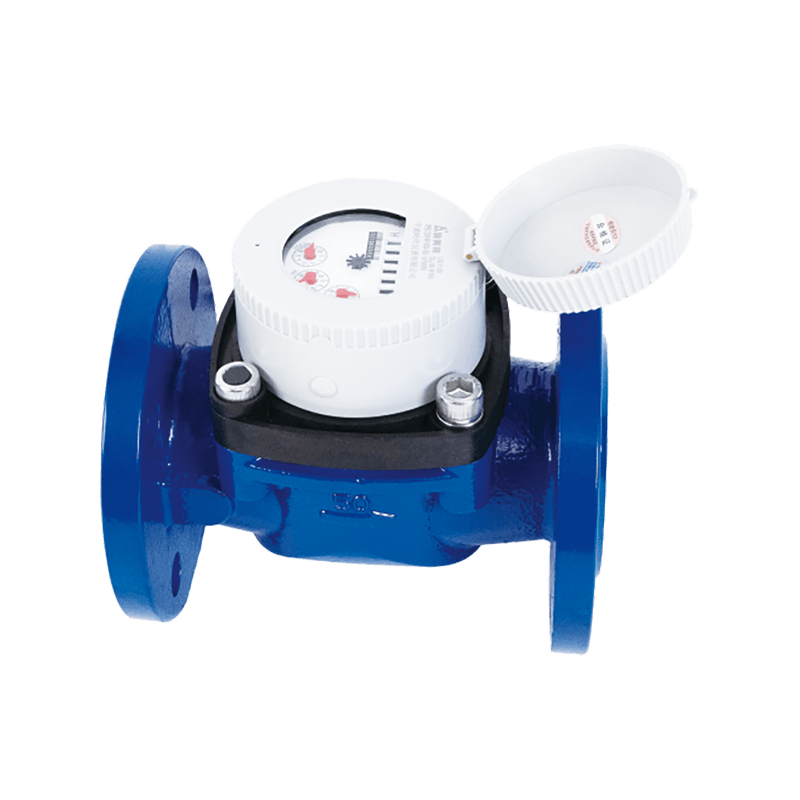 WPD Horizontal Screw-Wing Water Meter with Sealed RegisterThis mechanical meter suits large-flow and low-fluctuation pipelines like mains and secondary supply. Its vacuum-sealed counter, detachable movement, and stainless steel filter support low maintenance and durable accuracy.View Product →
Electromagnetic Flow Meters
An electromagnetic flow meter, usually called a magmeter, generates a magnetic field across the pipe and measures the small voltage created as a conductive liquid moves through it, following Faraday's law of induction. Because the voltage is directly proportional to the fluid velocity, the meter can be calibrated over a wide flow range. The most attractive feature is the absence of moving parts and flow obstructions: the liquid passes through a completely open bore, the pressure loss is negligible, and there is nothing to clog or wear. This makes magmeters the preferred choice for raw wastewater, sludge, and other liquids that would destroy a mechanical meter. The main constraint is that the fluid must be electrically conductive, which excludes oils, most hydrocarbons, and gases but includes water and almost all aqueous solutions.
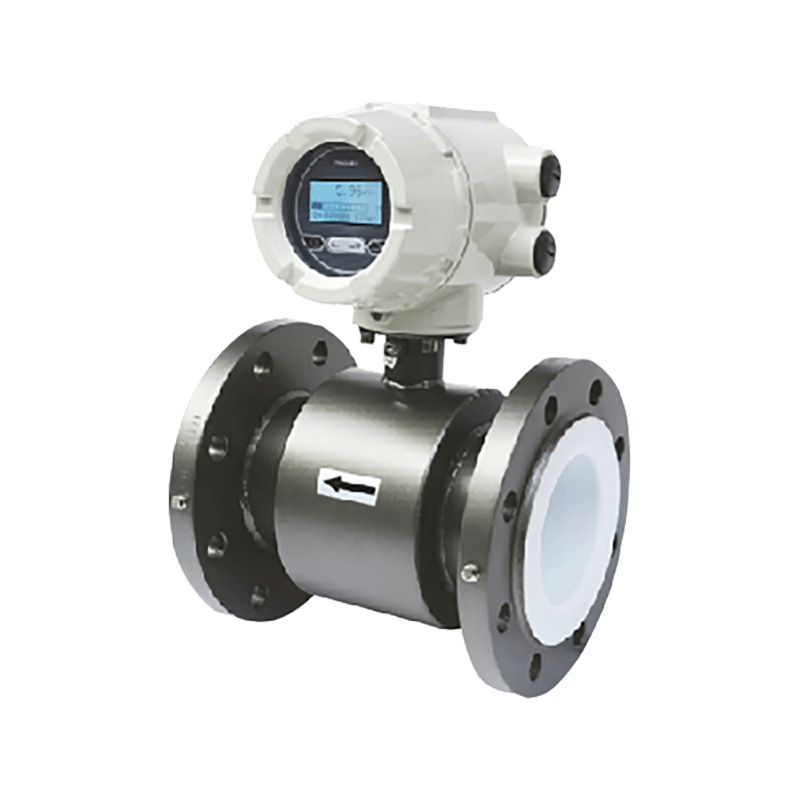 Bidirectional Electromagnetic Water Meter with IP68 EnclosureIdeal for conductive liquids without moving parts or pressure loss, this meter provides high-precision bidirectional measurement, self-diagnosis, and long battery life, making it a strong choice for DMA and network monitoring.View Product →
Ultrasonic Flow Meters
Ultrasonic flow meters use high-frequency sound waves to determine the velocity of the fluid. Transit-time meters compare the time taken by a signal traveling with the flow against the time taken by a signal traveling against the flow; the small difference is proportional to the average flow velocity. Doppler meters, by contrast, look at the frequency shift caused by particles or bubbles in the liquid. Transit-time ultrasonic meters are extremely popular in clean water applications because they have no moving parts, cause no pressure loss, and offer a wide turndown with very stable measurement. They are also well suited to retrofits, because clamp-on transducers can be mounted on the outside of an existing pipe without cutting it open. Inline ultrasonic meters integrate the transducers into the meter body and achieve the same accuracy as mechanical meters with much lower long-term maintenance.
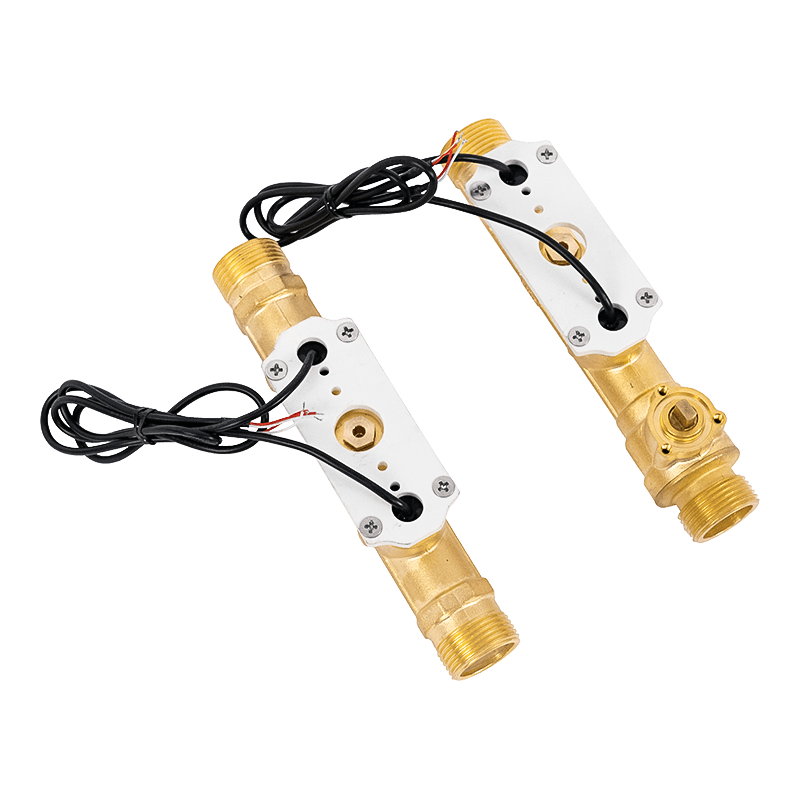 Ultrasonic Water Meter with Non-Contact Time-Difference MeasurementWith no internal moving parts and a very low starting flow, this meter delivers stable, maintenance-free performance. Its non-contact principle is unaffected by sand or bubbles and works without requiring water conductivity.View Product →
Differential Pressure Flow Meters
Differential pressure flow meters create a restriction in the pipe, such as an orifice plate, a nozzle, or a venturi tube, and measure the pressure drop across that restriction. The flow rate is then calculated from the pressure difference using a relationship derived from Bernoulli's equation. This is one of the oldest and best documented flow measurement methods, and it works with liquids, gases, and steam. The trade-offs are a permanent pressure loss, relatively narrow turndown of about 3:1 to 10:1 depending on the design, and the need to install impulse lines and transmitters, which adds complexity. Differential pressure remains the standard in many process industries because of its versatility, but it is rarely the first choice for clean water billing applications.
Variable Area and Vortex Flow Meters
Variable area meters, often called rotameters, use a float inside a tapered vertical tube. The fluid pushes the float upward until the annular area between the float and the tube is large enough for the drag force to balance the weight of the float. The float position then indicates the flow rate. Rotameters are simple, inexpensive, and useful for purges and small process lines, but they must be mounted vertically and are read manually. Vortex flow meters place a bluff body inside the pipe; the flow sheds alternating vortices behind it, and the shedding frequency is proportional to the flow velocity. Vortex meters handle liquids, gases, and steam with no moving parts, but their low-flow performance is limited, so they are best applied in mid-range industrial flows rather than in residential metering.
Flow Meter Comparison: Accuracy, Rangeability, and Cost
Rangeability, or turndown, is the ratio between the maximum and minimum flow that a meter can keep within its stated accuracy. A meter that cannot handle low flows will under-register during off-peak hours, which is a direct revenue loss in billing service. A meter with a wide turndown maintains good accuracy across the whole operating envelope and reduces the number of meter sizes needed on a distribution network. The practical consequence is simple: the more variable the demand, the more the turndown ratio matters. The chart below shows typical turndown figures used by instrument engineers when comparing product families.
The chart above compares the typical turndown ratios of six common flow meter technologies. Positive displacement meters show the widest rangeability, often reaching 200:1, because their measuring chamber maintains accuracy even when the flow is very weak. Ultrasonic meters follow with a typical turndown of 150:1, and electromagnetic meters arrive at roughly 100:1. Turbine and variable area meters sit in a middle zone around 10:1 to 20:1, while differential pressure devices are the narrowest, frequently limited to 4:1. A wide turndown is valuable when a pipe operates under highly variable demand, such as a residential water supply that falls to a trickle at night and peaks in the morning. In that situation, a meter with a narrow turndown will either fail to register small flows or measure them with unacceptable error. This is why utilities are replacing mechanical meters with ultrasonic or electromagnetic units in networks that have strong daily demand variation. A wide turndown is not free, however; ultrasonic and electromagnetic meters cost more initially and require a power source or long-life battery. For constant industrial flows that stay close to a design point, a turbine meter with a 20:1 turndown is often perfectly adequate and much cheaper. Another pattern visible in the chart is that the wide-turndown technologies are also the ones without moving parts, which reduces wear and extends the interval between maintenance visits. A meter that stalls at low flow does not simply lose accuracy; it loses revenue and can hide a small leak for months. For this reason, rangeability is usually the first specification to check whenever a flow profile is irregular.
| Technology | Typical accuracy | Rangeability | Pressure loss | Moving parts | Relative cost |
|---|---|---|---|---|---|
| Positive displacement | ±0.1% to ±0.5% | 200:1 | High | Yes | Medium |
| Electromagnetic | ±0.2% to ±0.5% | 100:1 | None | No | High |
| Ultrasonic | ±0.5% to ±1.0% | 150:1 | None | No | High |
| Turbine | ±0.5% to ±1.0% | 20:1 | Medium | Yes | Low |
| Variable area | ±2.0% to ±4.0% | 10:1 | Medium | Yes | Low |
| Differential pressure | ±1.0% to ±2.0% | 4:1 | High | No | Medium |
The table gives a practical summary for an initial screening. Accuracy and rangeability are the two numbers most engineers look at first, but pressure loss should never be ignored. A meter with high permanent pressure loss forces pumps to work harder for the lifetime of the installation, and that extra energy cost can easily exceed the purchase price of the meter within a few years. Moving parts are an indicator of future maintenance; a mechanical meter in clean water can run for many years, but the same meter in sandy or aggressive water will require reconditioning much sooner. The relative cost column is a rough guide rather than a price list, because the final price depends on pipe size, materials, communication options, approvals, and order volume.
Flow Meter vs Water Meter: Is There a Difference?
Strictly speaking, a water meter is one specific application of a flow meter. A flow meter is a generic instrument that can measure the flow of water, oil, gas, steam, chemicals, and many other fluids. A water meter is a flow meter that has been designed, approved, and calibrated specifically for water service, and in most countries it is also subject to legal metrology controls. Every residential water meter is a flow meter, but not every flow meter can be called a water meter, because the legal framework demands a certain accuracy class and a pattern approval before the meter can be used for billing.
| Aspect | Flow meter | Water meter |
|---|---|---|
| Measured medium | Liquids, gases, steam, slurries | Clean or slightly contaminated water |
| Regulatory status | Industrial instrument, no legal metrology | Legal metrology for billing applications |
| Performance standard | Manufacturer specification | OIML, MID, or national water meter standards |
| Typical output | Display, pulse, 4-20 mA, Modbus, wireless | Counter, pulse, wireless reading, valve control |
| Common types | All technologies | Single-jet, multi-jet, volumetric, Woltman, ultrasonic, electromagnetic |
In practical purchasing, the two terms are often used interchangeably, and the context usually makes the meaning clear. If a buyer asks for a "flow meter" from a water equipment supplier, the supplier will interpret it as a water flow meter. If the same buyer asks a process instrumentation vendor, they may be quoted a magnetic or vortex meter suitable for chemical service. The distinction matters mainly for approvals: a meter used for water billing must carry a type approval certificate, while an industrial flow meter used for internal monitoring does not need one. If you are buying for a water utility, always confirm that the meter has the relevant approval for trade use in your market. This is one of the first questions to ask a flow meter manufacturer or water meter supplier, because the approval process adds cost and time and cannot be applied retroactively after the meter is installed.
How to Select a Flow Meter: Practical Criteria
The best flow meter is not the most expensive or the most feature-packed; it is the one that matches the fluid, the flow profile, and the installation conditions for the longest period at the lowest total cost. Work through the checklist below before contacting a supplier, and you will be able to specify exactly what you need instead of relying on a general recommendation.
- Identify the fluid and its properties. Conductivity, viscosity, temperature, pressure, abrasiveness, chemical compatibility, and the presence of bubbles or suspended solids all limit which technologies can work. A magmeter is perfect for wastewater but useless for oil; an ultrasonic meter is excellent for clean water but unreliable with heavily aerated liquids.
- Define the flow range, not just the average. The practical minimum and maximum flow rates determine whether the meter's rangeability covers your real profile. In a residential network, night flows can be as low as a few liters per hour, so a meter with a 200:1 turndown will register usage that a 10:1 meter would miss.
- Set a realistic accuracy target. Billing applications often need ±1% or better; a process check can accept ±3%. Higher accuracy costs more and may require a stricter installation environment, so overspecifying accuracy means spending money without a real benefit.
- Check the communication requirement. A local reading may be enough for a small plant, but a utility network normally wants a pulse output, Modbus, M-Bus, or a wireless standard such as NB-IoT, LoRa, or Cat-1 to enable remote reading and data integration.
- Consider the installation space. Straight upstream and downstream pipe runs are critical for turbine and transit-time ultrasonic meters, while magmeters are more tolerant of disturbed flow profiles, and clamp-on ultrasonic meters only need a clean external pipe surface.
- Evaluate pressure loss and energy cost. A high-pressure-loss device forces pumps to consume more electricity; over a ten-year life, the accumulated energy cost can exceed the purchase price of the meter itself.
- Calculate the lifetime cost. Compare the initial price, installation labor, battery or power replacement, calibration, and expected maintenance. A very cheap mechanical meter that needs annual repair visits in dirty water is not economical compared with a durable ultrasonic meter that stays in service for a decade.
Application Scenarios and Their Typical Selections
The table below pairs common application scenarios with the flow meter technologies that are most often selected for them.
| Clean water in buildings and municipal networks Residential apartments, commercial complexes, and water utilities usually install multi-jet or single-jet meters for households, positive displacement meters where low-flow accuracy is critical, and Woltman meters on mains. Smart versions add pulse or wireless outputs for remote reading, and ultrasonic meters are increasingly used for their wide turndown and long service life. |
Industrial process and energy service Electromagnetic meters are preferred for conductive liquids such as dosing solutions, process water, and wastewater. Ultrasonic transit-time meters work well for clean process water and district heating flows, and differential pressure meters remain common for steam and compressed gas applications where high temperatures rule out electronic alternatives. |
A common mistake is to select a meter solely by pipe diameter. Pipe size tells you the physical connection, but the flow range tells you the operating point; a 100 mm pipe can carry anywhere from a few cubic meters to a few hundred cubic meters per hour, and a meter sized by diameter alone will be completely mis-ranged. The correct approach is to specify the expected minimum, normal, and maximum flow rate in engineering units, then ask the supplier to propose a meter whose rangeability covers that entire band with margin. Good suppliers will ask exactly these questions before quoting, and that dialogue is the best protection against an unsuitable purchase.
Flow Meter Applications Across Industries
Flow meters appear wherever fluid has to be measured, controlled, or billed, and the range of applications is far broader than most people expect. Beyond the obvious water utility, flow measurement supports energy management, process quality, environmental compliance, and fair cost allocation between tenants or production lines.
- Municipal water supply: Bulk meters on distribution mains, district metering for zone management, customer billing meters, leakage monitoring, and non-revenue water reduction programs.
- Wastewater and drainage: Inlet and outlet monitoring at treatment plants, often with electromagnetic meters that tolerate solids and never clog, plus flow measurement for pumping stations and environmental discharge reporting.
- HVAC and chilled water: Energy consumption measurement in cooling plants, heat exchangers, and district cooling networks, normally with ultrasonic or electromagnetic meters coupled with temperature sensors.
- District heating: Heat metering with ultrasonic heat meters, where the flow reading is combined with the supply and return temperature difference to calculate thermal energy in kilowatt-hours or gigajoules.
- Food and beverage: Recipe consistency, filling line accuracy, cleaning-in-place monitoring, and water consumption tracking for environmental certification.
- Chemical and pharmaceutical dosing: Precise small-flow control of additives, often with positive displacement meters because of their exceptional performance at low flow rates.
- Agriculture and irrigation: Quantifying the water delivered to fields and greenhouses, helping farmers comply with extraction permits, optimize pump scheduling, and verify uniform distribution.
- Mining and construction: Dewatering flow measurement, slurry monitoring with abrasion-resistant designs, and dust suppression water accounting.
When a company buys flow meters in volume, it usually works with a flow meter wholesaler or directly with a manufacturer such as Ningbo Times Instrument Co., Ltd., which produces the AMICO brand of water meters. Standardizing on one or two proven technologies across multiple sites simplifies spare part inventory, operator training, and data integration. Volume buyers also benefit from factory calibration consistency, because a single production line can maintain tighter tolerances than mixed batches from different sources. A good supplier will document the calibration certificate for every unit, support the first installation, and provide communication configuration that matches the customer's existing data platform.
Installation and Maintenance Guidelines
Even a high-end flow meter will perform poorly if it is installed incorrectly. The first rule is to follow the manufacturer's installation manual and respect the recommended straight pipe runs. Inlet and outlet straight sections allow the flow profile to stabilize before it reaches the measuring element, which is essential for turbine and transit-time ultrasonic meters. As a general guide, most meters require at least ten pipe diameters upstream and five diameters downstream without bends, valves, or reducers. Electromagnetic meters need full-pipe flow, so they must be mounted at a point that always remains flooded, and they must be properly grounded to eliminate electrical noise from the liquid. Almost every meter body carries an arrow that shows the flow direction; installing a meter backwards is common, easily avoided, and immediately visible in the reading.
Mechanical meters wear because of moving parts and should be selected with the actual water quality in mind. Sand and pipe scale attack the bearings and rotor, so a strainer or filter upstream is recommended for dirty water. The measuring element of a mechanical meter should be inspected periodically, and in large meters it can be reconditioned without replacing the whole body. Non-mechanical meters such as ultrasonic and electromagnetic designs eliminate this wear but still require battery checks, cable inspection, and occasional cleaning of the sensor faces, especially in water with biological growth or lime content.
Calibration is the second pillar of reliable measurement. The stated accuracy of a flow meter is only valid when the meter has been verified against a reference standard. Accuracy drifts over time because mechanical parts wear, organic films build up on sensor surfaces, and electronic components age. For billing meters, local regulations usually fix a verification interval, commonly five to ten years for residential water meters. Industrial meters are often calibrated on a fixed annual schedule or whenever a reading appears suspicious. The calibration procedure itself can be performed on site with a portable reference meter or in the factory with a gravimetric flow rig; for critical installations, both are recommended.
| Symptom | Likely cause | First check |
|---|---|---|
| Reads too low | Blocked inlet, air entrainment, meter installed above the pipe | Strainer, air release valve, meter orientation |
| Reads too high | Pulsating flow, electromagnetic interference, damaged rotor | Piping layout, grounding, rotor condition |
| No display | Dead battery, loose wiring, display failure | Battery voltage, connector, display functions |
| Erratic readings | Air bubbles, partial fill, sensor fouling, faulty grounding | Dewatering point, sensor faces, ground connection |
| Drift over time | Mechanical wear or sensor coating | Comparative test with a second reference meter |
A simple maintenance schedule extends meter life and keeps readings credible. On a monthly basis, check the display, look for leaks around the meter, and verify that the pulse output is still advancing if one is connected. Every three months, compare meter readings against a reference point such as a storage tank level or a second meter on the same line. Once a year, inspect sensor faces, replace batteries in wireless transmitters if their voltage is low, and review the consumption log for abnormal patterns. In winter, protect outdoor meters from freezing, because ice expansion can crack the measuring chamber or the transducer port. Keeping a simple log of readings for each meter is also valuable: if the consumption profile changes suddenly without a process change, it is usually the meter telling you that something needs attention.
Smart Flow Meters and Remote Metering
Digital communication has turned flow meters from stand-alone instruments into nodes of a measurement network. A smart flow meter still measures the same physical flow, but it also records historical readings, detects anomalies, and sends data to a cloud platform or a central management system. For a water utility or a property manager, this means no more manual reading, faster leak discovery, and instant availability of consumption data for billing and analysis.
The terms AMR and AMI appear frequently in this context. Automatic Meter Reading (AMR) usually means the meter is read remotely on demand, but the flow of information is mainly one-way. The Advanced Metering Infrastructure (AMI) adds two-way communication, remote configuration, valve control, and integration with billing and analysis software. Most modern projects are heading toward AMI because the infrastructure cost is similar and the benefits are significantly greater.
The communication option is the main decision in a smart metering project. The cards below show the most widely used interfaces and their typical role in a metering network.
The meter emits a fixed number of electrical pulses per liter or cubic meter; a data logger or PLC counts the pulses and converts them to volume.
A wired bus protocol widely used in European building utilities to concentrate local meter data and forward it to a head-end system.
Narrowband Internet of Things gives direct cloud communication over the cellular network with low power consumption and strong building penetration.
Long-range radio works with a private gateway, covering an entire district without per-device cellular fees.
A 4G category that supports higher data rates and bidirectional interaction, useful for firmware updates and real-time valve commands.
For manufacturers, smart metering is not just a product feature; it is a service chain that includes installation support, communication configuration, data platform integration, and after-sales service. A supplier that produces both mechanical and smart meters can simplify this chain, because the same metering body keeps its mechanical performance while the communication module is upgraded. The key advantages of ultrasonic water meters over traditional mechanical meters become even more evident in smart networks, since the absence of moving parts extends the service interval and matches the long expected life of a wireless module. Operators want the communication electronics to outlive the battery with no mechanical intervention in between, and a no-moving-part meter comes much closer to that ideal.
An intelligent security meter reading system combines these communication options with smart meters and management software, allowing an operator to read thousands of points, generate bills, identify abnormal consumption, and control valves remotely. The software layer is where the raw flow data becomes business value: consumption forecasts, network balance calculations, pressure management, and customer notifications. When choosing a smart flow meter, therefore, buying from a manufacturer that understands both the hardware and the communication ecosystem reduces integration risk. It is also wise to choose a meter family that can grow from a simple pulse output to a full wireless solution without replacing the entire installation, because network requirements evolve as the customer base grows.
Flow Meter FAQs
Here are the most common questions that buyers and engineers ask when they start a flow metering project.
What is a flow meter used for?
A flow meter is used to measure the rate and total volume of fluid passing through a pipe or open channel. Typical uses include water billing, pump and process control, leak detection, energy metering, and compliance with environmental reporting requirements.
What is the difference between a flow meter and a water meter?
A water meter is a specific application of a flow meter. All water meters are flow meters, but not all flow meters are water meters; flow meters also handle oil, gas, chemicals, steam, and other fluids. In practice, the two terms overlap heavily, and most residential water meters are mechanical flow meters with legal approval for billing.
Which type of flow meter is the most accurate?
Positive displacement meters generally achieve the highest accuracy, often within ±0.1% to ±0.5%, because they count fixed volumes directly. Electromagnetic meters are slightly less accurate but have no moving parts, and ultrasonic meters are close behind with the advantage of no pressure loss. The right choice depends on the fluid and the application, not on accuracy alone.
What does turndown or rangeability mean?
Rangeability, also called turndown, is the ratio between the maximum and minimum flow that a meter can measure while keeping its stated accuracy. A meter with a 100:1 turndown can measure from 1 percent to 100 percent of its rated range with the same accuracy, which matters in applications with strongly variable demand such as residential water networks.
How do I know which flow meter to buy?
Start with the fluid type, the expected flow range, the accuracy requirement, and the communication output you need. Then check the installation conditions, including straight pipe runs and available power. Finally, compare the lifecycle cost, not just the purchase price, and ask the supplier for the calibration certificate and relevant approvals.
Do flow meters need regular calibration?
Yes. Accuracy can drift as mechanical parts wear, sensor faces become coated, or electronic components age. Billing meters usually have a legal verification interval, and industrial meters are typically calibrated on a fixed schedule and after any major maintenance work.
Can a flow meter handle dirty water or wastewater?
Electromagnetic meters are the usual choice for wastewater and sludge because they have a large open bore with no moving parts and nothing to clog. Some ultrasonic Doppler meters also handle fluids with suspended solids. Standard turbine and positive displacement meters are generally not suitable for dirty water unless a reliable filtration system is installed upstream.
How long does a flow meter last?
A well-maintained mechanical water meter in clean service can last ten to fifteen years depending on the local regulatory replacement cycle. Electromagnetic and ultrasonic meters often last longer because they have no moving parts to wear, and their electronics can be serviced or upgraded without replacing the meter body.
Related Reading and Resources
For more technical depth, the two articles below explain how specific metering technologies maintain accuracy in real-world conditions.
If you are planning a metering project, whether for a single building, an industrial plant, or a city-wide network, the AMICO team at Ningbo Times Instrument Co., Ltd. can help you select the right water meter technology, verify approvals and calibration, and integrate smart reading outputs with your existing system. A clear specification prepared from this guide will make that conversation faster and more productive, and it will increase the chance that the flow meters you install deliver accurate, trouble-free data for years to come.