English
 中文简体
中文简体
Content
- 1 How Acoustic Sensors for Leak Detection Turn Noise Into Coordinates
- 2 Common Acoustic Sensor Types and Their Typical Specifications
- 3 Detection Reliability by Pipe Material, Soil and Pressure
- 4 Acoustic Sensors Compared With Other Leak Detection Methods
- 5 Where Acoustic Sensors Fit in a Smart Metering Programme
- 6 Selection Checklist for Buyers and System Integrators
- 7 Installation, Commissioning and Maintenance Practice
- 8 Costs, Water Savings and Procurement Risk
- 9 Frequently Asked Questions About Acoustic Sensors for Leak Detection
- 9.1 What frequency band do acoustic sensors for leak detection actually use?
- 9.2 Can acoustic sensors find leaks in plastic and polyethylene pipes?
- 9.3 How far apart should sensors or loggers be placed?
- 9.4 Do acoustic sensors work in flooded chambers?
- 9.5 Do I still need acoustic equipment if I already have smart water meters?
- 9.6 What is the difference between a noise logger and a correlator?
- 9.7 Can acoustic sensors detect leaks in hot water and heating pipes?
- 9.8 How often should a network be surveyed?
- 10 Bringing the Two Layers Together
Acoustic sensors for leak detection are usually bought for one reason: a district metered area shows unexplained night flow, and nobody wants to excavate three kilometres of street to find out why. A pair of accelerometers clamped to two valves 180 metres apart, recorded simultaneously for five minutes, can turn that vague suspicion into a marked spot on the pavement. That is the real job of acoustics in a water network: not measuring how much water is lost, but telling a repair crew exactly where to open the ground.
The conclusion first. Acoustic sensing is a localisation technology, and it performs best when it sits downstream of decent metering. Smart meters and district flow meters establish that a leak exists and roughly how large it is; acoustic correlators and noise loggers establish where it is. Networks that run both layers together generally find the same volume of leakage with far fewer dry excavations, because the trial-and-error digging that consumes most of a leak repair budget disappears from the workflow.
This guide covers the physics that decides whether a survey succeeds, the sensor types worth specifying, the pipe materials where acoustics struggles, and the practical checks that separate a useful deployment from an expensive one.
How Acoustic Sensors for Leak Detection Turn Noise Into Coordinates
Everything starts with turbulence. When pressurised water escapes through a crack, a failed joint gasket or a corroded pinhole, pressure energy converts into a high-velocity jet, and that jet radiates broadband noise. The noise travels two ways: through the water column as an acoustic wave, and through the pipe wall as structure-borne vibration. Sensors capture one or the other, and that choice matters considerably more than the amplifier gain quoted on a datasheet.
Contact accelerometers, the workhorse of most correlation surveys, are magnet-mounted or clamped onto valves, hydrants and exposed pipe walls. They respond to structure-borne vibration, typically between roughly 100 Hz and 3 kHz. Hydrophones sit inside the water column and capture the acoustic wave directly, which gives them an edge on large-diameter mains and on soft plastic pipe where the wall transmits very little energy. Ground microphones are pressed against the road surface and are mainly used for the final confirmation step directly above a suspected leak.
Localisation itself is arithmetic. Two sensors are placed on accessible fittings either side of the suspected section, and both record the leak noise at the same moment. Because the leak sits closer to one sensor than the other, its noise arrives at slightly different instants. Cross-correlation of the two recordings reveals that time difference, and a short equation converts it into a distance along the pipe. The only other variable is the speed at which sound travels in that specific pipe material and diameter, and this is where most field errors originate.
Published propagation velocities vary enormously: roughly 1,000 to 1,300 metres per second in ductile iron and steel, but only a few hundred metres per second in PVC and polyethylene. Guess wrong and a leak 1.8 metres from a valve may be flagged six metres away, which is the difference between a clean repair and a second excavation. Competent crews confirm velocity on every site from material, diameter and wall thickness, then record those values so the next survey starts from a known baseline.
Acoustic correlation converts a timing difference of a few milliseconds into metres of accuracy, and the propagation velocity you enter is the single largest source of error in that conversion.
Common Acoustic Sensor Types and Their Typical Specifications
Sensor selection is driven by three questions: what material is the pipe, how deep is it buried, and does the survey need a permanent screen or a one-off pinpoint. The table below summarises how the main options compare on mounting, usable bandwidth and practical limits. Frequencies quoted are the bands in which these devices are normally deployed, not hard cut-offs.
| Sensor type | Mounting | Typical band | Best-fit application | Main limitation |
|---|---|---|---|---|
| Contact accelerometer | Magnet or clamp on valve, hydrant, pipe wall | 100 Hz to 3 kHz | Correlation surveys on metallic mains | Result depends entirely on coupling quality |
| Hydrophone | Inserted into the water column through a tapping | 50 Hz to 5 kHz | Large-diameter mains, plastic pipe, low pressure | Requires a wet tap and careful sealing |
| Ground microphone | Hand-held on the road surface | 100 Hz to 2 kHz | Final confirmation above a suspected leak | Depth, soil type and traffic noise degrade the signal |
| Fixed noise logger | Magnet-mounted inside a chamber, battery powered | 200 Hz to 1.5 kHz | Continuous district-wide screening in night windows | Reports a likelihood index, not a distance |
| Distributed acoustic sensing | Fibre in an existing duct or a new cable | Wide band | Trunk main monitoring over several kilometres | High capital cost and specialist analytics |
A practical rule that experienced teams apply: buy contact accelerometers for correlation work on iron and steel, keep at least one hydrophone available for the plastic sections of the same network, and treat ground microphones as a verification tool rather than a discovery tool. Noise loggers belong in the permanent infrastructure layer, where they run unattended for years and hand a priority list to the survey crews.
Match the sensor to the pipe material before you compare prices, because a hydrophone on plastic pipe frequently outperforms a higher-specification accelerometer that cannot hear through the wall.
Detection Reliability by Pipe Material, Soil and Pressure
Vendor headline figures rarely survive contact with a wet clay trench, and buyers deserve a more honest picture. The dominant variable is not the electronics but the pipe material, because it determines how much leak noise survives the journey to the sensor. Soil saturation, burial depth and network pressure then modulate whatever is left. The chart below shows how these factors combine in ordinary municipal conditions. The values are indicative planning ranges drawn from utility field experience rather than laboratory specifications. Each bar expresses an approximate probability that a single well-executed survey localises a leak to within about one metre.
Figure 1: Indicative localisation success rate per survey
Indicative ranges for planning and expectation setting. Actual results depend on coupling quality, sensor spacing, background noise and operator experience.
Metallic pipe dominates the top of the chart for a physical reason: steel and ductile iron are stiff and dense, so they carry vibration efficiently for long distances with modest attenuation, which is why surveys on iron mains often succeed with sensor spacing of 200 metres or more. The same stiffness keeps the signal above the background noise of pumps and traffic, so a relatively simple accelerometer produces a clean correlation peak even when the leak is small.
Plastic pipe behaves in the opposite way. Polyethylene and PVC damp high frequencies quickly, so the useful energy sits in a much narrower low band, often below 700 Hz, where background noise from road traffic and industrial machinery is strongest. A differential pressure reduction compounds the problem, because leak noise intensity falls roughly with pressure, and a section running at 2 bar simply radiates less energy than the same section at 4 bar. Field teams compensate by shortening sensor spacing to 50 to 90 metres, averaging over longer recording windows and selecting a low-frequency filter that trades some resolution for a detectable peak.
Soil condition sits between those two poles. Saturated ground couples vibration to the surface more effectively, which sounds helpful, but it also raises the general noise floor and accelerates attenuation along the pipe itself. Water-filled chambers are the worst case in the chart and the most common cause of a failed survey: an accelerometer mounted on a valve body that is submerged, with the magnet working through a film of water and silt, rarely delivers a usable signal. Cleaning the fitting, drying the contact face and re-mounting the sensor solves more surveys than any change in electronics.
The 38 percent figure at the bottom should not be read as a reason to abandon the technology. It reflects a badly prepared measurement, not a bad method, and a return visit with a dried chamber, a cleaned valve stem and a hydrophone instead of an accelerometer typically moves that case into the 60 to 80 percent band. What the chart really communicates is a planning implication: a crew working on an HDPE network should expect fewer confirmed stops per shift than a crew on cast iron, so tender documents that assume identical productivity across both materials set the project up for dispute.
Pressure management and acoustic surveying reinforce each other. Lowering network pressure at night reduces both the volume escaping through existing defects and the noise those defects generate, which makes them harder to hear. The solution is sequencing: run the acoustic survey first, repair what it finds, then implement pressure reduction and use it to slow the growth of new leakage.
Pipe material and chamber condition, not sensor brand, decide whether an acoustic survey succeeds, so budget for preparation time and shorter sensor spacing on plastic networks.
Acoustic Sensors Compared With Other Leak Detection Methods
Acoustic correlation is not the only tool available, and on some networks it is not the first one worth buying. A short comparison helps frame the investment decision.
- Minimum night flow analysis, using smart meters and district meters, screens an entire distribution area at very low marginal cost but localises nothing. It produces the priority list.
- Fixed acoustic loggers run unattended and report a leak-likelihood index from the quietest hours of the night. Coverage is excellent and precision is moderate.
- Acoustic correlation deploys two or more sensors for a single campaign and returns a distance in metres. It delivers the highest accuracy per unit of spend on metallic pipe and noticeably less on soft plastics.
- Ground penetrating radar maps pipe routes and voids rather than leaks, and remains valuable when the buried asset records are simply wrong.
- Tracer gas methods are extremely sensitive on plastic and on non-pressurised drains, but they are slow, weather dependent and need reliable access points.
- Pressure transient monitoring detects a new burst within minutes and estimates its severity, but rarely its position.
In practice the strongest programmes stack these methods in sequence. Night flow analysis raises the alarm, permanent loggers narrow the search to a few hundred metres, correlation produces a distance, and a ground microphone or a second correlation with a different sensor pair confirms it before the excavation permit is issued. Each layer is cheap relative to the layer below it, which is why the marginal cost of adding acoustics to an existing metering programme is usually far smaller than the cost of the first unnecessary excavation.
Acoustics is a confirmation layer, not a standalone monitoring system, and it pays for itself by removing failed excavations rather than by replacing metering analytics.
Where Acoustic Sensors Fit in a Smart Metering Programme
Acoustic hardware only makes sense next to a metering layer that produces trustworthy flow data. A district metered area needs a reliable overnight baseline before any leak index means anything, and that baseline depends on the accuracy of the meters at the district boundary and at the customer connection. Ultrasonic metering technology has become the reference point here, because it holds accuracy down to very low flows where mechanical meters stall, which is exactly the range that matters during a 02:00 leak check.
How ultrasonic water meters improve low-flow measurement accuracy explains the measurement principle behind that advantage, and it is worth reading before specifying district meters, because a district baseline that drifts at low flow will generate false leak alarms for years.
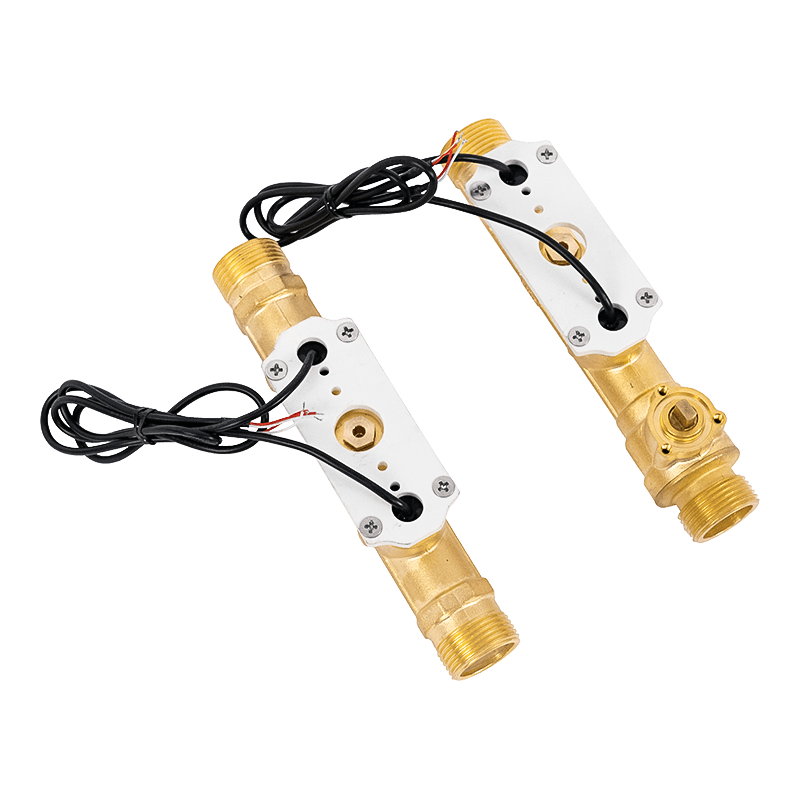 Ultrasonic Water MeterThe body material of DN15-DN40 is high-quality brass, and the iron shell material of DN50-DN300 is cast iron. High protection level and strong anti-interference abilit...View Product →
On transmission mains the acoustic picture changes again. Large-diameter pipe carries leak noise over long distances, but the noise is lower in frequency and the wall is thick, so hydrophones or high-sensitivity accelerometers mounted on air valves and scour points perform better than standard contact sensors. The metering layer on those mains also needs a wide turndown ratio, since trunk flows vary from near zero at night to full capacity during the day, and an electromagnetic meter is often the practical choice because it has no moving parts to wear and no low-flow stall point.
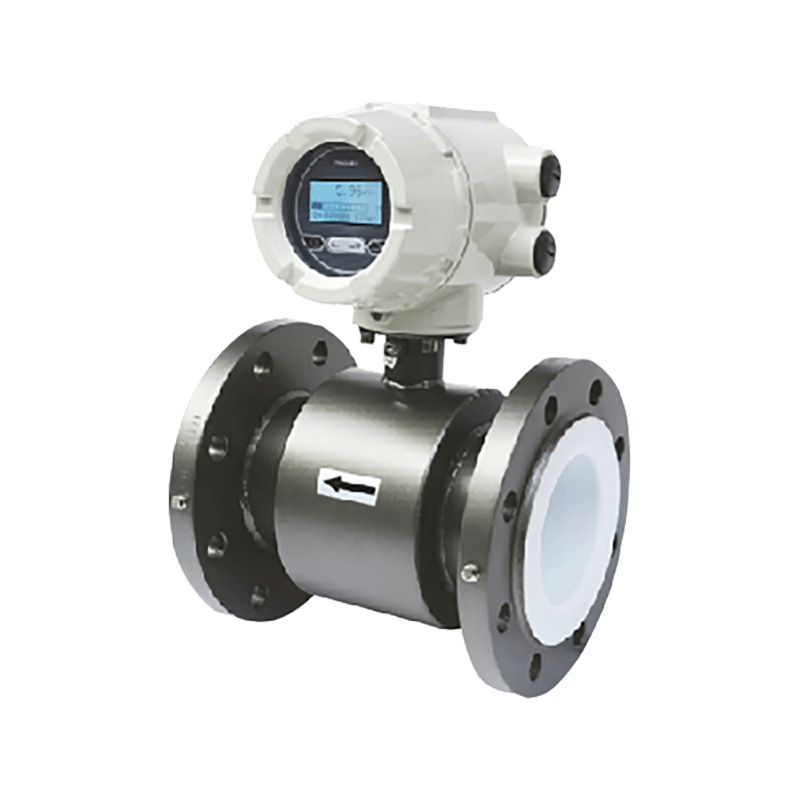 Electromagnetic Water MeterHigh precision, ultra-low starting flow. Bidirectional measurement can be achieved. High protection level: IP68. Battery life ≥ 6 years. Features self-diagnosis and da...View Product →
Once a leak has been localised and repaired, the value of the acoustic investment is measured by the recovery in the night flow curve. That requires the metering layer to report daily rather than monthly, which in most retrofits means a wireless endpoint. A district with permanent acoustic loggers and daily meter reads can usually demonstrate the water saved within a single billing cycle, turning a maintenance activity into a measurable asset performance indicator.
Acoustic sensors find the leak, daily metering data proves the repair, and the two layers together turn leakage control into a measurable, auditable programme.
Selection Checklist for Buyers and System Integrators
Specifications for acoustic equipment should be written around the network, not around a catalogue. The following points cover the parameters that actually change survey outcomes, and they are the ones worth demanding from any manufacturer or supplier before a purchase order is raised.
- Sensitivity and noise floor: state the minimum detectable leak at a defined distance and pressure, not a generic decibel figure.
- Frequency response: confirm coverage below 200 Hz for plastic networks and above 1.5 kHz for small-diameter metallic pipe.
- Coupling accessories: magnets for flat valve bodies, clamps for curved pipe, and a spare set of contact faces, since coupling is the most common failure point.
- Ingress protection: IP68 for anything that will sit in a chamber that floods, with the connector rated to match.
- Battery life and logging interval: permanent loggers should offer at least three years at a night window of two to four hours.
- Correlation compatibility: check that loggers can export raw audio, not only an index, otherwise a later correlation survey needs new hardware.
- Propagation velocity library: a tool that stores measured velocity by material and diameter saves hours on every subsequent campaign.
- Reporting and integration: the platform should push leak events into the same system that already handles meter reads and work orders.
- Spares and support: confirm the response time for replacement sensors and the availability of training, particularly from a wholesaler working through local partners.
- Calibration and traceability: ask for the factory verification method and the interval recommended for field verification.
On the metering side of the same programme, the equivalent decision is how devices report. A network that has already standardised on narrowband cellular communication can add endpoints without building new gateways, and an NB-IoT water meter reports reliably from basements and pits where older radio technologies struggle.
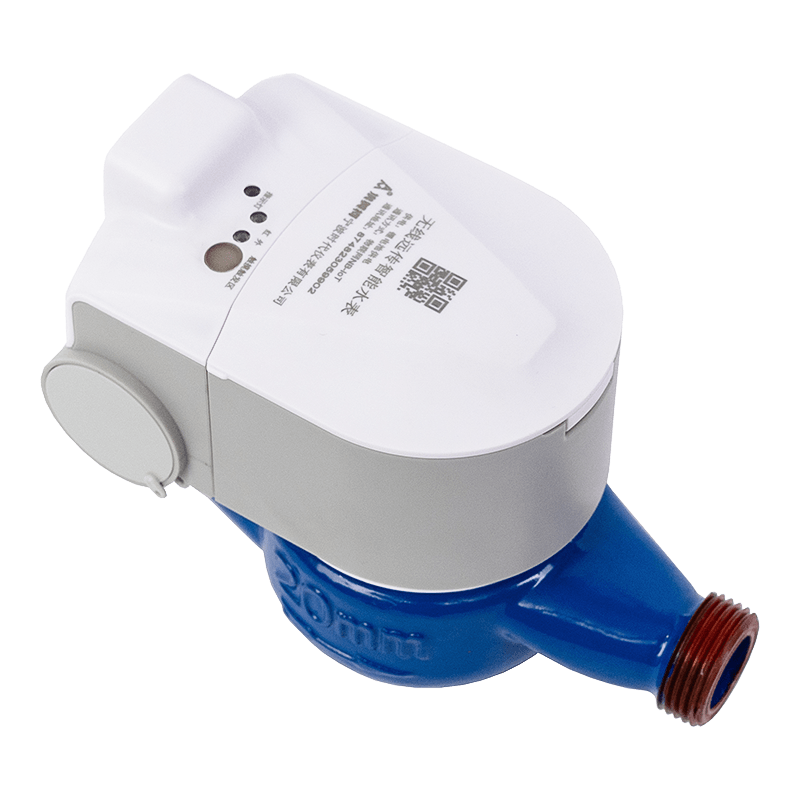 NB IOT Wireless Water MeterMade of high-quality materials, copper shell, iron shell or stainless steel body shell is optional. Available with or without valve. Available with cold or hot water. ...View Product →
Write the tender around coupling accessories, frequency coverage, raw data export and velocity libraries, because those four items decide survey success far more than the microphone specification.
Installation, Commissioning and Maintenance Practice
Installation quality explains most of the difference between teams that find leaks quickly and teams that return to the same street three times. The points below reflect standard field practice on municipal networks.
- Choose fittings that are mechanically solid, such as valve stems, hydrant bodies and thick-walled pipe, rather than thin service tees that ring at their own resonance.
- Clean and dry the contact face before mounting. Grease, silt and paint film absorb high-frequency vibration and quietly destroy signal quality.
- Space fixed loggers so that every point of the district lies within roughly 100 to 150 metres of a logger, and halve that spacing on polyethylene mains.
- Record the exact chainage and material of every logger position, since correlation distance is measured along the pipe, not across the map.
- Set the night window between 01:00 and 04:00 local time, when domestic draw-off and traffic are at their lowest.
- Log a baseline for two to three weeks before treating any index as an alarm, so seasonal demand does not generate false positives.
- Expect and investigate recurring alarms near pressure reducing valves, booster pumps and large industrial users, which are common sources of continuous noise.
- Verify every correlation result with a second method before excavation, ideally a ground microphone or an alternative sensor pair.
- Servicing should include contact face replacement, battery change according to schedule, and a firmware and velocity library update.
- Keep a repair history keyed to pipe material and diameter, and use it to adjust future sensor spacing and survey frequency.
A commissioning test that costs almost nothing involves correlating on a known leak or a deliberately opened hydrant at a measured distance, then comparing the calculated position with the truth. Teams that run this check report noticeably better accuracy on live surveys, because it exposes coupling and velocity errors before they matter.
Clean contact faces, documented logger positions and a known-distance commissioning test improve acoustic accuracy more than any upgrade in sensor specification.
Costs, Water Savings and Procurement Risk
Leakage economics are easy to state and harder to argue with. A pinhole defect discharging at 4 bar can release several hundred litres per hour, which amounts to more than 2,000 cubic metres a year from a single failure. Utilities in networks with weak leak control commonly report non-revenue water in the range of 20 to 35 percent of production, and acoustic surveying is one of the few interventions that reduces that figure within months rather than years.
The cost side is dominated by labour and access, not hardware. A permanently installed logger network costs far more in installation permits and chamber access than in the devices themselves, which is why spacing decisions have such a large financial effect. Correlation surveys are paid for by the day, so travel time between fittings is the real budget item, and a well-maintained valve and hydrant record reduces survey cost more than a cheaper sensor would.
Procurement risk in this category usually takes three forms. The first is buying loggers that report only an index, which forces a second capital purchase when correlation is finally needed. The second is accepting manufacturer performance claims that were measured on dry, accessible, metallic pipe, then applying them to a saturated plastic network. The third is forgetting the metering layer entirely, so the leak is repaired but the improvement cannot be demonstrated and the programme loses its budget at the next review cycle. Any credible supplier should be willing to state the network conditions under which their figures were obtained.
Procurement risk sits in the assumptions, so demand performance figures tied to a stated pipe material, pressure and soil condition, and budget for measuring the water saved after each repair.
Frequently Asked Questions About Acoustic Sensors for Leak Detection
What frequency band do acoustic sensors for leak detection actually use?
Most field equipment operates between about 100 Hz and 3 kHz, split by material. Metallic pipe transmits high frequencies well, so useful energy often sits between 500 Hz and 2 kHz. Plastic pipe attenuates those frequencies rapidly, and the detectable band typically shifts below 700 Hz, where filters with a narrower pass band become necessary.
Can acoustic sensors find leaks in plastic and polyethylene pipes?
Yes, but with reduced range and lower success rates per survey. The signal is weaker, the background noise at low frequency is stronger, and sensor spacing must be shortened considerably. Hydrophones generally outperform contact accelerometers on soft plastics because they listen inside the water column rather than through the pipe wall.
How far apart should sensors or loggers be placed?
On ductile iron and steel, 150 to 250 metres between fixed loggers is common and correlation spacing of 200 metres is workable. On PVC and polyethylene, spacing of 50 to 90 metres for correlation and 75 to 150 metres for permanent logger grids gives much better results. The governing rule is that every point in the district should be within useful listening distance of a sensor.
Do acoustic sensors work in flooded chambers?
Submerged sensors mounted above the water line lose most of their signal, which is the single most common cause of a failed survey. Units rated for permanent immersion can still function, but the mounting face must be clean and the sensor must remain in solid contact with the pipe or valve body. Drying and re-mounting usually recovers the measurement.
Do I still need acoustic equipment if I already have smart water meters?
Yes, and the two work in sequence rather than in competition. Meters and district flow data reveal that leakage exists and how severe it is, while acoustic equipment provides the position. Without acoustics, a leak alarm still requires manual searching; without metering, an acoustic survey has no way of prioritising which district to visit first.
What is the difference between a noise logger and a correlator?
A noise logger is a single sensor that records sound at one location and reports a likelihood index for the surrounding pipe section. A correlator uses two or more sensors recording simultaneously and calculates the distance to the leak from the time difference of arrival. Loggers screen, correlators pinpoint, and most mature programmes own both.
Can acoustic sensors detect leaks in hot water and heating pipes?
They can, although higher temperatures change both the propagation velocity and the noise characteristics, so velocity values must be adjusted. In district heating networks acoustic surveys are often paired with heat metering data, since a heat meter that reports an unusual flow with a stable temperature differential is a strong indicator of a leak on that branch.
How often should a network be surveyed?
A common benchmark is a complete acoustic sweep of the metallic network once every 12 to 24 months, with permanent logger coverage in the highest-loss districts and correlation campaigns triggered by flow anomalies between sweeps. Networks with ageing infrastructure and high pressure often justify a six-month cycle on priority zones.
Survey frequency should follow measured loss trends per district, not a fixed calendar, because the same network can contain both a stable zone and a section that fails twice a year.
Bringing the Two Layers Together
Acoustic sensors for leak detection answer a question that metering alone cannot answer: where. They do it with mature, well-understood physics, and they fail predictably when the pipe material, the coupling or the flooding condition defeats the signal. Buyers who plan for those conditions, shorten sensor spacing on plastic, keep contact faces dry and confirm every correlation with a second method will find leakage that has survived years of routine maintenance.
The wider lesson from utility practice is that the acoustic layer and the metering layer are more valuable together than either is alone. Meters supply the daily evidence that leakage is falling; acoustics supplies the precision that stops the excavation budget from disappearing into trial pits. A programme that treats them as one system, with shared platforms and shared reporting, gets both.
Technical Resources From the Manufacturer
Ningbo Times Instrument Co., Ltd manufactures AMICO smart water meters in Ningbo, China, covering multi-jet, single-jet, volumetric, Woltman, photoelectric, prepaid IC card, wireless, ultrasonic and electromagnetic ranges, with more than 1,000 completed project cases and over 23 years in the metering industry. Utilities, contractors and distributors looking for a production partner can review the full range at AMICO smart water meters.
Treat acoustic localisation and accurate metering as one leakage programme, and every repair becomes a measurable improvement rather than an unverified expense.