English
 中文简体
中文简体
Content
- 1 AMI Stands For Advanced Metering Infrastructure, Not Just a Smart Meter
- 2 AMI versus AMR: The Difference That Changes a Tender Document
- 3 The Four Layers of a Water AMI System
- 4 Comparing Communication Options for Water AMI Endpoints
- 5 What AMI Data Is Actually Used For
- 6 Specifications That Decide an AMI Water Meter Tender
- 7 Accuracy and Low Flow: Why the Meter Type Still Matters in AMI
- 8 Prepaid, Postpaid and Hybrid Models in an AMI Rollout
- 9 Installation and Commissioning Details That Cause Most Field Failures
- 10 Sourcing AMI Water Meters: Manufacturer, Supplier or Wholesaler
- 11 Cost, Payback and Risk in an AMI Business Case
- 12 Frequently Asked Questions About AMI in Water Metering
- 12.1 What does AMI stand for in water metering?
- 12.2 Is AMI the same as a smart water meter?
- 12.3 What is the difference between AMI and AMR?
- 12.4 Does an AMI water meter need an internet connection?
- 12.5 How long do AMI water meter batteries last?
- 12.6 Can a mechanical water meter be used in an AMI system?
- 12.7 Which communication technology is best for water AMI?
- 12.8 What protocols do AMI water meters use?
- 12.9 How much does an AMI water meter cost?
- 12.10 Do I need AMI if I only bill monthly?
- 12.11 How many meters should a pilot cover?
- 13 Bringing the Picture Together
A procurement officer sends back a specification sheet with three letters circled: AMI. The document asks for AMI-ready water meters, AMI head-end integration and a defined AMI data interval, but it never spells the term out. For anyone stepping into utility metering from a facilities, property or trading background, that single abbreviation can stall a bid for a week and quietly push the price comparison in the wrong direction.
AMI stands for Advanced Metering Infrastructure. In the water sector it means the whole chain that carries measurement data from the meter to the utility software and carries instructions back: the meters themselves, the communication network, the head-end server or meter data management platform, and the applications that turn readings into bills, leak alarms and valve commands. A meter on its own is not AMI. A radio on its own is not AMI. AMI is a two-way system, and it is bought as a system even when it arrives as boxes of hardware.
That distinction has commercial consequences. When a buyer treats AMI as "a smart meter with a radio", the enquiry usually misses the questions that decide whether the project still works in year three: who owns the network, who pays for data traffic, how the meter behaves when coverage drops for two days, and what happens to stored readings after a firmware update. Those questions are answered in the specification, not by a brand name.
This guide explains what AMI stands for, how AMI differs from AMR, which meter technologies belong in an AMI rollout, the specifications that decide a tender, the installation details that cause most field failures, and the sourcing questions that manufacturers, suppliers and wholesalers in the water meter industry hear most often.
AMI Stands For Advanced Metering Infrastructure, Not Just a Smart Meter
The phrase "advanced metering infrastructure" was originally borrowed from the electricity sector, where it described the combination of smart electricity meters, a fixed communication network and central data management. Water utilities adopted the same architecture later, mainly because water meters sit in pits, basements and outdoor chambers where radio coverage is far less friendly than on a wall-mounted electricity meter.
The practical definition used by most water utilities today has four requirements. First, the meter must produce a digital measurement, either directly through an electronic sensing element or by converting a mechanical register into pulses. Second, there must be a communication path that does not depend on a person walking past the property. Third, that path must be bidirectional, so the utility can send configuration, tariff or valve commands back to the device. Fourth, there must be a central system that stores, validates and distributes the data to billing, customer service and network operations.
A stand-alone prepaid IC card water meter, for example, is a smart meter but not automatically an AMI device. If the customer tops up at a local vending point and the meter never reports to the utility, the utility gains revenue protection but gains no data. Connect the same meter family to a reading network or a cellular module and it becomes part of an AMI deployment, because the utility now receives consumption, credit and tamper events without visiting the property.
This is why AMI projects are usually judged on data availability and system uptime rather than on meter accuracy alone. A meter that measures perfectly but reports nothing for three weeks is an operational problem in an AMI contract, whereas in a traditional billing contract the same meter might still be considered acceptable.
For buyers comparing quotations, the useful question is simple: what exactly is included in the price, and what will still be missing on the day the first bill is issued from AMI data. Answers usually fall into five buckets: meters, communication hardware, data transmission costs, platform licences, and integration labour.
AMI versus AMR: The Difference That Changes a Tender Document
AMI stands for Advanced Metering Infrastructure, while AMR stands for Automatic Meter Reading. The two terms are often used interchangeably in tender documents, and that looseness creates real cost differences. AMR describes a one-way flow: the meter accumulates consumption, a collector reads it, and the data lands in the billing system. AMI adds the return path plus a much higher reporting frequency, which is what enables valve control, prepaid logic, pressure and flow alerts, and time-based tariffs.
| Capability | AMR (Automatic Meter Reading) | AMI (Advanced Metering Infrastructure) |
|---|---|---|
| Data direction | One way, meter to system | Two way, meter and system |
| Typical reading interval | Monthly or on demand | Daily, hourly or configurable |
| Remote valve control | Rarely supported | Common on valve-controlled models |
| Prepaid and credit management | Normally handled at the meter | Handled centrally with remote top-up |
| Leak and burst alerts | Usually found only after the fact | Event alarms raised within the reporting cycle |
| Tariff structures | Flat or simple tiered billing | Tiered, seasonal and time-based options |
| Network model | Walk-by, drive-by or fixed one-way | Fixed network, mesh, or licensed cellular |
| Cost profile | Lower upfront, lower data cost | Higher upfront, ongoing connectivity cost |
The cost profile is where the argument usually turns. A drive-by AMR route with a monthly read has almost no recurring data cost. A cellular AMI deployment with daily or hourly reporting carries a subscription for every endpoint, plus the operational effort of managing failed connections and battery replacements. In dense urban areas with existing gateway infrastructure, a LoRa or mesh network can spread the connectivity cost across thousands of endpoints and reduce the per-meter operating burden. In scattered rural service areas, licensed cellular is often the only realistic option, and the reporting interval becomes a design decision rather than a default.
There is also a contractual point worth checking. Many tenders ask for "AMI meters" but award on price per unit, then discover during commissioning that the head-end software, the data plan and the integration with the existing billing system sit outside the awarded scope. Splitting scope that way is not automatically wrong, but it should be a conscious decision made at tender stage, with an owner named for each interface.
One more distinction matters during evaluation: reporting frequency and storage depth are separate specifications. A meter that reports once a day but stores thirty or sixty days of interval data in local memory can still deliver a full consumption profile after a week of network loss. A meter that reports once a day and stores only the last reading cannot. The storage specification is inexpensive to request and expensive to retrofit.
The Four Layers of a Water AMI System
Breaking an AMI deployment into layers keeps the technical discussion manageable and makes the scope boundaries visible in a quotation. Nearly every water AMI project, whether it serves a single residential compound or a municipal network of tens of thousands of connections, maps onto the same four layers.
Layer 1: The Metering Endpoint
This is where measurement happens, and it is where the widest product choice exists. Mechanical speed-type meters such as multi-jet and single-jet designs remain the workhorses of residential metering because they are simple, robust and inexpensive. Volumetric meters use a oscillating piston or rotary piston chamber and typically hold tighter accuracy at very low flow, which matters in buildings where night consumption is small but constant. Woltman detachable meters, both horizontal screw-wing and vertical spiral-wing types, handle larger nominal diameters and higher flow rates on mains and riser pipes.
On the electronic side, ultrasonic and electromagnetic meters remove moving parts from the measuring path, which reduces wear in aggressive water or high-cycling conditions and gives a wider turndown ratio in many designs. Photoelectric direct-reading registers convert a mechanical or electronic register into a digital value that can be read without contact, and they are frequently specified where a utility wants to keep mechanical metrology but add remote reading. Prepaid IC card meters add credit logic at the point of use.
Almost every one of these categories can be supplied in an AMI-compatible version, either with a factory-fitted communication module or with a pulse output that feeds an external transmitter. The choice of endpoint therefore depends on the water, the flow profile, the installation space and the billing model, not on AMI itself.
Layer 2: The Communication Network
The network is where most AMI projects succeed or fail in the field. A water meter is often installed in a concrete pit, a basement or a metal cabinet, all of which attenuate radio signals. Vendors who promise coverage from a map without a site survey are selling hope. Practical projects combine a coverage test at a sample of real installations with a fallback: local memory storage plus delayed upload, or a walk-by read capability that keeps billing running while the network issue is resolved.
Communication options generally fall into licensed cellular, unlicensed radio and wired or bus systems. Cellular modules in the NB-IoT, LoRa and Cat-1 families each suit different reporting patterns and coverage conditions, and the honest answer to "which is best" is that the answer depends on the local network operator, the density of the service area and the reporting interval the utility actually needs.
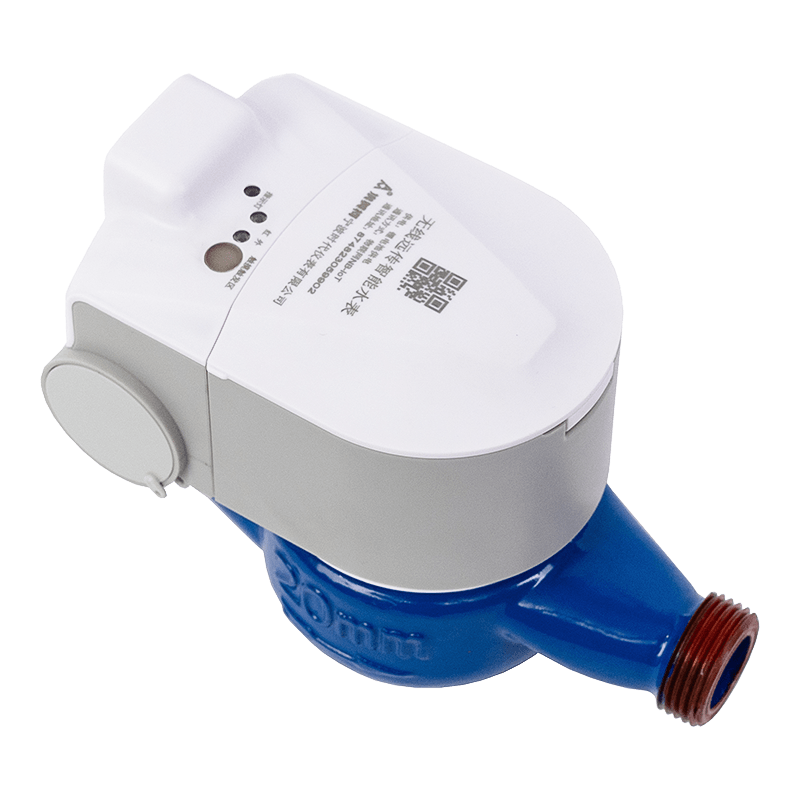 NB IOT Wireless Water MeterMade of high-quality materials, copper shell, iron shell or stainless steel body shell is optional. Available with or without valve. Available with cold or hot water. ...View Product →
Where a utility already operates a wired bus for indoor installations, photoelectric or pulse meters on an M-Bus style network can be a lower-risk route because the concentrator is mains powered and the endpoint does not depend on battery life. Where there is no wiring and no reliable coverage, a licensed cellular endpoint with deep local storage is usually the safer first phase.
Layer 3: Head-End and Meter Data Management
The head-end collects, authenticates and stores incoming data. In small deployments this may be a simple cloud service with a dashboard. In larger ones it becomes a meter data management platform that validates readings, estimates missing intervals, manages device firmware and passes clean data to the billing engine. The questions to ask here are about data ownership, export formats and the cost of adding endpoints later.
Integration with existing systems is frequently underestimated. A platform that exports a clean CSV file every morning may be perfectly adequate for one utility and completely inadequate for another that needs near real-time valve control and prepaid credit synchronisation. Both are legitimate; the specification should say which one is being bought.
For teams designing the platform side of a rollout, a structured review of smart water meter solution architecture is a sensible starting point before the hardware tender is issued, because platform constraints often eliminate product families that looked attractive on paper.
Layer 4: Applications and Business Rules
The top layer is what the utility does with the data: billing runs, non-revenue water analysis, district metered area balancing, leak alarms, customer portals, prepaid credit management and valve control for disconnection or emergency shut-off. This layer is where the return on the AMI investment is realised, and it is also the layer most often left under-resourced. A useful rule of thumb is that the application layer deserves at least as much planning attention as the meters, because data that no process consumes produces no savings.
Comparing Communication Options for Water AMI Endpoints
Communication choice drives battery life, data cost and maintenance workload, so it deserves its own comparison before the meter model is fixed. The figures below are indicative design targets drawn from typical configurations across the wireless and bus families described above, and they should be treated as planning guidance rather than guarantees.
Indicative endpoint service interval by communication method
Indicative planning ranges only; actual service life depends on reporting frequency, signal quality, temperature and water quality.
The pattern in the chart reflects a simple trade-off: the more often an endpoint talks, the more energy it spends and the sooner someone has to visit it. A LoRa or NB-IoT endpoint configured for a single daily upload can in many designs run for the better part of a decade on a lithium battery, while a Cat-1 module that maintains a more conversational link with the platform will typically require attention sooner. Neither is wrong; a utility that needs near real-time valve control is buying responsiveness, and it should budget for the maintenance that comes with it.
For product selection, mechanical meters with pulse output remain the most economical way to bring older residential connections into a network, because the metrology is already proven and only the transmitter is new. Pulse output from a multi-jet or single-jet meter feeding a LoRa or NB-IoT transmitter is a common retrofit pattern in buildings where the pipework and the chambers are already fixed and full meter replacement would mean disturbing finished floors or paving.
Battery life also interacts with the physical installation in ways that datasheets rarely capture. A pit that fills with water in winter, or a chamber exposed to direct sun in a hot climate, will shorten service life regardless of the communication family chosen. Selecting an ingress-protected meter and enclosure, and checking the installation depth and drainage, often buys more service life than switching technologies.
Finally, the reporting strategy itself is a design variable. Many platforms support adaptive reporting, where the endpoint uploads at a baseline interval and switches to a faster rate when it detects abnormal flow, reverse flow or tamper events. This gives the utility the operational value of frequent data without paying the battery and bandwidth cost continuously, and it is worth requesting explicitly in the technical specification.
What AMI Data Is Actually Used For
Data has no value until a process consumes it, and in water utilities four processes dominate. The first is billing. Interval data allows a utility to move away from estimated reads, shortening the gap between consumption and invoice and reducing disputes. Where the platform supports it, tiered and seasonal tariffs become practical because the calculation is no longer manual.
The second is non-revenue water management. Comparing minimum night flow across a district metered area shows where losses are concentrated, and continuous data turns that from an annual study into a recurring operational routine. A single meter reading monthly tells a utility how much water a building used; an hourly profile tells it whether the building has a leak running at three in the morning, which is often the more useful signal.
The third is customer service and credit control. Prepaid and hybrid models depend on data flowing in near real time, because a customer who tops up expects the credit to arrive within minutes. Postpaid utilities use alerts for abnormal consumption to contact customers before a large bill becomes a bad debt.
The fourth is valve control. Remote shut-off supports leak isolation, emergency response and credit enforcement without sending a team to the property. This is where the endpoint specification matters most, because only valve-controlled models can act on a command.
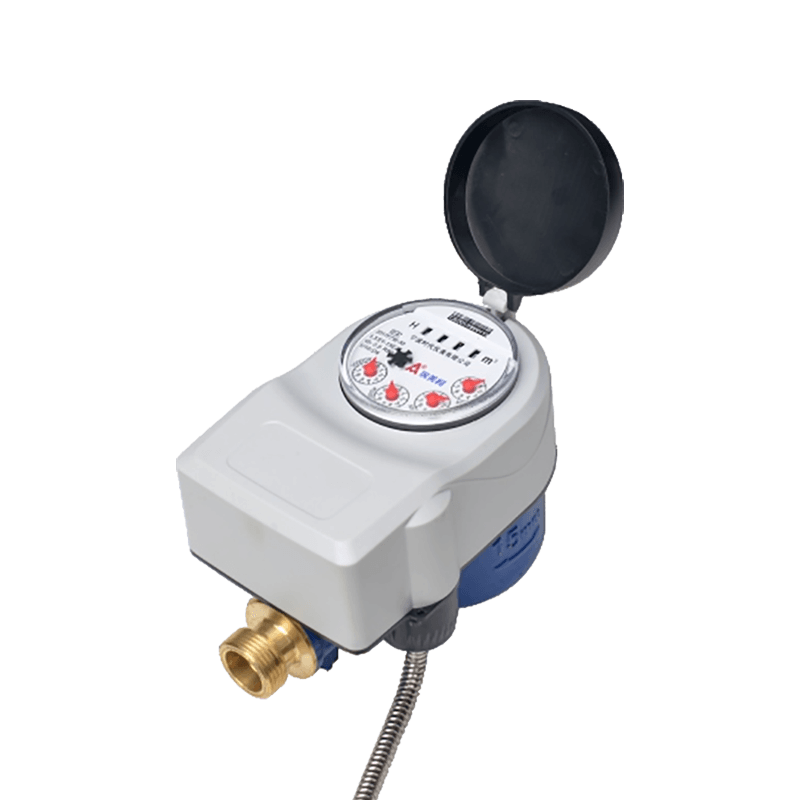 Photoelectric Valve Controlled Water MeterMade of high-quality materials, copper shell is used for DN15-DN32, and iron shell is used for DN40 and above. Available with cold or hot water. Precision readings can...View Product →
When valve control is in scope, three details deserve attention. The first is fail-safe behaviour: what the valve does during a power or network outage, and whether it defaults to open or closed. The second is actuation torque and water quality, since mineral deposits and debris increase the effort required to close a valve that has not moved for a year. The third is the audit trail, because remote disconnection is a customer-facing action that should be logged with a timestamp, a reason code and an operator identity.
Most utilities combine these four uses in phases rather than launching everything at once. A common sequence is remote reading first, billing integration second, leak analytics third, and valve control last, once the network and the customer communication processes have proven stable. Phasing also spreads the capital cost and gives the operations team time to build confidence in the platform.
Specifications That Decide an AMI Water Meter Tender
The technical specification is where an AMI project is won or lost. Two quotations can both be described as "NB-IoT water meter, DN15, Class 2" and still differ in ways that change maintenance cost by a factor of three. The table below lists the parameters that most often separate a workable quotation from an expensive one.
| Parameter | Typical options in the market | Why it affects the project |
|---|---|---|
| Metrology approval | ISO 4064 and OIML R49 based national approvals, MID for European markets | Determines whether readings are legally usable for billing |
| Accuracy class and turndown | Class 2 with Q3/Q1 ratios such as 160, 250 or 400 | Low-flow accuracy drives revenue recovery in low-consumption buildings |
| Nominal diameter | DN15 to DN50 for residential, DN50 to DN300 for bulk mains | Mismatch causes pressure loss or inaccurate measurement at peak flow |
| Temperature class | T30, T50 or T90 depending on the medium | Hot water and boiler feed applications need a different meter entirely |
| Body and register material | Brass, engineering plastic, stainless steel | Affects drinking water suitability, corrosion behaviour and weight |
| Ingress protection | IP65 to IP68 for permanently flooded pits | Water ingress is the most common cause of premature electronics failure |
| Battery life and replacement | Typical design targets from five to ten years | Determines the recurring maintenance cost of the whole network |
| Communication | NB-IoT, LoRa, Cat-1, wired bus, pulse output to external transmitter | Coverage and data cost, not the meter, usually decide feasibility |
| Protocol and payload | M-Bus, Modbus, CoAP or LwM2M style payloads, vendor-specific encodings | Determines integration effort with the head-end platform |
| Local storage depth | From the last reading up to several months of intervals | Protects billing accuracy during network outages |
| Valve and control | None, remote shut-off, or full valve control with position feedback | Enables credit control and emergency isolation |
| Tamper and event logging | Magnetic tamper, reverse flow, cover removal, low credit | Supports revenue protection and dispute resolution |
Two of these parameters cause more rework than the rest. The first is the turndown ratio. A utility that specifies Q3/Q1 of 160 because it is familiar with older residential meters may find that low-consumption apartments and small commercial units record far less accurately than expected. Moving to a 250 or 400 ratio, or adopting a volumetric or ultrasonic design for those connections, often changes the revenue picture more than any tariff adjustment.
The second is local storage depth. It is a cheap line item at tender stage and an expensive retrofit later, because retrofitting usually means replacing the endpoint or adding a gateway. As a rule, ask for enough stored intervals to cover the longest realistic network outage plus a full billing cycle for reconciliation.
Ingress protection deserves a similar attitude. Where meters are installed in chambers that flood, IP68-rated electronics and appropriate sealing are not optional extras; they are the difference between a five-year replacement cycle and an annual one. Regional differences matter too: approvals accepted in one market may not be accepted in another, so the specification should reference the approval required in the destination market rather than a generic international class.
Accuracy and Low Flow: Why the Meter Type Still Matters in AMI
There is a comfortable assumption that once data travels automatically, measurement accuracy becomes a secondary concern. It does not. AMI improves how often a reading is collected; it does not change how well the meter measures, and in water metering the difficult region is almost always the low end of the flow range.
Residential night flow, small leaks and single-tap use sit at the bottom of the flow curve. A mechanical multi-jet meter with a modest turndown ratio may start registering reliably only above a certain flow, which means slow continuous losses can remain invisible. A volumetric meter, which measures discrete volumes of water passing through a chamber, typically performs better at the very low end. An ultrasonic meter measures transit time differences and can be designed with a very wide turndown ratio because there is no mechanical start-up threshold to overcome.
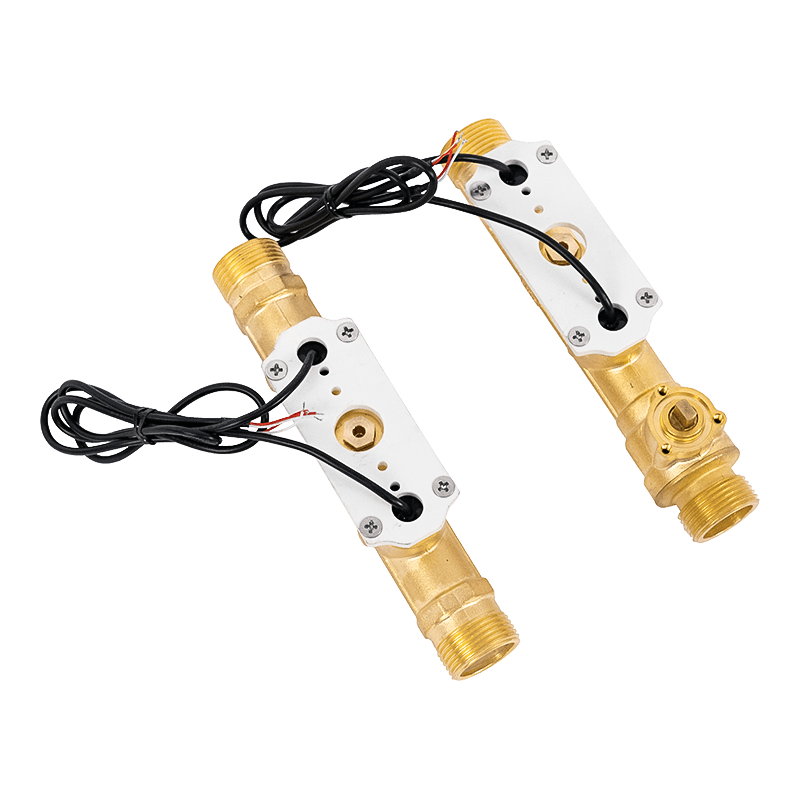 Ultrasonic Water MeterThe body material of DN15-DN40 is high-quality brass, and the iron shell material of DN50-DN300 is cast iron. High protection level and strong anti-interference abilit...View Product →
This is not an argument that every connection needs an electronic meter. The right choice depends on the water, the flow profile and the economics. In a district where most connections are houses with gardens and high seasonal consumption, a well-specified mechanical meter with a reasonable turndown ratio will measure accurately for years and cost a fraction of the electronic alternative. In a block of small apartments with low and steady consumption, or in a building where measured non-revenue water is an unresolved problem, the extra investment in a volumetric or ultrasonic design can pay back quickly through recovered volume.
Water quality also enters the decision. Aggressive or slightly corrosive water shortens the life of mechanical components, while suspended solids can affect ultrasonic paths over time. High-temperature applications, such as boiler feed or domestic hot water circuits, require meters rated for the temperature class in question, which often removes standard cold-water mechanical models from consideration entirely.
Bulk metering follows different logic again. On mains and large risers, Woltman detachable meters provide a wide flow range with a removable measuring element that can be serviced without cutting the pipe. Where the flow is highly variable, combining a bulk meter with accurate low-flow measurement at district level gives a better picture than either instrument alone.
A practical way to decide is to compare the cost of the meter upgrade against the annual value of the water that is currently unmeasured. Where that ratio is unattractive today, a phased approach is reasonable: keep the mechanical fleet, add remote reading to capture consumption data, and use the resulting profiles to identify the specific connections where a higher-accuracy meter will pay for itself.
Prepaid, Postpaid and Hybrid Models in an AMI Rollout
Billing model and metering technology are usually specified together, and getting the sequence right avoids expensive corrections. Prepaid metering is attractive where collection risk is high, where tenants change frequently, or where the utility wants to reduce arrears without disconnection campaigns. Postpaid metering suits utilities with strong collection systems and customers who prefer a monthly account.
Prepaid IC card meters deliver revenue protection even without a network, because the meter refuses to supply water once the credit is exhausted. Adding a communication module turns the same meter into an AMI endpoint, allowing remote top-up, credit synchronisation and usage visibility. Bluetooth versions of prepaid meters offer a middle path, where a meter reader or a customer with a mobile application can transfer credit locally without a fixed network, which is often a sensible first step in buildings where coverage is uncertain.
Hybrid models are increasingly common. A utility may run postpaid billing for large commercial accounts while operating prepaid for tenanted residential blocks, with both populations managed on the same head-end platform. Data from the prepaid population is often more granular than the utility strictly needs, and the temptation to keep every interval forever should be resisted: storage and processing costs grow quietly, and most operational value comes from the last few months of data.
Two practical details deserve attention when prepaid logic meets AMI. The first is offline behaviour: what the meter does when the platform is unreachable, and how credit is reconciled when connectivity returns. The second is the customer interface, because a prepaid customer who cannot see their balance will contact the utility regardless of how elegant the metering architecture is.
Installation and Commissioning Details That Cause Most Field Failures
Most AMI problems reported in the first year are installation problems rather than product defects. The list below covers the issues that appear repeatedly in field reports and commissioning logs.
- Pit and chamber conditions. Standing water, silt and condensation affect both the mechanical register and the electronics. Where chambers flood seasonally, IP68-rated endpoints and sealed cable entries are the practical minimum.
- Pulse wiring. Pulse cables run alongside power or pump cables can pick up interference that produces phantom counts. Keep signal wiring separated, use screened cable where the run is long, and confirm the pulse weight configured in the platform matches the meter.
- Antenna placement. An antenna buried inside a metal enclosure or laid flat under a concrete lid will lose most of its range. A short external antenna routed to a dry, unshielded position often solves coverage complaints without changing technology.
- Meter orientation and straight lengths. Manufacturer instructions on upstream and downstream straight pipe lengths exist for a reason; ignoring them introduces swirl and measurement error, particularly with Woltman and ultrasonic designs.
- Register and unit configuration. Cubic metres versus litres, pulse weight and resolution errors are common during commissioning and produce plausible but wrong data that can run undetected for months.
- Time and time zone settings. Interval data is only useful if timestamps align across endpoints and the platform. Set the clock reference once, in the specification, and verify it during acceptance.
- Addressing and inventory records. A meter identifier that does not match the property record defeats the purpose of remote reading. Barcode capture at installation is a low-cost control.
- Tamper and bypass checks. After sealing and commissioning, verify that tamper events are actually reported and visible in the platform, not merely supported by the firmware.
Commissioning should also include a deliberate outage test. Disconnecting one endpoint from the network for a defined period and confirming that the stored intervals upload correctly afterwards validates two things at once: local storage depth and the recovery logic in the head-end platform. This test takes minutes and prevents an argument later about lost data.
Documentation matters as much as hardware. An as-built record that maps every meter identifier to a physical address, a communication route and a commissioning date turns a fault report from a multi-day investigation into a short field visit. Utilities that invest in this record during the first phase generally report fewer repeat visits and faster fault resolution in later phases.
Sourcing AMI Water Meters: Manufacturer, Supplier or Wholesaler
Buyers entering the water metering market usually approach one of three types of business. A manufacturer designs and builds meters and can control the metrology, firmware and communication module inside the product. A supplier distributes meters from one or more factories without owning production. A wholesaler stocks a range for resale, often serving installers and smaller utilities with smaller quantities and shorter lead times. Each has a legitimate role, and the right choice depends on how much control the buyer needs over specification, documentation and after-sales support.
For AMI projects specifically, manufacturing control matters more than it does for a simple mechanical purchase. Communication behaviour, payload format, storage logic and firmware update paths are all product-level decisions. A trading intermediary can usually arrange these through the factory, but the buyer should still know who writes the firmware and who supports it after commissioning.
Ningbo Times Instrument Co., Ltd, the company behind the AMICO brand, sits in the manufacturer category. Established in 2001 and part of the AMICO group, the company produces intelligent water meters at a 12,000 square metre facility with more than 140 employees, and reports over 1,000 completed project cases with annual sales exceeding RMB 100 million. Its product range covers multi-jet, single-jet, volumetric, Woltman detachable, photoelectric direct-reading, prepaid IC card, wireless and ultrasonic water meters, plus heat meters, which means an AMI scope can be assembled from one production and quality system rather than several.
Practical verification questions for any potential water meter manufacturer or supplier include the following. Which markets have approvals already been granted in, and can certificates be produced rather than described? What is the production lead time for a mixed order of several meter families? How is quality controlled across incoming material, machining, assembly, performance testing and packing? What is the warranty policy, and how are spare parts and battery replacement handled five years after delivery? What documentation comes with each shipment: test reports, calibration records, wiring diagrams and protocol descriptions?
Sample evaluation should include more than a bench check of accuracy. A useful sample programme tests the meter in the conditions it will actually face: low flow performance, a flooded chamber, a long pulse cable run, a weak signal environment, and a platform integration exercise using the real payload format. Ordering a sample of the complete chain, endpoint plus transmitter plus platform connection, is more informative than ordering a meter alone, because integration problems surface early while they are still cheap to correct.
For distributors and wholesalers building a portfolio, the practical considerations are different again. Range breadth keeps customers, but inventory depth in slow-moving diameters ties up capital. A workable approach is to stock fast-moving residential sizes and high-turn wireless models, while relying on factory lead times for bulk meters and specialist electronic products. It also helps to standardise on one or two register and communication families across the range, so that field staff and support teams do not need to learn a new configuration tool for every order.
Cost, Payback and Risk in an AMI Business Case
A defensible AMI business case rests on four benefit streams: reduced meter reading cost, improved billing accuracy, reduced non-revenue water, and avoided arrears or disconnection costs. Each should be estimated with local numbers rather than generic percentages, because labour costs, water tariffs and leakage rates vary enormously between markets.
On the cost side, the largest line is rarely the meter. A realistic list includes the endpoint, the communication module or transmitter, installation labour, network infrastructure or data subscriptions, the head-end platform and its integration, training, and the ongoing cost of battery replacement and device replacement over the asset life. Spreading these over the depreciation period usually produces a clearer picture than comparing unit prices.
| Cost category | Main drivers | Common estimation mistake |
|---|---|---|
| Endpoints | Meter family, diameter, accuracy class, valve option | Pricing only the fast-moving residential size |
| Communication | Cellular data plans versus owned network infrastructure | Ignoring recurring data cost over the full asset life |
| Installation | Access, chamber condition, whether pipework must be altered | Assuming straight replacement in all cases |
| Platform and integration | Existing billing system, interfaces, reporting requirements | Treating integration as a one-off small item |
| Operations | Battery replacement, fault visits, meter testing programme | Assuming zero maintenance after year one |
Risk management deserves the same rigour. Three risks dominate. Technology risk is the possibility that the chosen communication family does not perform in the intended environment, which a coverage trial mitigates cheaply. Integration risk is the possibility that the platform cannot deliver the data format the billing system needs, which a pilot on one district metered area exposes quickly. Supplier risk is the possibility that support, spare parts or firmware updates become unavailable during the asset life, which is best managed by verifying manufacturing capability and documentation practices before award rather than by relying on price alone.
Phasing reduces all three risks. A pilot covering one district or one building type typically costs a small fraction of the full project, and it produces real data on coverage, battery drain and integration effort. Utilities that pilot first tend to negotiate far better terms on the full rollout, because the specification is grounded in measured results rather than vendor promises.
Frequently Asked Questions About AMI in Water Metering
What does AMI stand for in water metering?
AMI stands for Advanced Metering Infrastructure. It refers to the combination of digital water meters, a communication network, a head-end or meter data management platform, and the business applications that use the data for billing, leakage analysis, prepaid credit management and remote valve control. It is a system term, not a product name.
Is AMI the same as a smart water meter?
No. A smart water meter is one component of AMI. A smart meter can operate in isolation, for example a prepaid IC card meter that manages credit locally, while AMI requires two-way communication between the meter and a central system.
What is the difference between AMI and AMR?
AMR stands for Automatic Meter Reading and describes one-way data collection, usually monthly or on demand. AMI adds a return communication path and higher reporting frequency, which enables remote valve control, prepaid management and faster leak detection.
Does an AMI water meter need an internet connection?
It needs a communication path, which may be a licensed cellular network such as NB-IoT or Cat-1, an unlicensed radio network such as LoRa, or a wired bus with a concentrator. The head-end platform is normally hosted centrally, so some form of connectivity is required somewhere in the chain even when individual meters use local radio.
How long do AMI water meter batteries last?
Service life depends on reporting frequency, signal quality, temperature and the communication family. Many daily-reporting wireless designs target five to ten years, while endpoints with frequent two-way polling typically require attention sooner. Ask suppliers for the battery capacity, the reporting profile the estimate assumes, and the replacement procedure.
Can a mechanical water meter be used in an AMI system?
Yes. A multi-jet, single-jet or Woltman meter fitted with a pulse output or a photoelectric direct-reading register can feed an external transmitter and join a network, which is a common and cost-effective retrofit route for existing residential connections.
Which communication technology is best for water AMI?
There is no universally best option. Dense urban areas with existing gateways often suit LoRa or mesh networks, scattered service areas often suit licensed cellular, and indoor installations with existing wiring often suit a mains-powered bus. The decision should follow a coverage trial at real installation sites.
What protocols do AMI water meters use?
Common options include M-Bus and Modbus for wired connections, and lightweight IP-based payloads such as CoAP or LwM2M style encodings for cellular endpoints, alongside vendor-specific formats. The practical question is whether the payload can be integrated into the head-end platform without custom development.
How much does an AMI water meter cost?
Price depends on diameter, metering principle, accuracy class, material, communication module and valve options, so a single figure is misleading. When comparing quotations, request the endpoint price together with the data cost, the platform licence basis and the warranty terms, so the total cost of ownership is visible.
Do I need AMI if I only bill monthly?
Not necessarily. A drive-by or walk-by AMR system may be sufficient and cheaper if billing accuracy and leakage visibility are already acceptable. AMI becomes compelling when a utility needs faster data, remote control, prepaid management or better non-revenue water analysis.
How many meters should a pilot cover?
A pilot that covers one district metered area or one representative building type is usually enough to test coverage, battery behaviour, integration and installation workflow. The goal is not statistical confidence in the pilot, but early evidence on whether the design assumptions hold in real conditions.
Bringing the Picture Together
Once the abbreviation is unpacked, an AMI project becomes a set of ordinary engineering and commercial decisions. Decide which meter families suit the water, the flow profiles and the buildings in scope. Choose a communication approach after testing coverage at real sites, and specify storage depth so network interruptions do not become billing interruptions. Define who owns the platform, who pays for data and who supports the firmware for the life of the asset. Then verify the supplier on production capability, documentation and approvals rather than on unit price alone.
For utilities, property managers and distributors working through that list, a manufacturer with a full endpoint range plus in-house quality control removes a layer of coordination risk, because pulse outputs, communication modules, valve options and register types can all be specified and tested as one system. That is the practical case for assembling an AMI scope from a single production source, and it is the reason NIngbo Times Instrument and the AMICO brand maintain parallel ranges across mechanical, photoelectric, prepaid, wireless and ultrasonic water meters, together with heat meters for heating applications.
If you are preparing an enquiry, the most useful next step is to write down the reporting interval, the number and type of endpoints, the installation conditions and the billing model, then send those four items with your diameters and quantities. That level of detail shortens the quotation process considerably and reduces the risk that the delivered hardware solves a different problem from the one you actually have.
Explore the product range
Review the complete water meter portfolio, including mechanical, electronic and heat metering families, to assemble a specification that fits your project.