English
 中文简体

Content
- 1 Why the Data Route Decides Whether an Automatic Meter Succeeds
- 2 The Four Layers Inside an Automatic Meter
- 3 Automatic Meter Reading Compared: Walk-By, Drive-By and Fixed Network
- 4 Reading the Register: Pulse, Photoelectric or Ultrasonic Automatic Meters
- 5 Sizing an Automatic Meter Correctly Before You Order
- 6 Prepaid, Valve Control and the Commercial Model Behind Automatic Meters
- 7 Hot Water and Heat Metering With Automatic Meters
- 8 What Actually Drives the Price of an Automatic Water Meter
- 9 How to Vet an Automatic Meter Manufacturer, Supplier or Wholesaler
- 10 Commissioning an Automatic Meter and the Faults That Appear Later
- 11 FAQ About Automatic Meters
- 11.1 What is an automatic meter?
- 11.2 Is automatic meter reading the same as a smart meter?
- 11.3 Should a residential compound use LoRa or NB-IoT automatic meters?
- 11.4 Can existing mechanical meters be converted to automatic reading?
- 11.5 How accurate are ultrasonic automatic water meters at low flow?
- 11.6 What is a typical minimum order quantity and lead time for an automatic meter?
- 11.7 How long do batteries last in a wireless automatic meter?
- 11.8 Do automatic meters work in flooded pits?
- 11.9 What should an acceptance test include?
- 12 Where to Go Next
A 640-unit residential block orders 640 automatic meters because the tender document says "remote reading required". Six months later, the property manager is chasing about eight percent missing reads, two gateways that never came online, and a valve that will not close on the fourth floor. The meters themselves were fine. The problem sat in the reading element, the transfer route and the platform behind them, none of which had been specified with the same care as the meter body.
That pattern repeats across utility tenders, property refurbishments and industrial sub-metering projects. An automatic meter is not one product but four stacked together: a measuring element, a reading element, a communication route and a management platform. Only the first one is a mature mechanical problem. The other three decide whether your project runs quietly or turns into a two-year service dispute.
The practical conclusion, before any technical detail: choose the data route first, the reading principle second, and the meter body third. Buyers who reverse that order usually end up paying twice, once for the meters and once for the retrofit.
An automatic meter fails in the field far more often because of its communication and reading layers than because of its measuring chamber, so those are the layers to write into the specification.
Why the Data Route Decides Whether an Automatic Meter Succeeds
Automatic meter reading, usually shortened to AMR, means collecting consumption, status and diagnostic data from a meter without a person standing in front of it. Advanced metering infrastructure, or AMI, goes a step further by allowing two-way communication: not just reading the meter but also sending commands, changing tariffs, updating firmware or closing a valve.
Most procurement documents blur the two. A utility that only needs a monthly figure for billing does not need a two-way network, and paying for one adds cost without adding value. A landlord who wants to cut off water for non-payment does need two-way control, and a read-only system will disappoint them.
Four questions should be answered before a single model number is discussed:
- How often does a reading actually need to reach the billing system? Monthly, daily, hourly and near real time are four very different products.
- Who owns and pays for the network after installation? A private gateway and a licensed cellular subscription carry different operating costs and different failure modes.
- Who is allowed to change a setpoint, close a valve or update firmware, and how is that action logged?
- What happens during an outage? A system that stores readings locally and backfills later behaves very differently from one that simply loses the data.
Answer those in writing and the shortlist narrows quickly. Skip them and every supplier looks equally suitable, which is exactly how unsuitable meters get ordered.
The Four Layers Inside an Automatic Meter
It helps to open the product up conceptually. Whether the unit is a domestic multi-jet meter or a DN200 Woltman detachable meter, the stack looks similar.
Layer one: the measuring element
This is the part that actually counts water. Velocity meters, including multi-jet and single-jet types, spin a rotor proportional to flow. Volumetric meters trap a fixed volume per cycle, which gives strong low-flow behaviour. Woltman and spiral-wing meters handle large diameters and high flow. Ultrasonic and electromagnetic meters remove moving parts entirely and measure flow by transit time or induced voltage.
Layer two: the reading element
Pulse output, photoelectric direct reading, and fully electronic registers all sit here. This layer defines whether a reading is an accumulated count or an absolute position, which matters enormously when diagnosing disputes later.
Layer three: the transfer element
Handheld walk-by collection, drive-by radio, LoRa gateways, NB-IoT, LTE Cat-1 and wired M-Bus all live at this level. Cost, coverage and power consumption are decided here, not in the water path.
Layer four: the platform
Billing, valve control, leak alerts, tamper alarms and reporting interfaces. A good meter paired with a thin platform is a mediocre automatic meter.
| Layer | What it is | What to verify before signing |
|---|---|---|
| Measuring element | Multi-jet, single-jet, volumetric, Woltman, ultrasonic or electromagnetic | Permanent flow and minimum flow, turndown ratio, pressure loss class, temperature class |
| Reading element | Pulse output, photoelectric direct reading, electronic register | Whether the value is absolute or accumulated, memory behaviour after power loss, seal and tamper design |
| Transfer element | Walk-by handheld, drive-by radio, LoRa, NB-IoT, Cat-1, wired bus | Report interval, penetration in pits and basements, antenna options, subscription cost |
| Platform | Billing, valve commands, alarms, export interfaces | Protocol documentation, data ownership, API access, alarm thresholds, user roles |
Write all four layers into the purchase order, because a supplier can only be held to what the contract actually names.
Automatic Meter Reading Compared: Walk-By, Drive-By and Fixed Network
Reading cost is not a fixed number, it scales with how much human effort each cycle requires. The chart below compares the relative field effort for four common arrangements, normalised to a thousand meters, so buyers can see where the labour actually sits.
The gap between walk-by and a fixed network is where most of the operating budget hides. Walk-by keeps hardware cheap and needs no subscription, but it still consumes a crew day every cycle and still depends on access to the property. Drive-by cuts the route time sharply and works well in low-rise districts with curbside pits, though dense urban blocks and underground meter rooms limit radio reach. A fixed network such as NB-IoT or LoRa removes the cycle entirely, which also changes what you can do with the data: daily reads make leak detection and abnormal-use alerts practical, while monthly reads mostly support billing.
The product families map onto that logic fairly cleanly. LoRa modules suit a defined site where the operator is willing to plan gateway positions, for example an industrial park or a managed residential compound. NB-IoT modules suit scattered sites and utility-wide rollouts where no one wants to own a gateway estate. Cat-1 modules fit projects needing more frequent two-way exchanges, larger payloads or firmware updates over the air, at the cost of higher power draw.
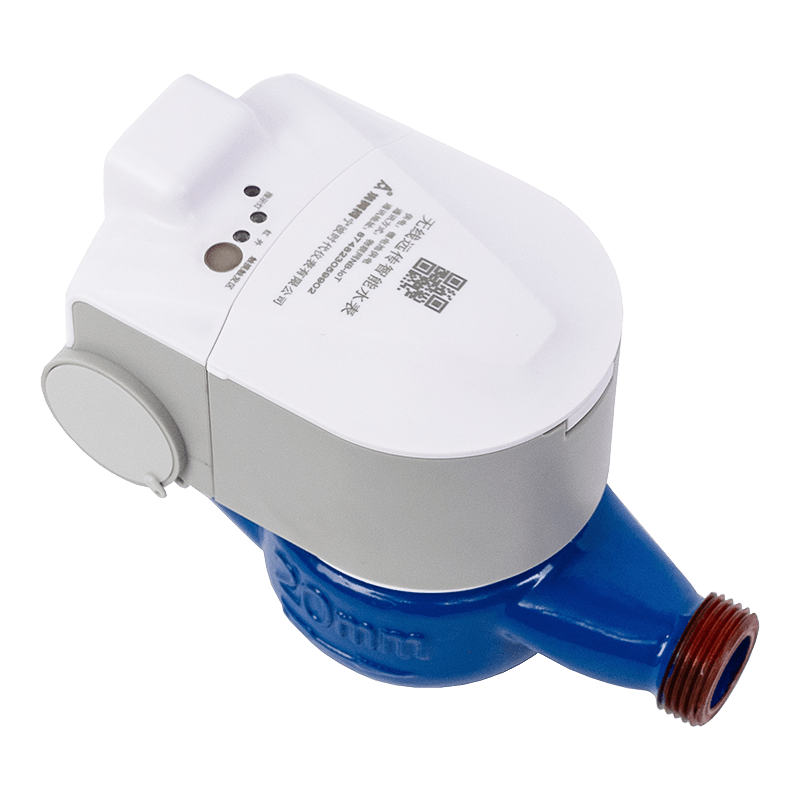 NB-IoT Wireless Water Meter for Smart MeteringFor scattered sites and utility-wide rollouts, this NB-IoT meter supports remote reading, valve control and prepaid functions without a gateway estate.View Product →
Compare automatic meter options on total cost per read over five years, not on the unit price on the quotation.
Reading the Register: Pulse, Photoelectric or Ultrasonic Automatic Meters
Once the route is settled, the next decision is how the register hands over its value. Three approaches dominate, and they fail in completely different ways.
Pulse output: cheap, cumulative, unforgiving
A reed switch or open-collector output emits one pulse per fixed volume, commonly one pulse per litre or per ten litres. The receiving device counts pulses and multiplies. It is inexpensive, widely understood and easy to integrate with third-party loggers. The weakness is arithmetic: if the logger is offline, if a pulse is missed through contact bounce, or if the counter is reset by accident, that volume is gone and cannot be recovered by re-reading the dial. Pulse meters work best in sub-metering and trend monitoring, where relative consumption matters more than an auditable absolute figure.
Photoelectric direct reading: absolute and auditable
A photoelectric head images the actual number wheels and returns the dial position, not a derived count. Nothing accumulates, so a missed transmission simply means the next read is still correct. This matters in utility billing, where a disputed invoice needs a defensible number. The same design supports on-demand reads and pairs naturally with valve control, which is why valve-controlled photoelectric models are common in prepaid and credit-managed estates.
 Photoelectric Direct-Reading Water Meter for Remote MeteringA passive direct-reading meter captures dial positions for defensible billing, with RS485 or M-BUS output and no built-in battery.View Product →
Ultrasonic and electronic registers: fewer moving parts, more installation sensitivity
Ultrasonic meters measure transit-time difference and have no rotor to wear or jam, which gives them strong low-flow sensitivity and a long service life in clean water. They are also less tolerant of poor installation: air pockets, insufficient straight pipe, and heavy sediment all disturb the measurement. Where the water carries sand or the pipework is cramped, a strainer and a properly planned upstream run matter more than the accuracy class printed on the datasheet.
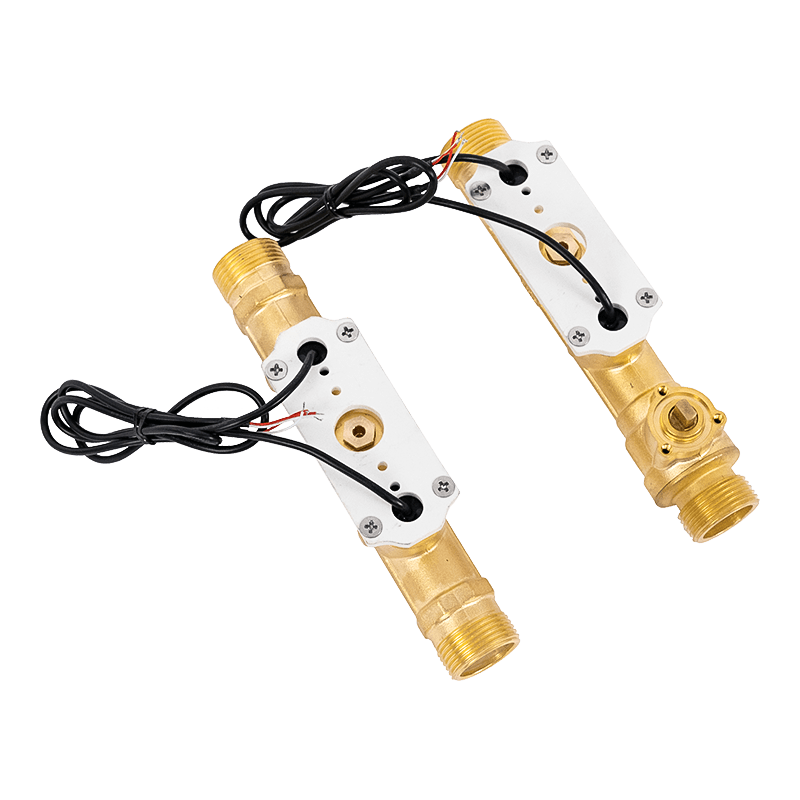 Ultrasonic Cold-Water Meter for Pipeline and Bulk SupplyWith no moving parts and low initial flow, this cold-water meter suits clean-water mains and bulk supply where low-flow sensitivity matters.View Product →
In practice, many portfolios end up mixed: pulse or photoelectric multi-jets across residential units, ultrasonic or electromagnetic meters on mains and bulk supply, and volumetric meters where low-flow accuracy is commercially important, such as drinking water points and rented accommodation.
If the reading has to stand up in a billing dispute, specify an absolute reading principle rather than a cumulative pulse count.
Sizing an Automatic Meter Correctly Before You Order
Most returns trace back to sizing, not to electronics. A meter that is too large will under-read at night and during low occupancy; a meter that is too small will wear early and lose accuracy at peak. The following inputs should be confirmed on site, not assumed from the drawing.
| Input | Why it matters | Typical mistake |
|---|---|---|
| Permanent and peak flow | Determines diameter and turndown ratio | Sizing on pipe diameter alone |
| Minimum night flow | Drives accuracy at low consumption | Ignoring low-flow revenue loss |
| Pressure and pressure loss | Affects downstream supply and meter life | Accepting a high pressure loss class on a long riser |
| Water temperature | Defines the temperature class and materials | Using a cold water meter on a hot water line |
| Water quality | Sediment, chlorine and hardness affect choice | Fitting ultrasonic meters without filtration |
| Pit or chamber conditions | Defines ingress protection and antenna placement | Assuming IP65 is enough in a flooded pit |
| Installation orientation | Horizontal and vertical models are not interchangeable | Fitting a horizontal register vertically and losing accuracy |
| Straight pipe requirement | Governs ultrasonic and Woltman performance | Installing directly after an elbow or reducer |
A simple rule is useful when drawings are incomplete: base the size on the highest sustained flow the site will realistically see, then check the turndown ratio against the lowest night flow you can tolerate losing. Domestic volumetric and multi-jet meters with high turndown ratios exist for exactly this reason, and on bulk supply a Woltman or ultrasonic meter with a wide measuring range usually beats a nominally correct but narrow-range alternative.
Oversizing an automatic meter is not a safety margin, it is a permanent revenue leak at low flow.
Prepaid, Valve Control and the Commercial Model Behind Automatic Meters
In rented housing, student accommodation, serviced apartments and industrial parks, the meter is often less about measurement and more about cash collection. A prepaid automatic meter shifts the credit risk from the operator to the occupant: water is bought in advance, and the valve closes when the balance runs out.
The mechanics are simple enough. A prepaid IC card meter stores a balance in the register. The occupant tops up through a card reader, a vending terminal, or in newer designs a Bluetooth connection to a phone app. The valve opens on credit and closes on exhaustion or on a command from the management platform.
Three practical points decide whether the scheme works:
- Valve reliability in real water. Debris and scale jam small valves, so strainers, valve torque and the number of daily operations all matter. A valve rated for a clean test bench can still stick on a site with iron pipes.
- Top-up logistics. Card-based systems need vending points and card replacement stock. Bluetooth or app-based top-ups reduce counter hours but require staff who can support residents who are not comfortable with phones.
- Policy, not technology. What is the emergency credit allowance, who reopens a valve at 2 a.m., and how is the deposit handled at handover? These questions cause more complaints than the meters ever do.
Where credit management is combined with remote reading, the sensible architecture is usually a two-way network with valve control at the meter and a clear audit trail at the platform. Systems that only close valves, without logging who issued the command, become difficult to defend when a tenant disputes an interruption.
Prepaid automatic metering succeeds or fails on valve reliability and top-up logistics, not on the accuracy of the register.
Hot Water and Heat Metering With Automatic Meters
Hot water is a different specification from cold water, and treating it as an afterthought causes premature failure. A single-jet hot water meter designed for elevated temperatures uses different materials and clearances from a cold water unit, and fitting a cold water meter on a hot line typically shows up as a cracked register or a seized rotor within a season.
Heat metering adds another layer. An ultrasonic heat meter pairs flow measurement with matched temperature sensors on supply and return, then integrates the temperature difference against volume to produce energy. The critical details are less glamorous than the electronics:
- Sensor pairing and cable length must match the meter, since the temperature pair is calibrated together.
- Installation position, usually the return line, must allow the sensors to sit in a well-mixed flow rather than a dead leg.
- Water quality matters more than in cold water metering, because scale on the sensor pockets shifts the temperature reading and therefore the billed energy.
- Commissioning should record the installation point, pipe diameter and initial readings, otherwise later disputes have no baseline.
For district heating and building-level settlement, the combination of an ultrasonic heat meter for energy and automatic water meters for domestic consumption gives a complete picture: how much heat entered the building, how much water each unit used, and where the difference sits. That comparison is often the quickest way to find a leaking riser or a bypassed coil.
In heat metering, the temperature sensor pair and its installation position affect the invoice as much as the flow sensor does.
What Actually Drives the Price of an Automatic Water Meter
Two quotations for the same nominal size can differ by a factor of two and both be honest. The difference sits in the cost blocks below, and a like-for-like comparison requires each block to be priced separately.
| Cost block | What moves it | Where buyers get caught |
|---|---|---|
| Body and materials | Brass, plastic, stainless steel, coating, thread standard | Quoted in brass, delivered in coated plastic |
| Measuring element | Multi-jet, volumetric, ultrasonic, electromagnetic | Comparing different principles as if they were equal |
| Register and electronics | Pulse, photoelectric, electronic display, memory, sealing | No agreed behaviour after power loss |
| Communication module | LoRa, NB-IoT, Cat-1, radio, wired bus | Module quoted without antenna or gateway |
| Network operation | SIM or eSIM subscription, gateway ownership, server hosting | Three-year running cost left out of the tender price |
| Valve and control | Valve type, torque, feedback, control protocol | Valve added without a control platform to drive it |
| Platform and integration | Licences, API work, billing integration, training | Integration treated as free |
| Testing, packing, freight | Type test reports, batch testing, export packaging | Freight and duties excluded from the comparison |
For volume buyers, three commercial terms deserve as much attention as the price itself. First, minimum order quantity per model, because a mixed portfolio of six models at low volume rarely gets the best unit price. Second, lead time defined in weeks from deposit and, separately, from artwork approval, since those two clocks start at different moments. Third, the spare parts policy: a five percent allowance of registers, batteries or valves at the original price protects a rollout better than a verbal promise of future availability.
Wholesalers and trading companies can be perfectly good channels for small mixed orders, but they add a margin and often a layer of delay on technical questions. For a project with a specification, a direct manufacturer conversation is usually faster, especially when a custom pulse rate, a specific protocol or a private labelling request is involved.
Ask every supplier to price the communication module, the subscription and the platform separately, so the five-year total becomes visible.
How to Vet an Automatic Meter Manufacturer, Supplier or Wholesaler
Factory capability is a reasonable proxy for delivery stability, but the numbers need interpretation. A plant of about 12,000 square metres with roughly 140 staff, more than 1,000 completed projects and annual sales above 100 million RMB describes a mid-sized specialist producer, the kind that can handle a utility tender and a distributor's mixed container in the same quarter. AMICO, produced by Ningbo Times Instrument, sits in that bracket, having operated since 2001 and structured its range around both mechanical meters and the smart variants built on top of them.
What the brochure will not tell you is how the company behaves when something goes wrong. Ten questions do most of the work:
- Which accuracy class and which standard does the model meet, and can you send the type test report?
- What is the declared IP rating, and was it tested on the finished unit or on the housing alone?
- How is battery life calculated? Ask for the arithmetic, not the headline figure.
- Which protocols are supported natively, and is the protocol document available before purchase?
- What happens to stored readings when the network is unavailable for a week?
- Can the report interval be changed remotely, and who is authorised to do it?
- What is the firmware update policy, and how are version differences between batches handled?
- What is the minimum order quantity, the production lead time and the warranty period, stated in writing?
- Which spare parts are recommended for a three-year stock, and at what price?
- Can you supply references from projects of similar size and similar climate?
Quality management is the second half of the assessment. Look for a described process across incoming material inspection, design control, machining, performance testing and packing, and ask to see records from one recent batch rather than a certificate on the wall. A supplier that can trace a specific serial number through its test bench is telling you something useful about how it will handle a field complaint two years later.
A manufacturer that can trace a single serial number through testing is far easier to work with than one that can only show certificates.
Commissioning an Automatic Meter and the Faults That Appear Later
Commissioning is where a rollout is won. Almost every problem that surfaces in month six was visible, in some form, on the day of installation.
- Serial number and network ID mapping. A single transposed digit puts one flat's consumption on another flat's bill and takes weeks to unpick.
- Pulse wiring and debounce settings. Wrong polarity, long unshielded runs and unsuppressed interference produce phantom or missing pulses.
- Antenna placement. Metal pit covers, concrete basements and riser shafts attenuate radio far more than the datasheet implies; walk-test the worst ten locations first.
- SIM activation and access point settings. Confirm data actually arrives at the platform before the crew leaves the site.
- Valve cycling. Open and close each valve twice during commissioning, so a jammed valve is found while the pit is still open.
- Sealing and tamper records. Photograph the seal and the register reading at handover, not after the first dispute.
- Time synchronisation. Meters and platform drifting apart makes interval data hard to reconcile.
- Battery condition at low temperature. Cold pits reduce usable capacity, so check the reported voltage in winter, not in the factory.
- Firmware version register. Record each unit's version so future batches can be matched during maintenance.
A short acceptance test, agreed in advance, is worth more than a long warranty clause: ten percent sample read against a calibrated reference, a full platform round trip, a valve command log, and a written exception list. Suppliers accept that scope readily when it is specified before the order rather than raised at handover.
Test the ten worst radio locations and cycle every valve during commissioning, because those two checks prevent most of the callbacks.
FAQ About Automatic Meters
What is an automatic meter?
An automatic meter is a utility meter that collects consumption or status data without manual reading and passes it to a collection device or platform. In water metering it usually combines a measuring element, a reading element such as pulse or photoelectric, and a communication route such as handheld radio, LoRa, NB-IoT or a wired bus.
Is automatic meter reading the same as a smart meter?
Not exactly. Automatic meter reading typically means one-way or semi-automatic data collection for billing. A smart meter usually adds two-way communication, remote configuration, alarms and often valve control. Many products sold as smart meters are closer to AMR with a platform attached, so ask specifically about two-way commands and firmware updates.
Should a residential compound use LoRa or NB-IoT automatic meters?
LoRa works well when the site is defined and the operator is willing to plan gateway positions, since there is no per-device subscription. NB-IoT suits scattered sites and utility-wide rollouts where no one wants to own a gateway estate. Run a coverage walk test at the worst ten locations before deciding, because buildings decide this more than datasheets do.
Can existing mechanical meters be converted to automatic reading?
Sometimes. Meters with a pulse output or a compatible register interface can be fitted with a data logger or a communication module. Units without a reading interface generally cannot, and adding a camera-based reader is only sensible for low volumes. For large portfolios, replacing with factory-integrated automatic meters is usually cheaper over a five-year horizon.
How accurate are ultrasonic automatic water meters at low flow?
Ultrasonic meters generally start measuring at lower flows than mechanical rotors and hold accuracy well across the range, which is why they are popular for bulk and district metering. That advantage depends on installation: adequate straight pipe, no trapped air and reasonable water quality. In sandy or heavily aerated lines, mechanical or filtered options may be more predictable.
What is a typical minimum order quantity and lead time for an automatic meter?
It varies by model and by whether the unit is standard or customised. Pulse rates, protocols, labelling and packaging all affect both quantity and schedule. Ask for two dates in writing: production lead time from deposit, and delivery lead time from artwork approval, because those clocks start at different points.
How long do batteries last in a wireless automatic meter?
Life depends on report frequency, payload size, network conditions and temperature, not on a single headline number. A unit reporting once a day and one reporting hourly can differ by years. Ask the supplier for the consumption arithmetic per report and the battery capacity, then check the assumption against your coldest installation site.
Do automatic meters work in flooded pits?
Only if the ingress protection is genuinely adequate and the antenna is placed accordingly. A sealed meter body with a poorly sealed cable gland still fills with water. For pits with standing water, specify a higher protection class, potted electronics and a remote antenna, and confirm that the protection was tested on the assembled unit.
What should an acceptance test include?
At minimum: a sample read against a calibrated reference, a full round trip from meter to platform, a logged valve command where applicable, verification of serial and network ID mapping, and a written exception list. Ten percent sampling plus a full check of the worst radio locations is a practical balance for large rollouts.
Where to Go Next
If you are shortlisting models, the fastest way to narrow the field is to match a product family to the reading route you have already chosen, rather than browsing every meter type in the catalogue. The two links below cover the range and one specific accuracy question that comes up in almost every technical review.
- The full AMICO water meter range, covering multi-jet, single-jet, volumetric, Woltman, photoelectric, prepaid, wireless, ultrasonic and heat metering families.
- Key advantages of ultrasonic water meters over mechanical meters, useful when a specification compares the two principles directly.
One closing thought for anyone writing a specification this quarter. Automatic meters are bought once and lived with for a decade, and the decisions that cause the most regret are rarely about the measuring chamber. They are about report intervals, gateway ownership, protocol documentation and who answers the phone when a valve will not close. Settle those four items in writing and the hardware choice becomes straightforward, whichever family you pick.
Choose the route, name the protocol, price the platform, then pick the meter, and the project stays predictable.