English
 中文简体
中文简体
Content
- 1 What Is a Multi-Jet Water Meter and How Does It Work
- 2 Core Technical Advantages of Multi Jet Water Meters
- 3 Plastic Multi-Jet Water Meter: Material Choice for Modern Networks
- 4 Multi-Jet Dry Water Meter: Sealed Register Technology Explained
- 5 Multi-Jet Water Meter With Impulse: Remote Reading and Data Integration
- 6 Typical Internal Construction of a Multi-Jet Water Meter
- 7 Application Scenarios Across Water Networks
- 8 Maintenance, Installation, and Service Life Considerations
- 9 Standards and Metrology Compliance
- 10 About Ningbo Shidai Instrument Co., Ltd
- 11 Frequently Asked Questions
Multi jet water meters remain one of the most dependable positive displacement metering technologies available for municipal, commercial, and industrial water networks today. Their multi-stream impeller design distributes water force evenly across the rotor, which reduces mechanical wear, stabilizes measurement accuracy across a wide flow range, and extends service life compared with simpler single-jet designs. This article explains how multi jet water meters work, why plastic multi-jet water meter bodies are gaining adoption in modern networks, how a multi-jet dry water meter register protects reading accuracy, and how a multi-jet water meter with impulse output supports automated meter reading. Ningbo Shidai Instrument Co., Ltd, operating under the AMICO Group, designs and manufactures this full family of multi jet water meters, and the sections below walk through the engineering principles, performance data, and practical applications that matter most to water utilities and system designers.
What Is a Multi-Jet Water Meter and How Does It Work
A multi-jet water meter is a rotor-type positive displacement flow meter. Inside the meter body, an impeller chamber, sometimes called an impeller box, splits the incoming water into several separate streams. Each stream is directed through its own channel so that it strikes the rotor blades tangentially from multiple points around the circumference at the same time, rather than from a single directed jet as in a single-jet meter. Because the water strikes the rotor from several symmetrical directions simultaneously, the axial thrust load on the rotor shaft and its support bearing is largely balanced out.
This balanced hydraulic loading is the core engineering advantage of the multi-jet configuration. In a single-jet meter, the rotor bearing absorbs an uneven side load every time water passes through, which accelerates wear at the pivot point over time. In a multi-jet water meter, the distributed jets cancel much of that lateral thrust, so the bearing and rotor pivot experience significantly reduced mechanical wear across the operating life of the meter. This structural difference is also why multi-jet meters tend to hold their accuracy class for longer periods between recalibration cycles, and why the design has become a preferred choice for cold water and hot water distribution metering worldwide.
The rotor's rotational speed is mechanically or magnetically coupled to a gear train that drives the register, which converts revolutions into a volumetric reading, typically expressed in cubic meters or gallons. Because the multi-jet arrangement also reduces the influence of turbulence and installation-related flow disturbances on the rotor, these meters are less sensitive to imperfect upstream piping conditions than some alternative metering technologies, which is one reason plumbing codes in many regions permit shorter straight-pipe run requirements for multi-jet installations.
Core Technical Advantages of Multi Jet Water Meters
Water utilities and facility engineers generally evaluate metering technology against four practical criteria: accuracy retention over time, mechanical durability, maintenance frequency, and ease of reading or integration with data systems. Multi jet water meters perform well across all four criteria, largely because of the balanced rotor design described above combined with a simple, low-part-count internal mechanism. Fewer moving parts means fewer failure points, which in turn means lower field service demand across a large metering population.
The horizontal bar chart above summarizes qualitative performance scoring across six attributes commonly used when specifying a multi-jet water meter for a metering program. The chart illustrates that accuracy retention and mechanical durability score highest, which aligns directly with the balanced-rotor engineering explained earlier, since reduced bearing wear is the mechanism that preserves accuracy class over long service intervals. Reading clarity also scores strongly because most multi-jet registers use a magnetic drive coupling that keeps the dial or digital display isolated from water pressure and debris, so the display face stays legible even after years in the field. Low maintenance need reflects the simplified internal gear train, which has fewer components that can jam, corrode, or require field adjustment compared with more complex metering mechanisms. Installation tolerance scores slightly lower than the other attributes only because, like most rotor meters, performance is still improved by reasonably straight upstream piping, even though multi-jet designs are more forgiving than single-jet alternatives. Wide flow range coverage confirms that these meters are engineered to remain within permissible error limits from relatively low flows up to their rated maximum flow, which is the practical range most residential, commercial, and light industrial connections actually experience during daily use.
Plastic Multi-Jet Water Meter: Material Choice for Modern Networks
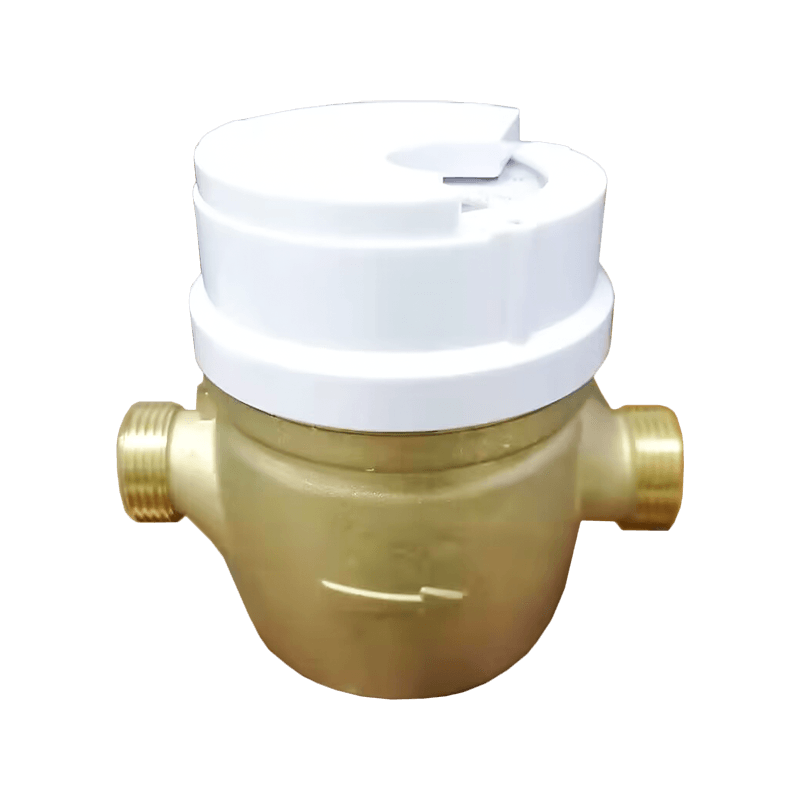
A plastic multi-jet water meter uses an engineering-grade composite or reinforced polymer for the meter body and internal chamber, in place of traditional brass. This shift in material has become a meaningful trend in the metering industry over the last decade, largely because modern engineering plastics offer excellent resistance to internal corrosion and mineral scaling, are non-conductive, and are considerably lighter than metal alternatives, which simplifies transport, handling, and installation for field technicians. A plastic multi-jet water meter is particularly well suited to water utilities managing large-scale meter replacement programs, since lighter meter bodies reduce installer fatigue and shipping costs across thousands of units.
Brass bodies, by comparison, offer high mechanical strength and have a long, proven history in water metering, but they can be more susceptible over time to selective corrosion in aggressive water chemistries, such as water with low pH or high chloride content, unless specifically alloyed to resist dezincification. Engineering plastics used in a modern multi-jet dry water meter or plastic multi-jet water meter housing are formulated to resist these chemical effects, which is why plastic-bodied meters are increasingly specified in regions with variable water quality or where non-metallic, non-conductive housings are preferred for electrical isolation reasons.
The radar chart compares plastic and brass multi-jet meter bodies across six practical attributes rather than ranking one material as universally superior. It shows that the plastic body extends further along corrosion resistance, weight advantage, and non-conductivity, which reflects the inherent chemical inertness and low density of engineering polymers used in a plastic multi-jet water meter housing. The brass body extends further along mechanical strength and impact toughness, reflecting the inherent rigidity of metal in situations involving heavy external impact or extreme mechanical stress during transport or installation. Chemical stability appears closely matched between the two materials on this chart, since both a correctly specified plastic compound and a correctly alloyed brass can perform reliably within normal potable water chemistry ranges. This comparison is intended to help specifiers match material choice to site conditions, such as choosing a plastic multi-jet water meter for a corrosive water environment or a lighter installation, while a brass-bodied unit may still be preferred where maximum mechanical robustness is the priority. Neither material eliminates the need for proper installation practice, and both benefit from correct pipe support so that the meter body itself does not bear unintended mechanical stress from the surrounding pipework.
Multi-Jet Dry Water Meter: Sealed Register Technology Explained
The term dry type, as used in a multi-jet dry water meter, refers to the register mechanism rather than the measuring chamber. In a dry register design, the counter or digital display sits inside a hermetically sealed compartment that is physically isolated from the water flowing through the meter. A magnetic coupling transmits the rotor's rotation across this sealed barrier to drive the register gears, so the water itself never contacts the reading mechanism.
This sealed approach in a multi-jet dry water meter offers a clear practical benefit: the register glass and internal gearing stay free of condensation, sediment, and mineral deposits that can otherwise cloud the display over years of underground or humid installation. Because the reading face remains clean, field technicians and remote reading systems both benefit from consistent legibility, which reduces disputed readings and supports accurate billing cycles. Dry register designs are now considered a standard expectation for long-service-life multi jet water meters, particularly in below-grade pits or humid mechanical rooms where a wet-register display would be prone to fogging.
Typical Applications That Benefit Most
- Underground meter pits subject to periodic flooding or high humidity.
- Long-term municipal deployments where field cleaning visits are limited.
- Multi-unit residential buildings where consistent, disputable-free readings matter for tenant billing.
- Industrial sites with elevated ambient moisture around the metering point.
Multi-Jet Water Meter With Impulse: Remote Reading and Data Integration
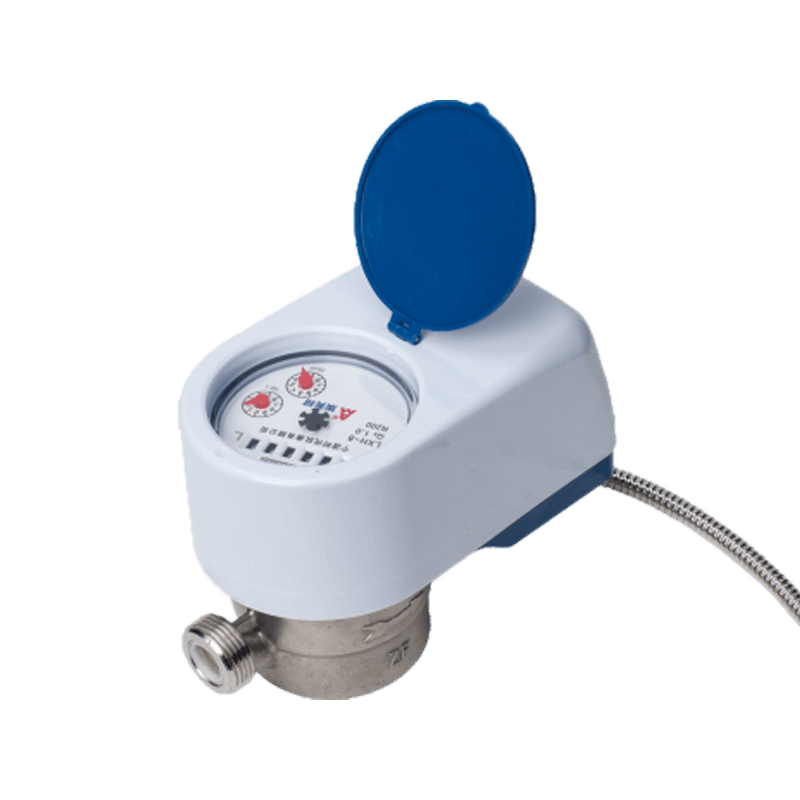
A multi-jet water meter with impulse output adds a reed switch or similar low-voltage contact that generates a pulse signal for every fixed increment of volume that passes through the meter, for example one pulse per liter or per specified unit of measured volume. This pulse output can be wired to a remote totalizer, a building automation system, or a data logger, which allows facility managers and utilities to collect consumption data without physically visiting each meter for a manual read.
Because the impulse output is generated directly from the rotor's rotation through the same magnetic coupling used in the dry register, a multi-jet water meter with impulse retains the accuracy characteristics of the base multi-jet mechanism while adding remote monitoring capability. This makes the impulse variant a practical stepping stone for utilities transitioning from manual meter reading toward automated meter reading, or AMR, and eventually toward advanced metering infrastructure, or AMI, systems that combine pulse or encoder outputs with wireless communication modules such as LoRa or NB-IoT transmitters.
The line chart above depicts the typical measurement error characteristic that a well-calibrated multi-jet water meter follows across its rated flow range, consistent with the general shape described in international metrology standards such as ISO 4064 for cold water meters. At the lowest flows near Qmin, the error curve dips furthest from the zero line because the rotor experiences the least hydraulic energy to overcome starting friction, though it still remains within the permissible tolerance band for that flow zone. As flow rises through the transitional flow point, labeled Qt on the chart, the curve moves closer to the zero error line and stabilizes, which reflects the point at which the meter typically qualifies for its stricter accuracy class. Through the normal operating range up to Qn, the error curve stays flat and close to zero, showing that the meter delivers its most consistent performance across the flow band that represents the majority of real-world daily consumption. Near Qmax, the curve remains within tolerance but can drift slightly, since sustained high flow introduces greater turbulence and mechanical loading on the rotor bearing. This overall curve shape is precisely why the balanced multi-jet rotor design matters in practice, because balanced hydraulic loading is what keeps the curve flat and predictable across such a wide span of everyday flow conditions, rather than fluctuating sharply the way a poorly balanced single-jet design might under similar conditions.
Typical Internal Construction of a Multi-Jet Water Meter
Understanding the proportion of internal components within a multi-jet water meter assembly helps explain why the design achieves its combination of accuracy and durability. While exact proportions vary by model and by whether the unit is a plastic multi-jet water meter or a brass-bodied version, the functional roles of each component group remain consistent across the product family.
The donut chart illustrates a representative weight distribution across the four major component groups that make up a typical multi-jet water meter assembly. The meter body and housing represent the largest share, since this section forms the outer pressure boundary and, in a plastic multi-jet water meter, is where the engineering polymer replaces what would otherwise be a heavier brass casting. The impeller and rotor assembly makes up the second largest share, reflecting the precision-molded blades and shaft that must be dimensionally accurate to maintain the balanced hydraulic loading discussed earlier in this article. The register and gear train, including the dry-sealed compartment in a multi-jet dry water meter, accounts for a smaller but still significant share, since this section houses the magnetic coupling, gear reduction, and either the mechanical dial or digital display, along with the pulse-generating reed switch in a multi-jet water meter with impulse variant. The strainer and seals make up the smallest share by weight but play an outsized functional role, since the inlet strainer protects the rotor from debris and the seals maintain the pressure boundary against the surrounding pipe connection. Reviewing construction in this way helps specifiers understand that material substitution, such as choosing a plastic body, primarily affects the largest component group by weight, which is exactly why switching to a plastic multi-jet water meter delivers a meaningful overall weight reduction for the finished unit.
Application Scenarios Across Water Networks
Multi jet water meters are specified across a wide range of settings because their flow range, durability, and now their remote-reading options through impulse output cover the practical needs of most metering applications. The table below summarizes common application settings and the meter attributes most relevant to each.
| Application | Typical Flow Demand | Recommended Feature |
|---|---|---|
| Residential and multi-unit housing | Low to moderate, variable | Plastic multi-jet water meter for lightweight installation |
| Commercial buildings | Moderate, fluctuating by hour | Multi-jet dry water meter for long-term reading clarity |
| Industrial facilities | Moderate to high, continuous | Robust body construction with wide flow range coverage |
| Municipal distribution networks | Variable across large populations | Multi-jet water meter with impulse for AMR data collection |
| Agricultural irrigation | Seasonal, occasionally high | Durable rotor design for intermittent heavy use |
Across all five settings in the table, the underlying multi-jet mechanism stays consistent, while the specific variant selected, whether a plastic multi-jet water meter, a multi-jet dry water meter, or a multi-jet water meter with impulse, is matched to the operational priorities of the site. This modular approach allows a single core metering technology to serve very different infrastructure needs without requiring utilities or facility managers to manage multiple unrelated metering platforms.
Maintenance, Installation, and Service Life Considerations
Proper installation extends the effective service life of any multi-jet water meter regardless of body material. Utilities and installers generally follow a short list of practical guidelines to protect long-term accuracy.
- Install the meter horizontally or per the manufacturer's stated orientation, since rotor balance assumptions depend on correct mounting position.
- Maintain a reasonably straight section of upstream pipe where possible to reduce turbulence entering the impeller chamber.
- Flush new piping thoroughly before final meter installation to prevent construction debris from reaching the inlet strainer.
- Periodically inspect the strainer in high-sediment water sources, since a partially blocked strainer can gradually restrict flow and affect readings.
- Protect below-grade installations from flooding where possible, even though a multi-jet dry water meter register is sealed against water ingress by design.
Because multi jet water meters use a mechanically simple gear-driven register, most field maintenance activity centers on strainer cleaning and periodic accuracy verification rather than internal repair, which keeps lifecycle costs predictable for large metering fleets.
Standards and Metrology Compliance
Multi-jet water meters intended for potable water applications are generally designed and tested with reference to recognized metrology frameworks, such as the ISO 4064 series of standards for water meters for cold potable water and hot water, which defines accuracy classes, permissible error limits, and flow zone definitions including Qmin, Qt, Qn, and Qmax. Meters designed to these frameworks are evaluated across the full stated flow range under controlled test conditions, which is the basis for the characteristic error curve shape discussed earlier in this article. Compliance with recognized international frameworks gives water utilities and specifiers a consistent basis for comparing accuracy claims and flow range ratings across different multi-jet meter models and body materials.
About Ningbo Shidai Instrument Co., Ltd
Ningbo Shidai Instrument Co., Ltd is a subsidiary of AMICO Group and operates as a comprehensive high-tech enterprise specializing in the research, development, production, and sales service of AMICO brand metering products. The company's product range includes IC card water meters, Bluetooth water meters, heat meters, photoelectric direct reading meters, pulse remote transmission meters, LoRa wireless meters, NB-IoT wireless meters, WS water meters, WPD water meters, single flow communication water meters, capacitive direct drinking water meters, and intelligent water meter reading systems, alongside the multi-jet water meter families described throughout this article, including plastic multi-jet water meter, multi-jet dry water meter, and multi-jet water meter with impulse variants.
By combining engineering expertise in rotor-type positive displacement metering with modern communication modules such as pulse output, LoRa, and NB-IoT connectivity, Ningbo Shidai Instrument Co., Ltd supports water utilities and facility operators as they modernize metering infrastructure while maintaining the proven reliability associated with multi-jet meter technology.
Frequently Asked Questions
Q1: What makes a multi-jet water meter different from a single-jet meter?
A multi-jet water meter directs water through several channels that strike the rotor simultaneously from multiple points, which balances hydraulic loading on the rotor bearing and reduces mechanical wear compared with a single directed jet.
Q2: When should a plastic multi-jet water meter be chosen over a brass body?
A plastic multi-jet water meter is often preferred where lightweight installation, non-conductive housing, or resistance to corrosive water chemistry are priorities, while a brass body may be favored where maximum mechanical impact resistance is the main concern.
Q3: What is the benefit of a multi-jet dry water meter register?
A multi-jet dry water meter isolates the register from water contact using a magnetic coupling, which keeps the display face clean and legible over long service periods, particularly in humid or below-grade installations.
Q4: How does the impulse output on a multi-jet water meter with impulse work?
A reed switch generates a pulse for each fixed volume increment measured, allowing the signal to be read remotely by a data logger or automated meter reading system without a manual site visit.
Q5: Do multi-jet water meters require special upstream piping?
Multi-jet meters are generally more tolerant of imperfect upstream flow conditions than some other metering technologies, though a reasonably straight upstream pipe section still supports the most consistent accuracy.