English
 中文简体
中文简体
Content
- 1 What Is a Fire Hydrant Meter?
- 2 How Fire Hydrant Meters Work
- 3 Common Types of Hydrant Meter Assemblies
- 4 When a Fire Hydrant Meter Is Required
- 5 Flow Capacity and Meter Sizing for Hydrant Duty
- 6 Hydrant Meter Technology: Side-by-Side Comparison
- 7 Installation and Safe Operation on the Fire Hydrant
- 8 How to Select and Buy a Fire Hydrant Meter
- 9 Maintenance, Calibration, and Winter Storage
- 10 Frequently Asked Questions about Fire Hydrant Meters
- 10.1 Do I need a permit to use a fire hydrant meter?
- 10.2 Can I put any water meter on a fire hydrant?
- 10.3 What size fire hydrant meter do I need?
- 10.4 Is a backflow preventer required with a hydrant meter?
- 10.5 Can a fire hydrant meter be used for firefighting?
- 10.6 Who is responsible for damage to the meter?
- 10.7 How is the temporary water bill calculated?
- 11 Final Words: A Hydrant Meter Is a Compliance and Billing Tool
A construction crew arrives on a site where the permanent water connection has not been installed. The nearest water source is a fire hydrant on the boundary. If the crew opens the hydrant without any metering, the water is technically stolen; in most municipalities, that is a violation that can lead to heavy fines or even a stop-work order. The proper answer is a portable fire hydrant meter: a compact, certified flow meter that bolts onto the hydrant outlet and records exactly how much water is used for temporary needs such as concreting, dust control, pipeline flushing, and tanker filling.
Choosing the right fire hydrant meter comes down to four decisions: the connection size, the flow range, the required approvals, and the operating environment. A meter that is too small creates pressure loss and cannot pass the flow the job needs. A meter that is too large cannot register the small flows that occur overnight, which means lost revenue for the utility and possible fines for the user. This guide explains how fire hydrant meters work, how to size them correctly, and what to verify when you buy from a manufacturer, supplier, or wholesale distributor.
Key takeaway: a hydrant meter is a legal billing instrument. Choose the size and technology according to the actual job flow, not the outer diameter of the hydrant.
What Is a Fire Hydrant Meter?
A fire hydrant meter is a flow measurement device connected to a fire hydrant outlet to measure non-firefighting water use. It creates a legal, auditable record of consumption so the water utility can invoice the contractor or property owner accurately. Hydrant meters are always temporary in nature: they are installed for the duration of a construction project, an event, or a maintenance activity, and removed when normal water service begins.
A typical fire hydrant meter assembly contains the meter body, an internal measuring element, a register showing total volume, and often a strainer to protect the mechanism from particles in the distribution network. Most assemblies also include a backflow prevention element because the hydrant belongs to the public drinking water system, and any direct connection to hoses, tanks, or pumps can create a contamination risk.
The main components of a hydrant meter assembly include:
- The flow metering element, either a multijet impeller, a screw-wing turbine (Woltman), or an ultrasonic and electromagnetic sensor;
- The register that totals the volume, read locally or through a remote module;
- A strainer that removes sand, rust, and scale before they reach the measuring chamber;
- A check valve or dual-check backflow preventer that stops contaminated water from returning into the public main;
- An inlet and outlet connector matching the hydrant thread, typically a 2.5-inch NH or NST thread;
- Optional pressure gauge and hose adapters for the specific site application.
Because hydrant meters are used for commercial billing, they must comply with metrology standards such as ISO 4064 or OIML R49, with accuracy class 2 at minimum. Utilities usually maintain a list of approved meter models. Any meter not on that list is not accepted, regardless of its price or quality.
Key takeaway: only buy type-approved hydrant meters and confirm that they are calibrated and sealed before first use.
How Fire Hydrant Meters Work
Mechanical hydrant meters measure flow with either an impeller or a turbine rotor. In a multijet meter, water enters the measuring chamber through multiple jets and drives a rotor whose speed is proportional to the flow. In a Woltman meter, water passes axially through a screw-shaped rotor, which gives a stable relationship between flow and rotational speed while keeping pressure loss low. In both cases, a magnetic coupling transfers the rotor movement to a dry register, so the dial remains readable even during long service between calibrations.
Woltman meters deserve special attention in hydrant work because they are designed for continuous high flows. The WPD horizontal screw-wing meter, with its removable measuring element, can be inspected and recalibrated while the meter body stays in the pipeline. That is a practical advantage for site meters that must be certified every season without removing the entire assembly from the hydrant setup.
Smart hydrant meters use ultrasonic transducers or electromagnetic electrodes instead of moving parts. Ultrasonic meters calculate flow from the transit time of acoustic pulses between two ceramic transducers; electromagnetic meters measure the voltage generated when conductive water passes through a magnetic field. Their main advantage is rangeability: a typical smart meter measures from a very small trickle up to the full pipe flow, which makes it much harder for site users to hide overnight water use or slow leaks.
Both technologies have a place in the market. Mechanical meters are proven over decades, simple to service in the field, and inexpensive to repair. Smart meters cost more initially but reduce the risk of unmeasured flows and support automatic data collection for utility billing systems.
Key takeaway: the working principle determines the flow range and maintenance cost. Mechanical meters are robust and serviceable; ultrasonic and electromagnetic meters measure a much wider range without moving parts.
Common Types of Hydrant Meter Assemblies
Hydrant meters are rarely supplied as a bare meter. Manufacturers and suppliers build them into complete assemblies that can be installed on the hydrant in minutes. The configuration you need depends on the water quality, the flow rate, the billing method, and local backflow regulations. The following horizontal cards show the most common assembly options ordered from simple to smart.
Basic portable meter
Meter plus hydrant coupling.
Suited for permitted short-term
draws where backflow
protection is handled by the site.
Meter with strainer
Adds a mesh strainer upstream
of the measuring chamber.
Recommended when line flushing
or unknown pipe debris is expected.
Meter with backflow preventer
Integrates dual-check or
reduced-pressure protection.
Required by many utility
programs before connection
to hoses or tanks.
Meter with pressure gauge
Shows residual pressure across
the meter and downstream.
Useful during commissioning
and flow testing.
Smart and remote reading
Battery-powered with pulse
output, LoRa, or NB-IoT.
Supports telemetry and
automated monthly billing.
For ordinary construction-site duty up to about 16 cubic meters per hour, a multijet dry dial meter is a dependable and economic choice. The dry dial keeps the register free of condensation, and the impulse output can be connected to a simple telemetry module when the utility requires remote reading.
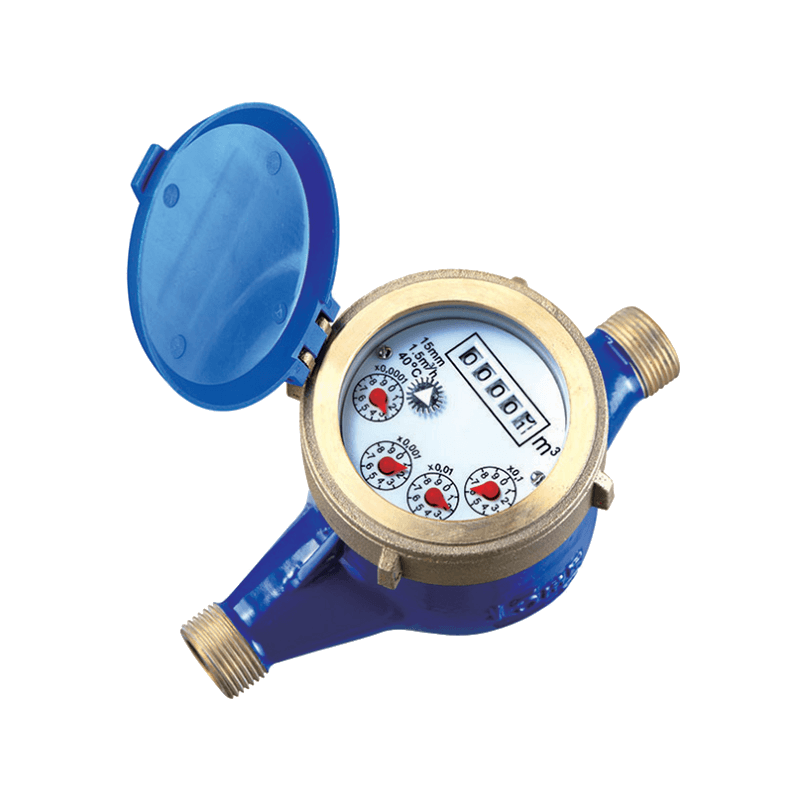 Multi-Jet Dry Dial Water Meter for Construction SitesThis dry dial meter suits ordinary site duty up to 16 m³/h, with a vacuum-sealed register and optional pulse output for remote reading when utility telemetry is needed.View Product →
| Assembly type | Typical connection sizes | Recommended duty | Key feature |
|---|---|---|---|
| Multijet dry dial meter | 1 in to 1.5 in | Light construction, site cabins, cleaning | Sensitive at low flows, compact, economic |
| Woltman WPD meter | 2 in to 4 in | Concreting, flushing, tanker filling | Low pressure loss, removable measuring element |
| Single-jet meter with impulse | 0.5 in to 1 in | Small temporary supply with telemetry | Impulse output for remote counting |
| Ultrasonic or electromagnetic meter | 2 in to 6 in | Demanding duties, night flows, smart metering | High rangeability, no moving parts |
Key takeaway: match the assembly type to the risk profile of the job. A clean low-flow site needs only a basic meter, while flushing and tanker operations justify a strainer plus backflow protection.
When a Fire Hydrant Meter Is Required
Utilities require fire hydrant meters whenever water is drawn from a hydrant for anything other than firefighting. The exact rule differs from city to city, but the common principle is simple: no permit, no meter, no water. The meter protects the utility revenue stream and documents that the use was authorized.
Typical situations that demand a fire hydrant meter include:
- New building construction before the permanent water service is activated;
- Renovation and retrofit projects where the existing main must stay in service;
- Road and bridge work, including dust suppression, soil compaction, and equipment washing;
- Flushing and commissioning of newly installed pipelines and water mains;
- Hydrostatic testing of tanks, reservoirs, and large-diameter pipes;
- Filling water tankers for temporary drinking water supply;
- Festival and event sites with temporary kitchens, washrooms, or cooling systems;
- Large pool filling and landscape irrigation where no permanent meter is available.
Even short-term use can require a meter. Many utilities only waive the requirement for fire flow testing performed by the fire department, and sometimes for very small volumes under an explicit permit. Taking water without authorization is treated as water theft and can trigger a costly fine plus reimbursement of the estimated volume. In serious cases, repeated violations can lead to the termination of the site water account or legal action.
Key takeaway: assume a permit and a hydrant meter are required whenever your activity withdraws more than a nominal volume from a fire hydrant.
Flow Capacity and Meter Sizing for Hydrant Duty
A fire hydrant outlet can pass a very large flow, but most temporary works actually draw between 2 and 40 cubic meters per hour. The meter must be sensitive enough to register small flows, yet large enough to pass peak demand without excessive pressure loss. Meter capacity is defined by Q3, the maximum continuous working flow according to ISO 4064, and by the rangeability ratio R. A meter with a higher R measures lower minimum flows. The chart below compares the typical Q3 values for hydrant meter connection sizes from 1 inch to 4 inches.
On a typical construction site, a 1-inch meter rated Q3 10 m³/h is sufficient for site cabins, sanitary use, and light cleaning, and its small dimensions keep the assembly easy to handle. Stepping up to a 1.5-inch meter, rated at 16 m³/h, covers medium-scale concreting and general washdown work. A 2-inch Woltman meter, rated at 25 m³/h, is the most common hydrant meter size in practice because it balances flow capacity, pressure loss, and portability. Pipeline flushing, which is often performed at 3 to 6 meters per second inside the flushed main, quickly exceeds the capacity of a 2-inch meter and calls for a 3-inch unit rated at 63 m³/h. Hydrostatic testing and high-demand operations may require a 4-inch meter rated at 100 m³/h. These figures, however, describe continuous capacity, not sensitivity. A mechanical meter only starts to register accurately above its Q1 flow, which is roughly Q3 divided by R; below that value, water passes through but the register may not move. That behavior is a real issue for sites where taps are left dripping or a tank float valve leaks. Ultrasonic and electromagnetic meters avoid most of this problem because their high R values allow them to resolve very low flows. Pressure loss is the other side of the equation: too small a meter produces an unacceptable pressure drop at the required flow, so the available hydrant pressure determines the minimum practical size. The recommended approach is to estimate the maximum probable flow, keep at least a 25 percent margin below Q3, and confirm that the minimum expected flow stays above Q1. A quick calculation will tell you whether a 2-inch Woltman meter is adequate or whether the job really needs a 3-inch unit. This is exactly the kind of duty for which the WPD horizontal screw-wing meter is designed, combining a wide Q3 range with a removable measuring element for easy verification.
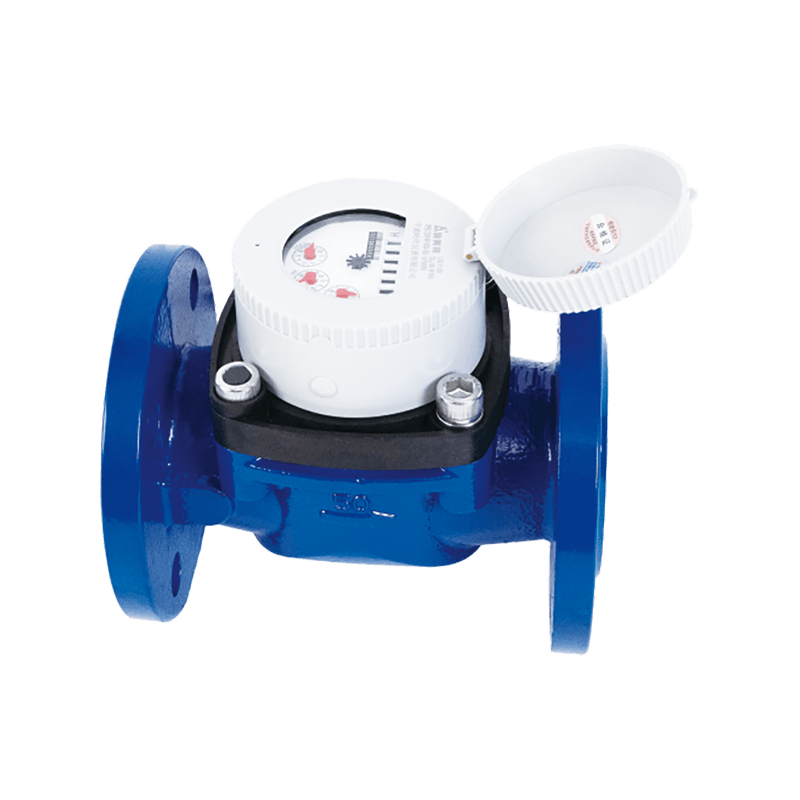 WPD Horizontal Screw-Wing Meter with Removable ElementDesigned for large-flow main pipelines and secondary supply, this meter features a wide Q3 range, hydraulic dynamic balance, and a detachable movement for easy verification.View Product →
Key takeaway: size the hydrant meter so that peak site demand stays below Q3 and the lowest overnight flow stays above Q1. The worst choice is a meter that is too large, because it reads zero on small leaks.
Hydrant Meter Technology: Side-by-Side Comparison
Once the connection size is known, the next decision is the measuring technology. The table below compares the four technologies that appear most often in fire hydrant metering: multijet mechanical, Woltman screw-wing, ultrasonic, and electromagnetic. Typical values are shown because standard flow ratings vary by model and standard; always confirm with the manufacturer's datasheet.
| Technology | Measuring principle | Typical Q3 range | Moving parts | Best use for hydrant duty |
|---|---|---|---|---|
| Multijet mechanical | Impeller driven by multiple jets | 1 to 16 m³/h | Yes | Light construction, site cabins, low-flow accuracy |
| Woltman WPD | Axial screw-wing rotor | 10 to 400 m³/h | Yes | Continuous high flow, flushing, tankers, low pressure loss |
| Ultrasonic | Acoustic transit time | 2.5 to 630 m³/h | No | Wide rangeability, remote reading, minimal maintenance |
| Electromagnetic | Faraday induction in conductive water | 1 to 250 m³/h and above | No | Wide rangeability, high accuracy, telemetry and billing |
Multijet meters are the workhorses of small temporary supply. They are inexpensive, robust, easy to repair, and familiar to every utility technician. Their limitation is size: above 1.5 inches they become heavy, and their pressure loss grows quickly as the flow increases. Woltman meters are the traditional hydrant meter. The axial screw gives an excellent relationship between flow indication and actual volume, so accuracy holds up over a wide range. The horizontal WPD body also drains well when the meter is removed and stored after use, which reduces frost damage in cold climates.
Ultrasonic meters solve the low-flow problem completely. Because there are no moving parts, there is no wear, no friction, no pressure drop caused by a rotor, and no measurable start-up threshold. That is why battery-powered ultrasonic hydrant meters are becoming common in water utility rental fleets. Electromagnetic meters offer similar advantages and are often the choice for large-diameter hydrant metering where telemetry, high accuracy, and long-term reliability matter more than first cost. Both smart technologies allow the utility to read the meter without visiting the site, an important benefit when hydrant meters are scattered across dozens of active construction projects.
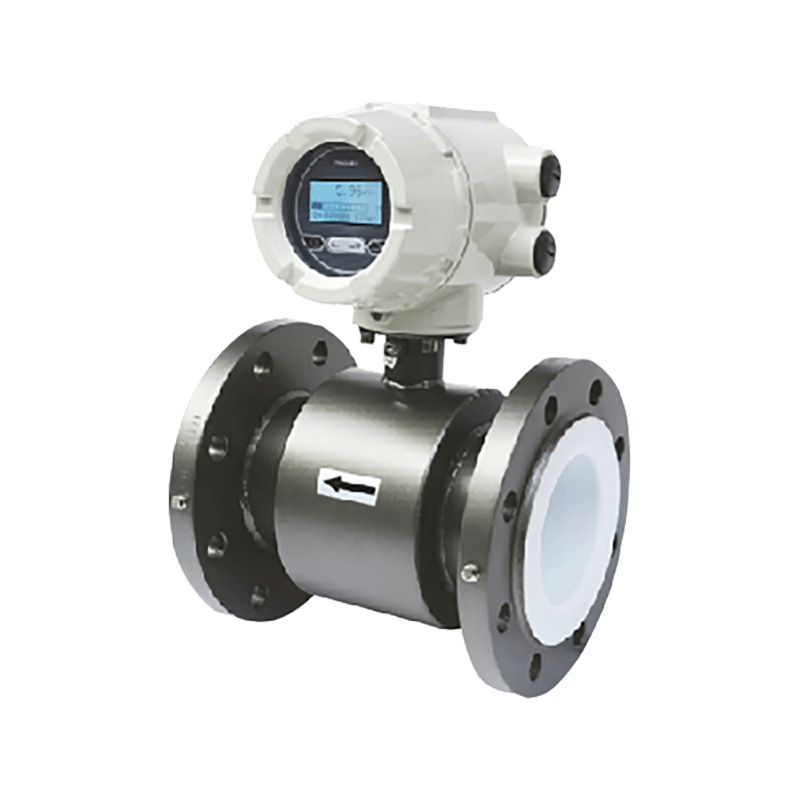 Electromagnetic Water Meter with High Accuracy and TelemetryWith no moving parts, ultra-low starting flow, and IP68 protection, this meter resolves low-flow readings and supports remote communication options like NB-IoT and GPRS.View Product →
Key takeaway: if the supply is clean and the flow is steady, mechanical technology is proven and cost-effective. If you must bill down to a trickle or read meters remotely, choose an ultrasonic or electromagnetic type.
Installation and Safe Operation on the Fire Hydrant
An incorrectly installed hydrant meter can under-register, create a contamination path, or cause physical damage to the hydrant and the meter itself. The installation procedure is simple, but each step has a purpose and should not be skipped.
- Obtain the water utility permit and confirm that the meter model is on the approved list; record the meter serial number and the start reading.
- Inspect the hydrant outlet threads and the gasket; replace worn gaskets to prevent air intake, leakage, and registration errors.
- Install a strainer upstream, then mount the meter in the orientation marked on its nameplate, horizontal for WPD-type meters unless otherwise stated.
- Install a backflow prevention device between the meter and the hose or tank, as required by local plumbing regulations.
- Open the hydrant valve slowly to avoid water hammer, which can shock the register mechanism and distort the calibration.
- Check all connections for leaks before leaving the meter unattended, and secure the meter with a lock or seal to prevent tampering.
- Read the register at the start and end of the billing period and report the readings to the utility in the required format.
The main physical risks for a portable hydrant meter are water hammer, freezing, and impact damage. Water hammer happens when the hydrant valve is opened quickly; the pressure surge can crack a register window or bend a rotor. Freezing is the most common cause of failure in temperate climates, because a meter full of water left outside overnight can crack its body. A simple drain-down procedure, or a well-ventilated storage box, prevents most of these failures. Impact from site vehicles is prevented by positioning the meter close to the hydrant, protected by a bollard or a sturdy hose ramp.
Key takeaway: slow opening, correct orientation, backflow protection, and winter draining prevent more than 80 percent of hydrant meter failures.
How to Select and Buy a Fire Hydrant Meter
Selecting a hydrant meter is a purchasing decision, not only an engineering one. The meter must be permitted, sized, priced, and documented. A practical selection procedure follows seven steps.
- Confirm the utility requirements: approved meter list, permit fees, deposit, and reporting format.
- Estimate the maximum flow by counting the largest simultaneous uses, such as two pumps and a hose running at the same time, then add a 25 percent margin.
- Determine the minimum flow, including overnight dripping, float-valve intake, and leakage from site equipment.
- Select the connection size and thread type, NH, NST, or BSP, based on the hydrant spout and the hose system.
- Choose the technology based on flow range, smart reading needs, and budget.
- Check material and build quality: brass or ductile iron body, protective coating, and UV-resistant register window.
- Buy from a manufacturer with metrology certification, after-sales support, and spare parts availability.
The table below pairs common site demand patterns with the recommended meter configuration. The left column describes the typical duty of a construction or utility operation; the right column gives the meter that fits that duty without oversizing or undersizing.
|
Common site demands
|
Recommended meter
|
When buying in volume for a municipality, utility, or rental company, the manufacturer matters as much as the meter itself. A factory with a formal quality management system and a complete test bench can supply consistent calibration, spare parts, and custom connection options. Ningbo Times Instrument Co., Ltd. manufactures AMICO-brand water meters for export and offers a complete range from multijet and volumetric types to Woltman, ultrasonic, electromagnetic, and wireless water meters. Many wholesale buyers also require type approval certificates, calibration reports, and a declaration of conformity; these documents are mandatory for hydrant meters because they are billing devices. Check the warranty, the availability of interchangeable measuring elements, and whether automatic meter verification equipment exists at the factory.
Key takeaway: verify approval status, calibration traceability, and spare parts commitment before ordering. A hydrant meter is a billing instrument, so its documentation is part of the product.
Maintenance, Calibration, and Winter Storage
Hydrant meters live a hard life. They are transported from site to site, connected with stiff hoses, left outdoors, and exposed to sand, chlorinated water, and impact. A simple maintenance routine keeps them accurate and extends their service life significantly.
- Inspect the register and the glass after each use; replace cracked glasses immediately because water entering the dial destroys the movement.
- Clean or replace the strainer whenever the meter is returned from a flushing job.
- Test the backflow preventer annually, or as required by the local code.
- Check for leaks around the meter body and the coupling gaskets.
- Winterize before storage: drain all water through the meter, dry the body, and store it in a heated room.
- Recalibrate before each rental season or according to the utility schedule, usually every 6 to 12 months.
- Keep spare O-rings, gaskets, and register modules on hand for fast turnaround.
For ultrasonic meters, maintenance is mainly about the batteries and the coupling element between the transducer and the pipe wall. The cleaning procedure is straightforward but must be performed carefully with the correct tools. The same discipline applies to the outer case: keeping the display clean and the lens unscratched helps the meter pass visual inspection at the utility yard.
Key takeaway: a hydrant meter that is not recalibrated is not a billing device; it is a guess. Schedule calibration before the season and after every major repair.
Frequently Asked Questions about Fire Hydrant Meters
Do I need a permit to use a fire hydrant meter?Yes, in most municipalities. A permit or registration ties the meter to a specific address, a contractor license, and a billing account. Application forms and fees vary, so check with the local water utility before ordering equipment. |
Can I put any water meter on a fire hydrant?No. Hydrant meters must be on the utility approved list, matched to the hydrant thread, rated for the required flow, and calibrated. A household meter is too restrictive and will under-register at the high flows typical of hydrant supply. |
What size fire hydrant meter do I need?Start with the maximum hourly demand. Site cabins and light works generally need a 1-inch to 1.5-inch meter; medium concreting and washing need a 2-inch meter; flushing and tanker filling usually require a 3-inch or 4-inch meter. Confirm with the utility, which often specifies a minimum meter size in its published rules. |
Is a backflow preventer required with a hydrant meter?Usually yes. The hydrant is part of the potable water network, and any hose lying in a ditch or connected to a tank can create a cross-connection. Some municipalities integrate dual-check protection inside the meter assembly; others require a separate approved backflow device downstream of the meter. |
Can a fire hydrant meter be used for firefighting?No. Hydrant meters are not firefighting equipment. If you need water for fire flow tests, contact the fire department or the utility; they will provide the specific procedure and often waive metering during the test. |
Who is responsible for damage to the meter?The permit holder. Typical agreements make the customer liable for loss, theft, freezing, and damage from misuse. A deposit is usually required, and the deposit is refunded when the meter is returned in good condition with all accessories. |
How is the temporary water bill calculated?The utility reads the register at the start and end of the permit period, and the billed volume is the totalized difference. Some utilities also add a service fee, an administrative charge, or a sewer surcharge based on the metered volume. |
Key takeaway: when in doubt, ask the utility before ordering. The permit, the approved equipment list, and the meter size are usually defined in their published rules.
Final Words: A Hydrant Meter Is a Compliance and Billing Tool
A fire hydrant meter turns an unmeasured draw from the public main into an accurate, auditable record. For contractors, it is the legal way to obtain water before permanent service is connected. For utilities and rental companies, it is a source of revenue and a control point against water theft. The right meter is sized to the duty, approved by the utility, correctly installed, and maintained in calibration.
Buying from an established manufacturer makes the whole process simpler. A factory that produces certified meters, provides calibration documentation, and supplies spare parts as a regular product line will keep your hydrant meter program running for years. Ningbo Times Instrument Co., Ltd. offers a full series of AMICO water meters, from multijet and Woltman types to ultrasonic, electromagnetic, and wireless smart meters, and supports wholesale and overseas distribution.
Related resources
Key takeaway: a compliant, correctly sized, and properly calibrated fire hydrant meter is not an expense; it is the cheapest insurance against fines, billing disputes, and contaminated water claims.