English
 中文简体
中文简体
Content
- 1 How the Time-Difference Method Works
- 2 Key Technical Specifications at a Glance
- 3 Ultrasonic vs. Mechanical Meters: A Performance Comparison
- 4 Measurement Accuracy Over Time: The Ultrasonic Advantage
- 5 Smart Communication Capabilities and IoT Integration
- 6 Residential vs. Industrial Applications
- 7 Installation Requirements and Best Practices
- 8 About NINGBO SHIDAI INSTRUMENT CO., LTD
- 9 Frequently Asked Questions
An ultrasonic water meter is a precision flow measurement device that uses sound wave technology — specifically the time-difference method — to calculate the volume of water passing through a pipeline without any mechanical moving parts. Unlike traditional mechanical meters, an ultrasonic meter achieves high measurement accuracy up to R≥250, eliminates wear-related degradation, and supports intelligent remote reading via RS-485, M-BUS, GPRS, and wireless interfaces. For utilities, property managers, and industrial facilities seeking a smart water meter with long-term reliability, the ultrasonic water meter is the definitive modern solution.
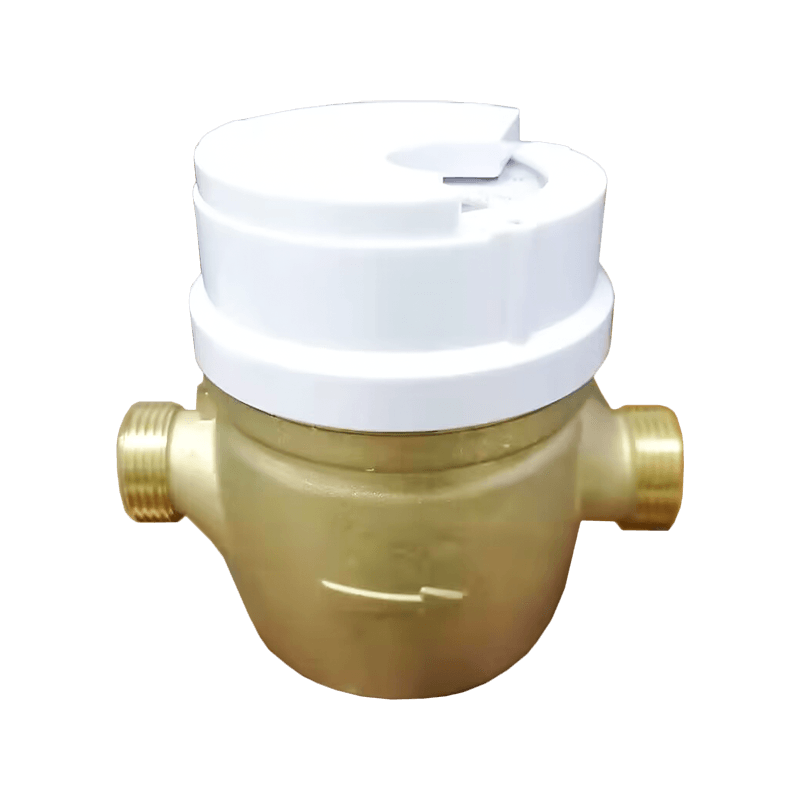
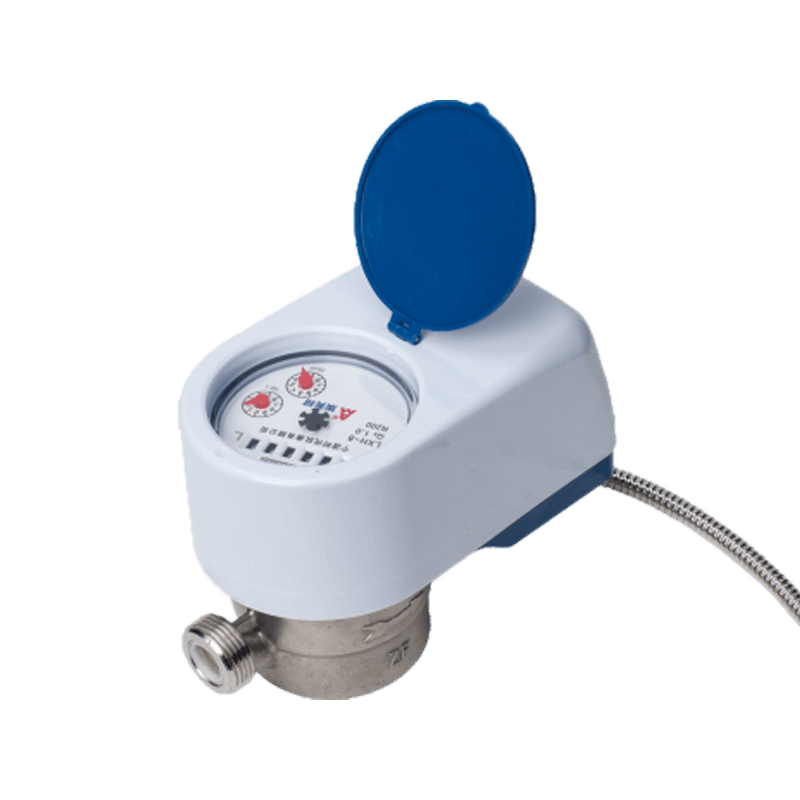
The device records the total volume of cold water flowing through a pipeline with near-zero pressure loss under common flow conditions. It is powered by internal lithium batteries — no external power supply is required — and the measurement data can be saved for up to ten years. With body materials ranging from high-quality brass (DN15–DN40) to cast iron (DN50–DN300), these meters serve both residential and industrial applications while maintaining a high protection level and strong anti-interference capability.
How the Time-Difference Method Works
The core operating principle of an ultrasonic water meter is the time-difference (transit-time) method. Two ultrasonic transducers are mounted on opposite sides of the pipe. One transducer sends a sound pulse downstream (in the direction of water flow), while the other sends a pulse upstream (against the flow). Because sound travels faster when carried by a moving medium, the downstream pulse arrives slightly sooner than the upstream pulse. The meter's electronics measure this tiny time difference — often just nanoseconds — and use it to calculate flow velocity automatically.
Since the calculation is purely electronic and automatic, there are no moving parts inside the meter. This eliminates the primary failure mode of mechanical flow meters: abrasive wear on impellers or gears. The result is a digital water meter that maintains its calibration accuracy throughout its entire service life with zero maintenance. The non-contact measurement principle also means the meter is completely unaffected by sand, bubbles, or other impurities, and places no electrical conductivity requirements on the water.
The diagram above illustrates the time-difference principle at the heart of every ultrasonic flow meter. Transducer A fires a pulse that travels downstream with the current, arriving at Transducer B slightly ahead of schedule. Simultaneously, Transducer B fires a pulse that must fight upstream against the flow and arrives at Transducer A slightly late. The processor captures both arrival times, computes the delta (Δt), and applies a known pipe-geometry formula to yield a precise flow velocity reading. This calculation is performed dozens of times per second, ensuring that sudden changes in demand — such as a burst or a running tap — are detected immediately. Because the entire process is electronic and non-invasive, even the smallest residential ultrasonic water meter can maintain accuracy across an extraordinary dynamic range (R≥250), meaning it measures accurately at both very low trickle flows and maximum rated flows without any adjustment or recalibration.
Key Technical Specifications at a Glance
Understanding the specification sheet is essential when selecting the right smart ultrasonic water meter for a project. The table below summarizes the core parameters of the AMICO ultrasonic water meter range, helping engineers and procurement teams make an informed comparison.
| Parameter | DN15–DN40 (Residential) | DN50–DN300 (Industrial) |
|---|---|---|
| Body Material | High-quality Brass | Cast Iron |
| Measurement Method | Transit-Time (Time-Difference) Ultrasonic | |
| Accuracy Class | R≥250 | |
| Max Working Pressure | MAP 10 Bar | |
| Temperature Grade | T30 | |
| Power Supply | Internal Lithium Battery (no external supply) | |
| Data Retention | Up to 10 years | |
| Communication Interfaces | RS-485, M-BUS, GPRS, Wireless (LORA / NB-IoT) | |
| Moving Parts | None | |
Ultrasonic vs. Mechanical Meters: A Performance Comparison
When utilities and building managers evaluate their next generation of flow meters, the comparison most often comes down to ultrasonic versus traditional mechanical (positive-displacement or turbine) meters. The differences are substantial across every dimension that matters operationally: accuracy, longevity, maintenance burden, and integration with modern IoT water meter solutions.
The horizontal bar chart above compares ultrasonic and mechanical water meters across six critical performance dimensions. The data confirms what field experience and independent lab tests consistently show: ultrasonic meters outperform mechanical meters on every metric except potentially ease of initial installation in legacy systems. Accuracy is the most dramatic gap — mechanical meters, particularly turbine types, lose calibration as their impellers wear, often drifting by 3–8% within five years of service. In contrast, an ultrasonic meter with no moving parts maintains its factory calibration for the full service life. Longevity is similarly skewed: mechanical meters typically require replacement or major overhaul at the 8–10-year mark, whereas a well-specified IoT water meter using ultrasonic technology routinely exceeds 15–20 years of accurate service. The low-flow detection gap is particularly relevant for residential ultrasonic water meters, where nighttime leak detection depends on capturing trickle flows that mechanical meters simply cannot register. Finally, the IoT readiness score reflects the native digital output of ultrasonic meters — they are designed from the ground up to feed data into automated meter infrastructure (AMI) and intelligent water meter reading systems, while most legacy mechanical meters require costly and unreliable pulse-conversion accessories to achieve the same connectivity.
Measurement Accuracy Over Time: The Ultrasonic Advantage
One of the most commercially important advantages of a high-accuracy water meter based on ultrasonic technology is long-term measurement stability. In utility billing, even a 2% systematic under-measurement on a 10,000-unit residential estate translates to substantial annual revenue loss. The line chart below tracks the typical accuracy retention curves of ultrasonic and mechanical meters over a 15-year service period, based on field study data from large-scale deployments.
The line chart tells a clear story: a non-invasive water meter leveraging ultrasonic technology retains accuracy above 98% throughout its entire operational life, with only the most gradual natural decline caused by transducer aging — a phenomenon that occurs over decades, not years. Mechanical meters, on the other hand, enter a steeper accuracy degradation curve from the very first year, driven by impeller wear, sediment buildup on gearing, and eventual blockage of mechanical passages. By year 5, a typical mechanical meter operating in hard-water conditions may already read 3–5% low, meaning the utility is effectively supplying water it is not billing for. By year 10, that error commonly reaches 8–12%. The financial implications for a water utility operating 50,000 meters are significant. The ultrasonic meter's maintenance-free, long-service-life design is therefore not simply a technical feature — it is a direct economic benefit that operators can quantify in their capital planning models. Furthermore, the meter's built-in under-voltage indication and power outage protection function ensure that even a low battery state is detected and reported before it can compromise data integrity, making the ultrasonic water meter a fully self-supervising instrument.
Smart Communication Capabilities and IoT Integration
The modern ultrasonic water meter is more than a measurement device — it is a data endpoint in a wider IoT water meter ecosystem. AMICO's ultrasonic meters support a comprehensive suite of communication protocols, enabling seamless integration into automated meter reading (AMR) systems, supervisory control and data acquisition (SCADA) platforms, and cloud-based utility management dashboards. The supported interfaces include RS-485, M-BUS, GPRS, LORA wireless, and NB-IoT (NB wireless) — covering both wired and wireless topologies for every deployment scenario.
In a residential estate using LORA or NB-IoT, a single gateway can collect consumption data from hundreds of smart ultrasonic water meters simultaneously, eliminating the cost of manual reading rounds entirely. In an industrial park connected via RS-485 or M-BUS, the meter becomes part of a building management system that monitors process water consumption in real time against budget targets. This dual applicability — across both residential ultrasonic water meter applications and industrial ultrasonic water meter installations — makes the platform exceptionally versatile.
The radar chart above maps the AMICO ultrasonic smart water meter across six capability dimensions that matter most to infrastructure decision-makers. The nearly perfect hexagonal shape formed by the data polygon reflects a device that delivers consistently high performance in every category rather than excelling in one dimension at the expense of others. Accuracy and low-flow detection — the two attributes that most directly affect billing integrity — both score in the 96–97% range, which translates to sub-1% measurement uncertainty under real operating conditions. Connectivity, representing the breadth and reliability of communication protocol support, scores highest at 98%, reflecting the meter's ability to slot into virtually any existing or planned AMR architecture. Anti-interference capability — the meter's resilience to electromagnetic fields, pipe vibration, and external acoustic noise — scores 95%, a direct result of the advanced signal processing algorithms embedded in the meter's microprocessor, which filter spurious signals before they can affect the measurement. Battery life at 92% indicates a device designed for decade-scale autonomous operation, supported by ultra-low-power electronics that consume minimal current between reading cycles while maintaining continuous measurement capability throughout.
Residential vs. Industrial Applications
The ultrasonic water meter platform covers an exceptional diameter range — from DN15 residential ultrasonic water meters suited to apartment and villa connections through to DN300 industrial ultrasonic water meters for municipal trunk mains, industrial process lines, and district metering areas (DMAs). This range is achieved not by scaling a single design but by selecting the optimal body material and transducer configuration for each size class, ensuring that the stringent accuracy requirements of the R≥250 class are met across the entire range.
The column chart illustrates the estimated global deployment distribution for ultrasonic water meters across five primary application segments. Residential deployment commands the largest share at 38%, driven by the global rollout of smart metering programs in Europe, Asia, and North America, where governments and utilities are replacing aging mechanical meter stocks with intelligent digital infrastructure. Municipal trunk-main and distribution-zone metering accounts for 28%, reflecting the critical role that large-bore ultrasonic meters play in non-revenue water (NRW) reduction programs — a single district-metering-area meter can pinpoint leakage representing millions of liters per year. Industrial process measurement at 18% represents applications such as semiconductor fabrication plants, food and beverage production, pharmaceutical manufacturing, and data center cooling systems, all of which demand the precision and audit-trail capabilities that only a high-accuracy water meter can provide. Commercial and irrigation segments, while smaller, are growing rapidly as water scarcity concerns drive more granular consumption management. Across all segments, the common thread is the preference for a smart water meter architecture that can deliver real-time data to centralized management platforms.
Installation Requirements and Best Practices
Correct installation is the foundation of long-term measurement integrity. Even the most accurate digital water meter will underperform if installed incorrectly. The following guidelines apply to all AMICO ultrasonic water meters and reflect both manufacturer specifications and field-proven practices from large-scale deployments.
Site Preparation
- Flush the pipeline thoroughly before meter installation to remove construction debris, scale, and sediment that could impair signal transmission through the pipe wall.
- Ensure the installation environment is dry and accessible for future meter reading and inspection. Installation in a dedicated meter box is strongly recommended to protect against physical damage and moisture ingress.
- Verify that the pipeline is free of excessive air bubbles and large suspended particles — conditions that the non-invasive water meter is robust against at normal levels, but which at extreme concentrations may marginally affect ultrasonic signal quality.
Mounting and Orientation
- Professional tools must be used: the connection threads on brass-body meters require calibrated torque to ensure sealing integrity without stressing the meter body.
- The flow direction arrow on the meter body must align with the actual water flow direction in the pipe. Reversed installation will produce negative readings or zero output from the flow sensor.
- The meter must be installed on a pipeline segment that maintains back pressure — meaning the downstream side of the meter must have sufficient pressure to keep the pipe full. A partially full pipe creates an air-water interface that disrupts the ultrasonic signal path.
Application Limits
The AMICO ultrasonic water meter is designed for cold, clean water service only. It cannot be used to measure sewage, water with excessive bubble content, or corrosive liquids. Operating parameters are bounded by a maximum working pressure of MAP 10 Bar and a temperature grade of T30. These limits must be respected in system design to avoid voiding the warranty and compromising measurement accuracy.
About NINGBO SHIDAI INSTRUMENT CO., LTD
NINGBO SHIDAI INSTRUMENT CO., LTD is a subsidiary of AMICO Group. It is a comprehensive high-tech enterprise specializing in the research, development, production, and sales services of AMICO brand IC card water meters, Bluetooth water meters, heat meters, photoelectric direct reading meters, pulse remote transmission meters, LORA wireless meters, NB wireless meters, WS water meters, WPD water meters, single flow communication water meters, capacitive direct drinking water meters, and intelligent water meter reading systems. The company's product range addresses the full spectrum of utility measurement requirements — from individual apartment connections served by a compact residential ultrasonic water meter to large-scale municipal network monitoring using industrial-grade DN300 ultrasonic meters integrated with IoT water meter solutions and central data management platforms.
Frequently Asked Questions
Q1: What is the key advantage of an ultrasonic water meter over a traditional mechanical meter?
The primary advantage is the complete absence of moving parts. Without impellers, gears, or turbines, there is no mechanical wear, which means the ultrasonic meter maintains its factory-calibrated accuracy throughout its entire service life. It also provides lower pressure loss, better low-flow detection, and native digital output for IoT integration — none of which are available in traditional mechanical flow meters.
Q2: Can an ultrasonic water meter measure sewage or chemically treated water?
No. The AMICO ultrasonic water meter is designed specifically to record the total volume of cold, clean water flowing through a pipeline. It cannot measure sewage, water with excessive bubbles, or corrosive liquids. For such applications, a dedicated flow meter designed for aggressive media should be selected.
Q3: What communication interfaces does the smart ultrasonic water meter support?
The meter supports RS-485, M-BUS, GPRS, LORA wireless, and NB-IoT (NB wireless) interfaces, making it compatible with virtually all automated meter reading platforms currently in use. These IoT water meter solutions enable remote collection of consumption data without manual site visits, which is particularly valuable for large residential estates and industrial campuses.
Q4: How long does the internal lithium battery last in an ultrasonic meter?
Under normal operating conditions, the internal lithium battery supports ultra-long standby operation, typically aligning with the meter's rated service life of 10+ years. The meter includes a built-in under-voltage indication and power outage protection function that alerts the system well in advance of battery depletion, ensuring no data loss occurs during the transition.
Q5: Is the ultrasonic water meter suitable for high-rise buildings and apartment complexes?
Yes. The DN15–DN25 residential ultrasonic water meter variants in high-quality brass are specifically designed for apartment and villa connections, where light weight, compact dimensions, and simple installation are critical. The meter's operating pressure rating of MAP 10 Bar covers the pressure conditions found in most multi-storey residential buildings, and wireless communication options such as LORA and NB-IoT enable building-wide meter reading without any additional wiring infrastructure.
Q6: Does the meter require recalibration over its service life?
Unlike mechanical meters, the AMICO ultrasonic water meter does not require periodic recalibration because there are no wearing components to alter the measurement geometry. The time-difference measurement is a function of electronics and signal processing, both of which are far more stable than the physical wear surfaces of a mechanical meter. Provided the meter is installed and operated within its specified parameters, it remains maintenance-free and calibration-stable for its full service life.